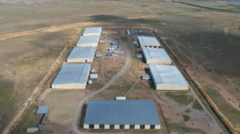
If you walk into a modern data center in rural Washington or West Texas, you won't necessarily hear the familiar, deafening roar of thousands of Bitcoin mining rigs hashing away. Instead, you'll see empty racks being gutted, heavy demolition crews hauling out obsolete gear, and massive liquid-cooling units taking over.
The gold rush for artificial intelligence infrastructure has officially pulled crypto firms away from Bitcoin. Companies that spent the last decade building massive operations to mine digital coins are trading their application-specific integrated circuits for enterprise-grade graphics processing units. They aren't doing this because they hate crypto. They are doing it because the math of electricity and revenue guarantees has changed overnight.
The Real Power Grab Driving the Pivot
Look closely at why this shift is happening. It isn't just about chasing a trend. It comes down to one scarce asset: grid-connected power.
Over the past ten years, crypto mining firms quietly locked up multi-megawatt power purchase agreements in remote areas where electricity was cheap and plentiful. When large tech giants started scrambling for massive blocks of power to train massive language models, they realized building new transmission lines takes years. Crypto miners already owned the keys to the grid.
Take companies like Core Scientific, TeraWulf, and Bitfarms (rebranded as Keel Infrastructure). They spent years navigating utility monopolies and local zoning boards to secure jaw-dropping amounts of wattage. Today, those power contracts are worth more than the Bitcoin hardware attached to them. Instead of gambling on volatile crypto block rewards, these firms are signing multi-billion-dollar leases with cloud providers and hardware giants.
Why the Conversion Isn't Plug-and-Play
People assume you can just unplug an Antminer, drop in a rack of NVIDIA chips, and start printing money. That is entirely false.
I've talked to infrastructure operators who learned this the hard way. Bitcoin facilities are functionally crude compared to high-performance computing centers. A standard crypto warehouse features basic industrial ventilation, massive airflow louvers, and simple electrical distribution. AI clusters require dense liquid cooling, low-latency fiber networking, and strict uptime redundancies that traditional mining sheds simply cannot handle.
Converting an old mining site requires ripping out most of the existing electrical infrastructure. Firms are spending hundreds of millions on turnkey engineering agreements just to retrofit these buildings. Yet, the capital expenditure makes sense when an AI data center contract promises predictable, multi-year recurring revenue compared to the boom-and-bust cycle of proof-of-work mining.
Will This Crash Bitcoin?
Mainstream financial analysts love to panic. Headlines claim that capital flight toward artificial intelligence will starve the Bitcoin network of security and hash rate.
That argument ignores how the protocol actually functions. Bitcoin's difficulty adjustment algorithm automatically resets itself every two weeks. If miners pack up and turn off their machines to chase high-performance computing contracts, the remaining network automatically becomes easier to mine. The block production schedule doesn't skip a beat.
Furthermore, major industry leaders like Coinbase CEO Brian Armstrong have repeatedly pointed out that Bitcoin's valuation isn't chained to short-term hosting costs. It is driven by global macro liquidity, sovereign debt expansions, and institutional adoption. When capital rotates out of digital asset derivatives and into equities, prices dip. That is just regular market behavior, not an existential threat to decentralized money.
What This Means for the Future of Digital Assets
We are watching a clean separation between financial speculation and physical infrastructure. The companies that survive in the digital asset space are realizing they are actually utility companies disguised as tech startups.
If you're investing in this sector, stop looking only at token prices. Pay attention to who owns the transformers, the substations, and the cooling towers. The real winners of the next decade won't just be the people holding digital coins. They will be the landlords of the compute era who figured out how to pivot when the market demanded a better use for raw electricity.