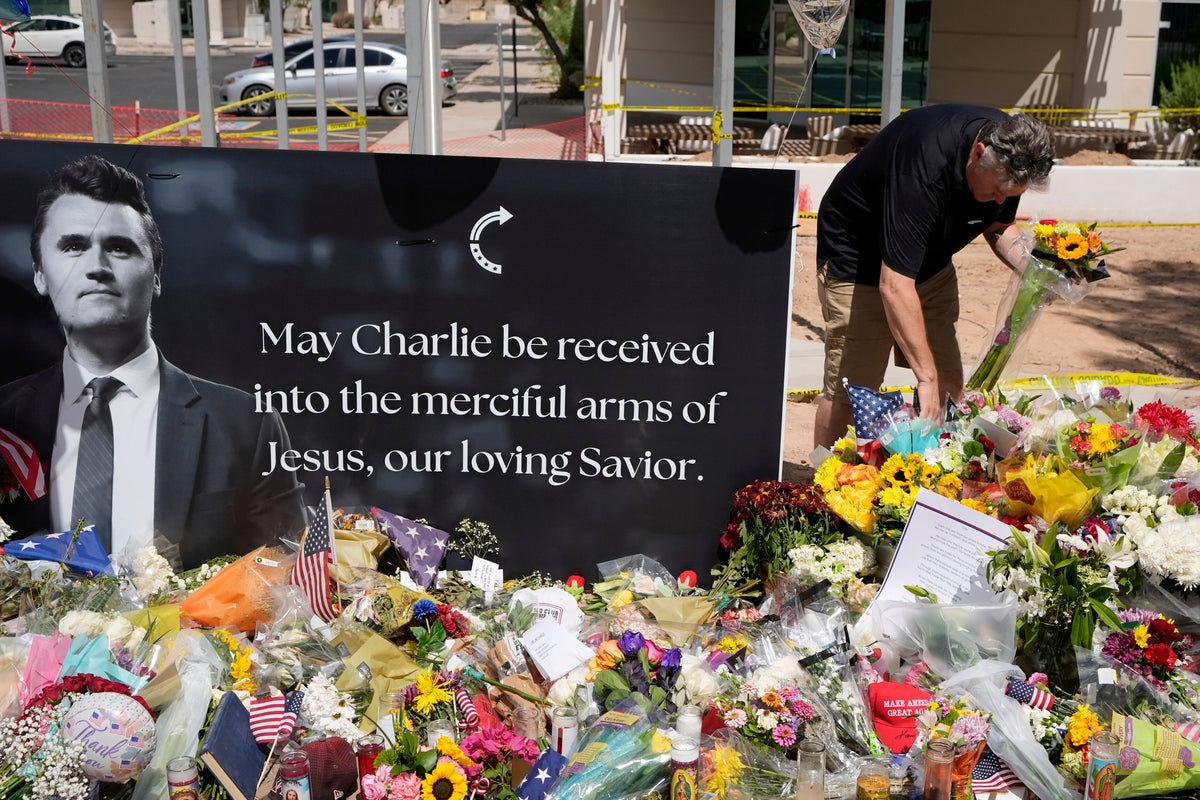
The five-day preliminary hearing unfolding in a Provo, Utah courtroom has laid bare the raw mechanics of the state’s case against Tyler James Robinson. For months, the public has been fed a steady diet of political rhetoric and online conspiracy theories surrounding the September 10, 2025 shooting of conservative activist Charlie Kirk at Utah Valley University. The state is pursuing the death penalty, a high bar that requires prosecutors to prove aggravating circumstances, specifically that the shooter knowingly endangered the lives of the thousands gathered at the campus amphitheater. While the prosecution has presented a formidable stack of physical and circumstantial evidence, a closer examination of the court proceedings reveals significant tactical vulnerabilities and systematic oversights that could reshape the trajectory of the upcoming trial.
The state’s objective this week is not to prove guilt beyond a reasonable doubt, but merely to satisfy the lower threshold of probable cause. State District Judge Tony Graf is tasked with deciding whether the evidence is sufficient to send the twenty-three-year-old defendant to a full capital trial.
The Sniper Pad Evidence and the Standard of Probable Cause
The opening salvo of the hearing centered on the physical geography of the crime scene. Former Utah Valley University police officer Christopher Bagley testified to discovering what he termed a sniper pad on the gravel rooftop of the nearby Losee Center. The roof offered an unobstructed line of sight to the outdoor podium where Kirk was shot in the neck from a distance of roughly 142 yards. According to Bagley, the disturbed gravel bore distinct impressions corresponding to a shooter lying in the prone position, preserving the outlines of elbows, knees, and feet.
State investigators reinforced this timeline with a dense grid of surveillance footage tracking a gray Dodge Challenger and a suspect moving through campus walkways, eventually scaling a pedestrian railing to access the roof just minutes before the fatal shot was fired.
The physical trail appears tight. Authorities recovered DNA matching Robinson’s profile from the trigger of the recovered rifle, a fired cartridge casing, two unfired rounds, and a towel wrapped around the weapon. Combined with a note left for his romantic partner stating he had an opportunity to take out Kirk, the state's initial presentation looks devastating.
But a preliminary hearing is an engineered environment. Prosecutors are permitted to introduce hearsay testimony and are not required to put every key witness on the stand.
The defense has already signaled its strategy by protesting the use of recorded statements from Robinson’s roommate rather than forcing an in-person cross-examination at this stage. By allowing recorded confessions and text messages to dominate the record early, the state is bypassing the immediate credibility tests that will define the actual trial.
The Ballistics Dispute That Handed the Defense an Opening
Behind the confidence of the prosecution lies a major scientific vulnerability that has already triggered legal sanctions. Robinson’s defense team previously revealed that an initial federal ballistics analysis failed to conclusively link the recovered bullet fragment taken from Kirk’s body to the rifle investigators say was used in the killing. The inconclusive result gave immediate life to a wave of online speculation regarding a second shooter or an alternate sequence of events.
The fallout from this ballistics gap drove prosecutors into damage-control mode, a move that backfired. Deputy County Attorney Christopher Ballard engaged with local media to minimize the federal report, arguing that a preliminary ballistics finding did not clear the defendant. Judge Graf responded by holding the prosecutor in civil contempt for violating strict pretrial publicity restrictions.
This dispute is more than a procedural skirmish. In a capital case, any ambiguity surrounding the primary physical evidence is a gift to defense attorneys.
If the state cannot definitively match the fatal projectile to the weapon in Robinson's possession through independent forensics, the prosecution will be forced to rely entirely on the digital trail and circumstantial confessions. DNA on a rifle proves ownership and handling; it does not scientifically prove that specific rifle fired the fatal shot when the ballistics report returns as inconclusive. The defense will undoubtedly exploit this gap to plant the seeds of reasonable doubt among jurors who are increasingly skeptical of state-sponsored narrative certainty.
A Systemic Failure of Campus Security and Executive Protection
The testimony delivered during the first days of the hearing exposed a startling lack of security preparation for an event featuring one of the most polarizing figures in modern American politics. Officer Bagley testified that only six officers were assigned to secure an outdoor venue filled with three thousand spectators. There were no security drones monitoring the surrounding rooftops, no metal detectors at the perimeter entry points, and no spotters positioned on the elevated structures overlooking the amphitheater.
Kirk was a high-profile target traveling the country on a heavily publicized campus tour. The decision to host an outdoor debate in a venue completely flanked by unsecured, multi-story university buildings represents an extraordinary failure of risk management by both university administration and Kirk's internal security detail.
The Losee Center roof was accessible via an adjacent public walkway, requiring the suspect to merely hop a standard guardrail to gain a commanding sniper position.
This security vacuum matters legally because it complicates the state's pursuit of the death penalty. To secure a capital conviction under Utah law, the state must prove that the actor created a great risk of death to authorities or multiple people. The defense can argue that the chaotic environment, the lack of crowd control, and the absence of basic perimeter security contributed to the vulnerability of the scene, challenging the notion that the act was executed with a deliberate disregard for the wider crowd rather than a hyper-focused, singular target.
The Radicalization Narrative and the Weaponization of Grief
The prosecution has built a psychological profile of Robinson centered on rapid political radicalization. Charging documents emphasize a text message sent by the defendant claiming he had enough of Kirk’s hatred and that some hate cannot be negotiated out. Statements from Robinson’s mother describe a young man who had grown increasingly vocal and volatile regarding political issues over the twelve months leading up to the shooting, aligning himself intensely with pro-transgender and progressive advocacy.
This motive framework turns the courtroom into a political lightning rod. The presence of high-profile political influencers and family members in the front rows of the gallery underlines the immense external pressure bearing down on the local judiciary.
The political nature of the crime has turned the proceedings into an ideological battleground, overshadowing the routine mechanics of criminal justice.
Erika Kirk’s public statements calling for an end to the conspiracy theories surrounding her husband’s death highlight the exhaustion of a family caught between a horrific personal loss and an insatiable media ecosystem. Yet, the state's insistence on emphasizing the political ideology of the defendant ensures that the trial will remain deeply partisan. This environment makes selecting an impartial jury in Utah County an incredibly difficult task.
The state will likely clear the low hurdle of the preliminary hearing this week, and the case will move toward a formal arraignment. But when the venue shifts to a full trial, the prosecution will no longer have the luxury of relying on hearsay or smoothed-over forensic reports. The inconclusive ballistics on the bullet fragment, the glaring security oversights that left a rooftop completely unguarded, and the high legal standard required to execute a defendant will test the state's case to its absolute limit.