The spring of 2020 did not smell like flowers. It smelled of industrial sanitizer, fear, and the metallic tang of adrenaline. Inside Britain’s hospitals, the air was heavy. Nurses wrapped themselves in bin bags. Doctors wore reused masks until the elastic snapped, desperate to keep a invisible enemy at bay. Every breath felt like a gamble. In those frantic, terrifying weeks, the nation watched the news with a collective knot in its stomach, praying for a lifeline.
Behind the closed doors of Whitehall, a different kind of frenzy was unfolding. Hundreds of millions of pounds were moving across digital ledgers at lightning speed. Contracts were signed on the backs of digital envelopes. The government had opened its checkbook to anyone who claimed they could source Personal Protective Equipment. It was a gold rush born of desperation.
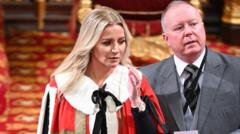
Among those who stepped into the light was Michelle Mone, a high-profile businesswoman and Conservative peer, alongside her husband, Douglas Barrowman. They recommended a newly formed company called PPE Medpro. Promises were made. Contracts worth over £200 million were awarded. The nation breathed a sigh of relief, believing help was on the way.
The help never arrived in the way it was promised.
Consider what happens next when the adrenaline fades and the ledger books are finally opened under the cold light of day. The Department of Health and Social Care looked at the mountains of gowns delivered to warehouses. They weren't the armor our frontline workers needed. They were deemed unusable. Millions of pieces of equipment, paid for with public money, sat frozen in storage while the people they were meant to protect continued to bleed out under the strain of a global catastrophe.
The story did not end with the passing of the pandemic. It simply moved from the sterile chaos of the wards to the suffocating quiet of the High Court.
The British government is now fighting a grinding, multi-million-pound legal battle to claw that money back. The Department of Health is suing PPE Medpro for £122 million plus interest, alleging that the gowns provided were not fit for purpose. But the legal dragnet has widened significantly. In a dramatic escalation, the government added Michelle Mone and Douglas Barrowman directly to the lawsuit, alongside several other individuals and corporate entities linked to the deal.
Imagine sitting in a room where a single signature can divert enough public funds to build schools, fund libraries, or pay the salaries of thousands of those very nurses who wore bin bags. Now imagine that money vanishing into a labyrinth of offshore trusts and luxury assets, while the entities responsible deny any wrongdoing. The contrast is not just stark; it is a profound betrayal of the social contract.
The defense from the Mone and Barrowman camp has been a masterclass in deflection. They argue that they have been made scapegoats for a systemic failure within the government's procurement process. They claim the gowns met the specifications requested at the time, and that the shifting goalposts of bureaucratic standards are to blame for the waste.
But the real problem lies elsewhere. It rests in the trust that was shattered.
When the High Court froze tens of millions of pounds of assets linked to Barrowman and Mone, it wasn't just a technical financial maneuver. It was a desperate attempt to halt the bleeding of the public purse. The legal documents reveal a complex web of financial transactions, where profits from the PPE Medpro contracts allegedly flowed into personal bank accounts, offshore structures, and luxury property purchases.
To understand the scale of this, we have to look past the staggering numbers. A hundred million pounds is an abstract concept to most people. It is a digit on a screen. To make it real, you have to look at what that money buys in the real world. It buys the security of a functioning healthcare system. It buys the trust that when a crisis hits, those in power will act with absolute integrity, not eye an opportunity for unprecedented profit.
The legal battle is poised to drag on for months, possibly years. Depositions will be taken, thousands of pages of emails will be parsed, and lawyers will argue over the precise definition of medical-grade polycarbonate. The defendants will continue to maintain their innocence, fighting every step of the way to protect their wealth and their reputations.
But out in the real world, far from the mahogany tables of the courts, the legacy of the VIP lane remains. It is etched into the cynicism of a public that watched insiders profit while ordinary citizens locked down. It is visible in the warehouse fees still being paid to store millions of pieces of useless plastic.
The money may or may not be recovered. The courts will eventually decide who owes what to whom. But the true cost of the PPE Medpro scandal cannot be repaid in sterling. It is measured in the quiet, corrosive realization that when the country needed unity and sacrifice the most, some saw only a market waiting to be cornered.
A nation’s trust is a fragile thing, easily broken, and impossibly expensive to rebuild.