The Democratic Republic of the Congo is facing a catastrophic health crisis that the world isn't paying enough attention to. Over 930 people have died in Congo's Ebola outbreak since it was declared on May 15, 2026. That number isn't just a grim statistic. It represents the fastest-growing Ebola epidemic on record.
If you think this is just another standard outbreak that health officials will quiet down in a few weeks, you're dead wrong. The data coming out of the eastern provinces right now is terrifying. A recent 24-hour surge saw 37 deaths in a single day—one of the highest daily jumps since this nightmare started.
With 2,344 confirmed cases and counting, the situation is moving from a localized emergency to an uncontrollable regional disaster. Here is why the standard playbook isn't working and what makes this specific crisis uniquely dangerous.
The Invisible Strain with Zero Vaccines
When people think of Ebola, they usually think of the Zaire strain. That's the variant responsible for the massive West African outbreak years ago and the one for which we actually have highly effective, approved vaccines.
This time, we aren't so lucky.
The current crisis in eastern Congo is driven by the Bundibugyo strain. It is a much less common variant of the virus. Because it doesn't pop up often, pharmaceutical companies and global health agencies haven't prioritized it.
The Stark Reality: There is currently no approved vaccine and no specific treatment for the Bundibugyo strain.
Medical teams at treatment facilities like the Rwampara Treatment Center in Ituri are essentially flying blind. They can offer supportive care—hydration, managing blood pressure, treating secondary infections—but they have no magic bullet to kill the virus. If you contract it, your body has to fight it off on its own.
Blind Spots and Unknown Chains of Transmission
The most alarming update doesn't even come from the death toll itself. It comes from the tracking data. The World Health Organization recently dropped a bombshell: roughly 80% of newly detected Ebola cases are coming from completely unknown transmission chains.
Think about what that actually means.
Epidemiologists usually map out an outbreak by tracing contacts. If Person A gets sick, you find everyone Person A talked to or touched. You isolate them. You break the chain.
Right now, four out of five people walking into clinics infected with Ebola have no known connection to any other confirmed patients. They are catching the virus from people who aren't even on the grid. The virus is moving silently through communities, spreading faster than health officials can physically track it. It has already bled across five different provinces in eastern Congo.
War Misinformation and Strikes Are Crushing the Response
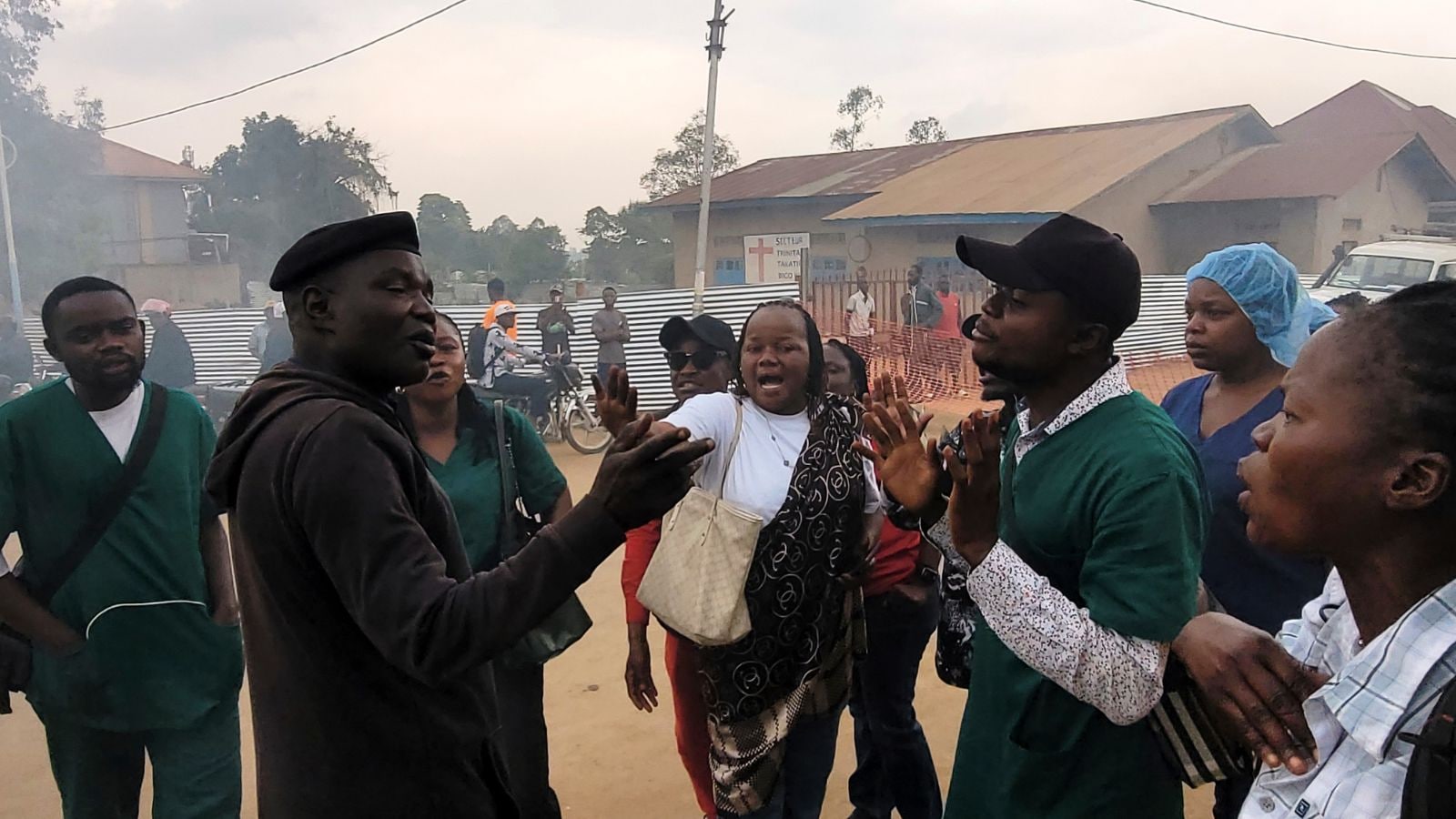
An epidemic doesn't happen in a vacuum. Eastern Congo is a complex environment plagued by rampant rebel violence and deep-seated political instability. This conflict turns a medical emergency into a logistical impossibility.
Medical teams can't reach certain villages because those areas are active war zones. But the violence isn't just coming from rebel groups. It's coming from local communities too.
Since mid-May, there have been at least 12 targeted attacks against healthcare facilities and medical workers. These aren't random accidents. They are fueled by intense skepticism, rumors, and deep public distrust.
When heavily armed security details accompany medical teams into vulnerable villages, it doesn't reassure locals. It terrifies them. Rumors spread that the government or foreigners brought the virus to wipe them out.
To make matters worse, the system is breaking down from the inside. Many Congolese healthcare workers have walked off the job, striking because they haven't been paid their wages. The ones who do stay are paying with their lives. At least 36 healthcare workers have died from the virus so far.
What Needs to Happen Immediately
Right now, 724 patients are sitting in isolation units and hospitals across the region. The Congolese Health Ministry claims it is intensifying response efforts and consolidating patient care capacities, pointing to 22 recent recoveries as a sign of progress. But a few dozen recoveries won't stop an exponential curve.
If the global community wants to prevent this from crossing international borders, the response strategy must pivot immediately.
First, get local leaders in the driver's seat. Foreign doctors and government officials from Kinshasa don't hold sway in eastern villages. Local pastors, community elders, and traditional healers do. If they don't buy into the response, the skepticism and attacks will continue.
Second, pay the workers. Expecting local nurses and doctors to risk an agonizing death from an unvaccinable virus while their families starve because of missing paychecks is both unethical and stupid. International funding must directly guarantee hazard pay for front-line workers.
Finally, fast-track experimental therapeutics. Since there's no approved cure for the Bundibugyo strain, regulatory bodies need to clear the red tape to deploy experimental antivirals under compassionate-use protocols.
The clock is ticking. This isn't just Congo's problem. An uncontained virus in a globalized world eventually becomes everyone's problem. Watch the data, demand transparency from international health organizations, and stop assuming the current tools are enough to fix this.