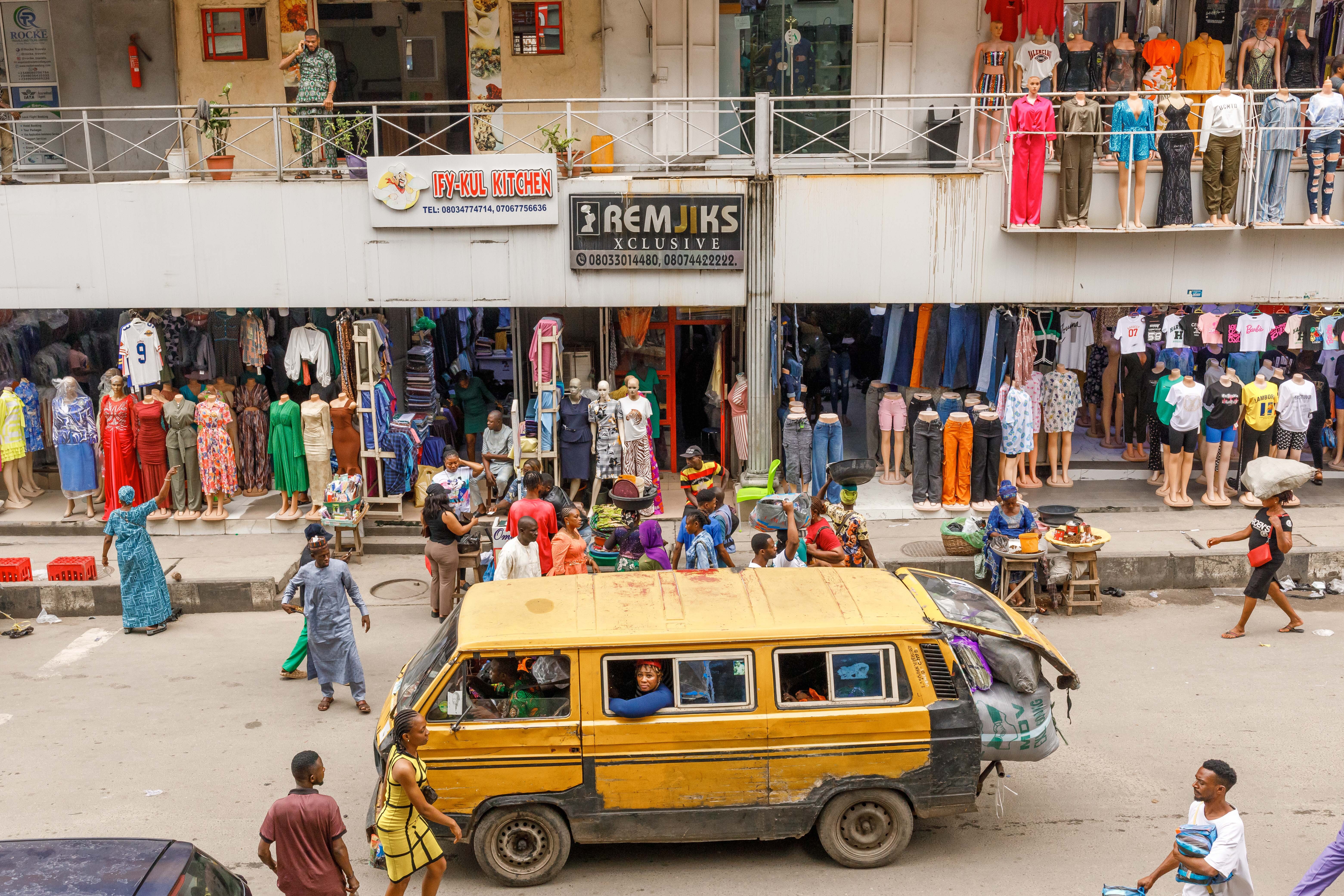
Dust gets into everything. It clings to the eyelashes, coats the dashboard, and settles over the morning maize like a gray shroud.
Ask anyone who drives the coastal corridor between Lagos and Abidjan about the dust, and they will tell you it is the least of their worries. They will tell you about the trucks. The overloaded flatbeds groaning under pyramids of crates, the fuel tankers tilting precariously over jagged craters, and the endless lines of commerce stalled at borders that treat time as a suggestion rather than a resource.
For decades, this stretch of West Africa has operated on a grueling rhythm of friction. Millions of people live along this narrow littoral strip, a bustling economic engine that generates a massive chunk of the region's GDP. Yet, moving between its beating hearts is an exercise in endurance.
Traffic. Delay. Spoilage.
I remember sitting in a shared sedan outside Cotonou, watching a crate of fresh tomatoes slowly soften in the equatorial heat. By the time we cleared customs hours later, half the produce was unsellable. That is the hidden tax of bad infrastructure. It is paid in spoiled food, missed meetings, inflated prices, and exhausted human potential.
But the ground is shifting.
Beneath the wheels of those battered trucks, a transformation is quietly taking root. It is called the Abidjan Lagos Corridor Highway.
The Anatomy of a Concrete Artery
To understand why this six-lane highway is shaking up the region, you have to look past the engineering blueprints. Forget the tonnage of asphalt and the millions of cubic meters of earthwork for a moment. Look instead at a hypothetical trader named Amina.
Amina sells textiles in Lomé, sourcing her fabrics from markets in Nigeria and shipping finished garments toward Côte d'Ivoire. Right now, her supply chain is a gamble. A single washed-out bridge or an arbitrary border bottleneck can turn a three-day turnaround into a two-week ordeal.
When infrastructure fails, risk skyrockets. When risk skyrockets, small businesses suffocate.
The new highway project, backed by the Economic Community of West African States, aims to stitch together five countries: Nigeria, Benin, Togo, Ghana, and Côte d'Ivoire. It links Lagos, the chaotic, pulsing megacity of twenty million souls, directly to Abidjan, the gleaming lagoon metropolis of the west.
Think of it as bypassing the circulatory blockages of a giant body.
Urban futures are rarely shaped by grand political manifestos. They are shaped by concrete, steel, and the simple physics of how fast a wheel can turn. When goods move faster, prices drop. When prices drop, households breathe easier. When borders become permeable rather than punitive, economic gravity shifts.
The Human Cost of Isolation
We talk about regional integration as if it were an abstract economic theory cooked up in air-conditioned boardrooms in Abuja or Geneva. It is not. It is deeply, intensely human.
Isolation breeds poverty. When communities are cut off from major urban centers by impassable roads, they become economic islands. Farmers cannot get their harvests to coastal markets before they rot. Entrepreneurs cannot scale their operations because they cannot reach customers two hundred miles away. Young people pack their bags for perilous journeys across the Sahara or the Mediterranean because their home regions feel economically trapped in amber.
The Abidjan Lagos corridor carries more than just commercial goods. It carries the aspirations of a young, restless population.
Consider the sheer demographic weight of the region. West Africa is young. Its median age is hovering near the late teens. This generation does not want to wait three days at a border post while paperwork slowly rots in a drawer. They want speed. They want connection. They want a digital and physical marketplace that matches their ambition.
When a highway slashes travel times between major West African hubs by half, it does something miraculous. It shrinks the psychological distance between neighbors. It turns separate nations into a singular, unified market of epic proportions.
Engineering a New Reality
Building a superhighway through a densely populated coastal zone is a masterclass in friction. It is messy. It displaces communities, demands massive capital investment, and requires a level of diplomatic synchronization that has historically eluded West African governments.
Critics whisper of ballooning budgets and environmental scars. They ask if the massive debt required to lay down six lanes of modern highway is worth the toll it takes on local ecosystems and national balances.
It is a fair question. Large-scale infrastructure projects carry ghosts of past failures—abandoned white elephants rusting in the tropical sun, monuments to poor planning and broken promises.
Yet, the alternative is paralysis.
To see why this highway is different, look at the integration model. This is not just about paving a road. It is about border posts designed for digital clearance rather than manual stamps. It is about a unified transit system where a truck cleared in Lagos does not need to unpack its cargo at every single national boundary.
The highway acts as a catalyst for urban decentralization. Right now, growth is dangerously concentrated in primate cities like Lagos and Abidjan, creating hyper-dense urban sprawls that strain public services to the breaking point. A high-speed corridor creates secondary growth poles. Smaller towns along the route suddenly find themselves connected to regional value chains. A sleepy coastal town in Togo or Benin can become a manufacturing hub or a logistics base.
Urban futures are rewritten not by abandoning cities, but by better connecting them.
The Horizon Beckons
Stand on the edge of the Lekki Expressway in Lagos as the sun dips below the Atlantic horizon, turning the sky the color of a bruised plum. The air hums with the bass of generators, the chatter of street vendors, and the relentless roar of traffic.
Now, imagine that roar stretching unbroken all the way to the lagoons of Côte d'Ivoire.
Imagine a truck leaving the ports of Nigeria at dawn and unloading its cargo in Ghana by nightfall. Imagine Amina checking her smartphone to track a shipment crossing three international borders in a matter of hours, completely uninterrupted by bureaucratic inertia.
The road is coming.
It will pour concrete over old barriers. It will bury the dust of endless delays beneath a slick, modern ribbon of asphalt. But more than that, it will rearrange the geography of possibility for millions of people who have spent too long waiting at the edge of the world, watching the rest of the planet speed by.
The future of West Africa is not waiting to be discovered. It is being paved right now, one mile of heavy-duty concrete at a time.