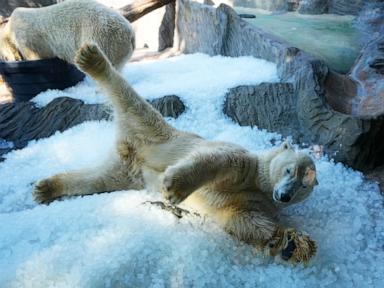
When the thermometer hits forty degrees Celsius in Prague, the headlines write themselves. Photos emerge of massive white carnivores crunching on frozen water blocks, splashing in chlorinated pools, and panting against artificial rock faces. The public eats it up. It looks like animal enrichment. It looks like compassion in action.
It is actually a symptom of a much larger institutional failure.
As European summer heatwaves break historical records year after year, zoos across the continent scramble to keep Arctic apex predators alive in environments designed for Victorian entertainment rather than biological survival. Tossing ice cubes into an enclosure is not conservation. It is an expensive band-aid slapped over a chronic systemic wound.
Let us look past the viral zoo social media posts and examine the brutal mechanics of keeping polar bears in temperate European cities during unprecedented climate extremes.
The Thermodynamic Trap
Polar bears do not just tolerate cold; they are physiologically engineered to exploit it. Their evolutionary history is written in thick blubber layers and dense underfur that trap body heat with terrifying efficiency. In their natural habitat, ambient temperatures rarely threaten them with overheating. The Arctic environment functions as a natural thermal sink.
Prague is not an ice sheet.
When summer temperatures in Central Europe soar, urban heat island effects amplify the misery. Concrete enclosures absorb solar radiation all day and radiate it back long after sunset. Water features warm up to bathwater temperatures. The air becomes thick and humid, a direct contradiction to the dry, crisp conditions required for optimal coat insulation and thermoregulation.
Zookeepers face a losing battle against physics. You can dump ten tons of crushed ice into a pool, but thermodynamic reality dictates that the ice will melt within minutes under a blazing sun. The bears are left pacing on hot stone, panting heavily, suffering from heat stress that goes largely unmeasured by casual onlookers.
The Economics of Artificial Winter
Keeping a polar bear cool in July requires an industrial-scale logistical effort. We are talking about massive refrigeration units running continuously, specialized water filtration systems, and daily energy consumption that rivals small apartment blocks.
Yet, institutional priorities remain bafflingly misaligned. Budgets that could fund genuine habitat restoration or direct conservation initiatives in Svalbard are instead funneled into air-conditioned indoor dens and ice machine maintenance in the middle of urban Europe.
The public funding model relies on the turnstile. Visitors want to see the big white bear. Zoos know that losing the polar bear exhibit means losing a major attendance draw. Consequently, the animals are kept as living tourist relics, enduring summers that grow harsher with every passing decade, purely to satisfy a mid-century appetite for exotic menageries.
The Myth of Animal Enrichment
Every time a video of a Prague zoo polar bear playing with an ice block goes viral, public relations departments breathe a sigh of relief. The narrative is tightly controlled: look how well we care for our animals. Look at the clever enrichment strategies our keepers design.
True animal enrichment stimulates natural foraging, hunting, and exploratory behaviors. Licking ice flavored with diluted fruit juice does not simulate hunting seals through breathing holes in sea ice. It is a distraction technique. It provides a momentary diversion from the profound sensory deprivation of a concrete enclosure.
Animal welfare experts increasingly question whether keeping ice-dependent species in temperate zones constitutes humane stewardship. When an animal spends its peak daylight hours seeking shade against a painted concrete backdrop while tourists press against glass barriers, the line between conservation and exhibition blurs beyond recognition.
The Broader European Reckoning
Prague is far from an isolated case. From Vienna to Rome, historic zoos built in the nineteenth and twentieth centuries struggle to retrofit archaic architecture for a warming planet.
Some facilities have chosen the path of phase-out. Recognizing that their climates are no longer suitable and that proper Arctic habitats are financially impossible to maintain locally, forward-thinking institutions have stopped acquiring polar bears. When the current generation passes away, the enclosures are permanently closed, and resources are redirected toward regional species conservation where climatic conditions actually align with the animals' biological needs.
Other facilities double down. They build deeper pools, install advanced chillers, and launch aggressive public relations campaigns to justify their continued presence. They point to captive breeding programs, though the success rate of releasing captive-born polar bears back into the wild is precisely zero. There is no wild habitat left for them to return to that is not rapidly shrinking due to global warming.
The Uncomfortable Truth
The spectacle of a polar bear eating ice in a Prague heatwave is a stark metaphor for humanity's broader environmental disconnect. We watch the animal struggle against localized heat while the very ecosystem that created the species dissolves into open ocean thousands of miles to the north.
We marvel at the technological effort required to keep a cold-weather animal alive in a warm-weather city, missing the irony entirely. The ice cubes are temporary. The heat is permanent. And the animals remain caught in the middle, enduring an endless European summer they were never built to survive.