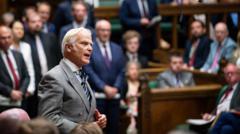
The British press loves a neatly packaged outrage. When the story broke regarding a bizarre mix of a House of Commons gift shop, an escaped lion anecdote, a frontline nurse, and a bottle of overpriced champagne, the commentary machine did exactly what it always does. It weaponized the optics. Writers lined up to wring their hands over the symbolic disconnect between Westminster privilege and public sector austerity.
They missed the entire point.
The lazy consensus screams that a bottle of champagne gifted or sold in the corridors of power is an insult to working citizens. It makes for great theater. It creates a seamless narrative of "them versus us." But focusing on the trivial trinkets of political theater is an intellectual failure. It shields the actual mechanics of institutional waste from scrutiny.
If you are tracking the health of a nation by the price of a bottle of bubbles in a parliamentary gift shop, you are tracking the wrong metric.
The Tyranny of Small Numbers
Humans are hardwired to understand local, tangible waste. If a politician buys a £50 bottle of champagne, the public reacts because £50 is a recognizable sum. It is the price of a family meal or a weekly utility bill. This is what economists call the "bike-shed effect" or Parkinson's Law of Triviality. The theory holds that an organization will give disproportionate weight to trivial issues because they are easy to comprehend, while massive, complex systemic problems are ignored.
Imagine a scenario where a committee spends three hours debating the coffee budget for a local council, then approves a £500 million IT procurement contract in ten minutes without a single question.
That is exactly what happens when we obsess over Commons gift shop anomalies.
While the media dissects the symbolism of a nurse receiving or not receiving a bottle of champagne, billions of pounds leak out of public procurement through poorly negotiated contracts, outdated infrastructure, and bureaucratic inertia. In my years auditing organizational efficiency, the biggest financial disasters never announce themselves with a cork pop. They happen quietly, via Microsoft Excel spreadsheets, signed by people who have never set foot in a gift shop.
The Reality of Public Sector Economics
Let's dismantle the premise that stopping minor perks or symbolic gestures somehow fixes systemic issues in healthcare or public service.
- The Scale Illusion: The total annual budget for the NHS sits well north of £160 billion. The entire operating cost of Parliament is a rounding error by comparison. Cutting the champagne, firing the gift shop staff, and forcing MPs to drink tap water out of paper cups would not fund a single extra hospital wing for a day.
- The Talent Trap: Public sector leadership is already facing a severe talent drain. When you turn the working environment into a monastic cell where every minor comfort is scrutinized by a tabloid headline, you do not attract reformists. You attract risk-averse bureaucrats who excel at hiding rather than executing.
- The Misdirection: Every hour spent debating the symbolic insult of a parliamentary gift item is an hour not spent debating structural tax reform, supply chain vulnerabilities, or long-term capital investments.
The obsession with purity over performance is ruining governance. We have traded systemic accountability for aesthetic compliance.
Dismantling the Public Also Asked Queries
When these stories break, the search trends reveal a deeply flawed public understanding of how state machinery operates. Let’s address the real questions people should be asking.
Shouldn't politicians live exactly like the people they represent?
No. This is a bankrupt populist fantasy. You want your lawmakers to have a deep understanding of their constituents' struggles, but forcing them into a performance of poverty accomplishes nothing. We need leaders capable of managing complex, macroeconomic systems. If we judge their fitness based on whether they drink the same tea or buy the same groceries as a baseline demographic, we are screening for performance art, not competence.
Why can't parliamentary profits be directly funneled to frontline workers?
Because that is not how state treasury functions work. Ear-marked micro-revenues are an administrative nightmare. The profits from a commercial operation inside Westminster are negligible. They do not move the needle on national wage structures. Frontline compensation requires systemic economic growth and deliberate fiscal policy, not the spare change from a souvenir stand.
The Real Cost of Optical Governance
The downside of my argument is obvious: it looks cold. It lacks the immediate emotional satisfaction of demanding that politicians suffer alongside the public during tough economic times. It requires looking past the human-interest angle—the nurse, the lion, the champagne—and staring directly into the dry, unsexy world of institutional policy.
But the alternative is what we have now: a cycle of outrage that changes nothing.
Politicians have learned to play this game perfectly. They know that if they look humble, ride a bicycle to work once a month, and ban alcohol on parliamentary premises, the public will look away. Meanwhile, the real structural decay continues unabated because nobody is checking the macro-level expenditures.
Stop letting cheap symbols dictate your political rage. Demand better procurement strategies. Demand supply chain overhauls. Demand rigorous legislative scrutiny of major bills.
Leave the champagne bottles alone and start looking at the real balance sheet.