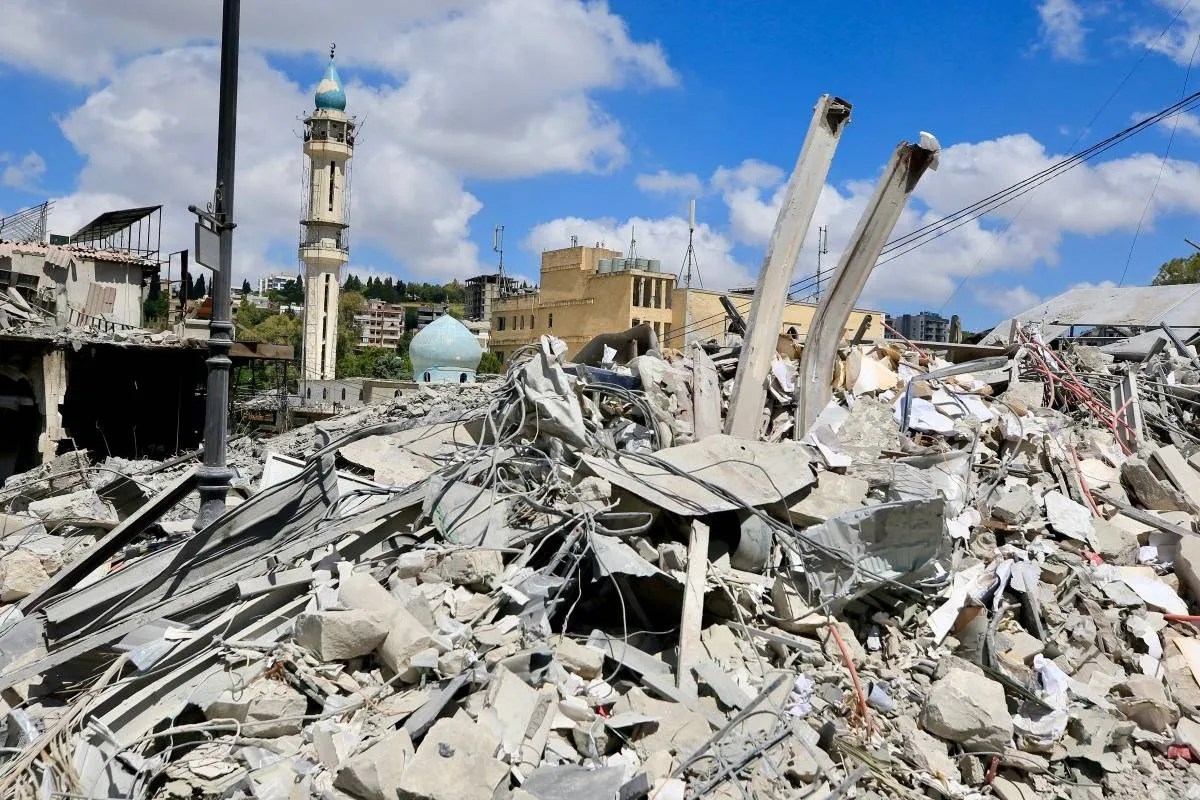
The intersection of high-intensity urban warfare and ancient architectural preservation presents an asymmetric risk structure where asymmetric kinetic operations cause irreversible damage to non-renewable cultural capital. Recent military engagements in Lebanon, specifically targeting regions adjacent to UNESCO World Heritage sites in Tyre and Baalbek, demonstrate that modern precision warfare fails to insulate historical infrastructure from collateral degradation. The damage to the Al-Bass Roman site in Tyre—a complex containing a monumental hippodrome, triumphal arch, and extensive necropolis—serves as a primary case study for analyzing the mechanics of structural decay, the failure of international protective frameworks, and the long-term economic contraction caused by the erasure of historical assets.
Evaluating this crisis requires moving beyond sentimental or purely historical narratives. Instead, the situation demands a rigorous analysis of the physical, legal, and economic vectors that govern heritage destruction in active conflict zones.
The Mechanics of Kinetic Degradation on Ancient Masonry
Ancient structures, particularly Roman and Phoenician limestone and sandstone ruins, possess distinct structural vulnerabilities when subjected to modern explosive forces. Unlike reinforced concrete, which absorbs and dissipates kinetic energy through steel-rebar tension, ancient masonry relies on gravity, mass, and friction-based interlocking blocks.
Three primary physical vectors drive the destruction of heritage sites during nearby kinetic strikes:
Shockwave Propagation and Subsurface Cavitation
Explosive detonations generate high-velocity shockwaves that travel through both the air and the subterranean strata. When these waves encounter porous archaeological stone, they induce micro-fracturing along natural sedimentation lines. The Al-Bass hippodrome structures, built largely from local sandstone and limestone, suffer from structural fatigue as these shockwaves destabilize the unreinforced foundations. This causes shifting in vertical columns, leading to eventual structural collapse under their own weight without requiring a direct missile impact.
Displacement of In Situ Stratigraphy
Archaeological integrity relies on the preservation of precise geological and historical layers. Near-miss bombardments alter soil density and displace subterranean artifacts. When craters form near the perimeter of a protected zone, the lateral pressure shifts the surrounding earth. This unseats subterranean foundations, tilting monumental arches and compromising the load-bearing integrity of ancient drainage networks and mosaic floorings.
Secondary Fragmentation and Chemical Corrosion
Fragments of modern munitions, along with concrete debris from targeted adjacent buildings, act as high-velocity shrapnel that scars and fractures ancient bas-reliefs, inscriptions, and columns. Furthermore, the chemical residue from modern explosives—often containing sulfur, phosphorus, and heavy metals—deposits onto porous stone surfaces. When mixed with atmospheric moisture, these residues form acidic compounds that accelerate the chemical weathering of Roman-era limestone, permanently dissolving intricate historical details over subsequent rainy seasons.
The Operational Failure of International Legal Frameworks
The destruction of the Al-Bass site highlights the systemic weakness of current international protection mechanisms, notably the 1954 Hague Convention for the Protection of Cultural Property in the Event of Armed Conflict and its Second Protocol (1999).
The primary structural flaw in these legal frameworks is the "military necessity" exemption. Under Article 4 of the 1954 Convention, the obligation to respect cultural property can be waived if a military commander determines that the site or its immediate vicinity is being utilized for military purposes. This loophole creates an operational vulnerability in dense urban areas like Tyre or Baalbek, where ancient ruins sit immediately adjacent to contemporary municipal infrastructure and residential zones.
[Kinetic Strike in Urban Zone]
       │
       ├──► Air/Subsurface Shockwaves ──► Micro-fracturing in Porous Stone ──► Structural Collapse
       │
       ├──► Lateral Soil Displacement ──► Foundation Shifting ──► Tilting of Arches/Monuments
       │
       └──► Chemical/Debris Deposition ──► Acidic Surface Corrosion ──► Erasure of Inscriptions
The designation of "Enhanced Protection" status by UNESCO theoretically grants immunity from military targeting and structural utilization. However, the enforcement mechanism is non-existent during active hostilities. Without a physical, neutral peacekeeping presence dedicated exclusively to heritage perimeters, international law functions purely as a retrospective accounting mechanism rather than a preventative shield. The lack of real-time satellite monitoring and transparent, publicly accessible data feeds allows conflicting parties to trade unverified accusations regarding the militarization of heritage zones, leaving the physical structures unprotected during the critical phases of an offensive.
The Economic Value Chain Disruption
The degradation of Lebanon’s archaeological infrastructure cannot be separated from the state's broader macroeconomic collapse. Cultural tourism historically functioned as a vital source of hard currency for the Lebanese service-based economy. The physical impairment of sites like Al-Bass triggers a multi-tiered economic contraction that outlasts the active phase of military conflict.
The damage impacts the economic ecosystem through several distinct phases:
- Immediate Capital Loss: The physical destruction of irreplaceable artifacts removes assets that drive international tourism demand.
- Infrastructure Deterioration: Direct damage to access roads, visitor centers, and local hospitality networks surrounding the heritage zones prevents immediate post-conflict recovery.
- Insurance and Risk Premiums: The classification of a region as a damaged conflict zone drives insurance premiums for travel and commercial operations to prohibitive levels, discouraging foreign investment and international tour operators.
- Labor Force Atrophy: As tourism revenues dry up, local conservationists, archaeologists, restorers, and hospitality specialists migrate, creating a critical deficit in the specialized human capital required to maintain and restore the sites.
This structural economic damage creates a negative feedback loop. The reduction in state revenue limits the budget allocated to the Directorate General of Antiquities (DGA), leaving the department incapable of funding basic stabilization efforts for the damaged ruins, which leads to further environmental degradation.
Strategic Restorative Requirements
Reversing the structural damage inflicted upon the Al-Bass Roman site requires an immediate shift away from ad-hoc patches toward an engineered stabilization framework. Speculative reconstructions or aesthetic repairs fail to address the core structural vulnerabilities induced by kinetic shocks.
The immediate post-conflict phase must prioritize structural stabilization. This involves deploying carbon-fiber reinforcement jackets around compromised Roman columns and utilizing non-invasive geotextiles to shore up shifted soil foundations around the hippodrome. Digital asset preservation must run parallel to physical stabilization; deploying high-resolution LiDAR scanning across the entire Tyre archaeological zone is required to establish a precise volumetric baseline. This data allows engineers to monitor structural deformation down to the millimeter, identifying shifts that precede catastrophic structural failures.
The financing of these interventions cannot rely on the depleted resources of the Lebanese state. Funding must be structurally insulated via international trust funds managed directly by external consortia, preventing the diversion of capital through municipal bureaucracies. International development banks must tie post-conflict reconstruction packages to explicit institutional guarantees for heritage protection zones, treating cultural asset stabilization not as a luxury project, but as a critical infrastructure requirement for macroeconomic recovery. This systematic approach represents the only viable method to prevent the total degradation of Lebanon's historical foundations amid ongoing regional instability.