The kettle whistles in a semi-detached house in Sheffield, but Sarah hesitates before pressing the switch. It is a tiny movement, a momentary freeze of the finger, but it represents the new psychic weight of British life. Every flick of a toggle is now a financial calculation. Every degree on the thermostat is a negotiation with a ghost.
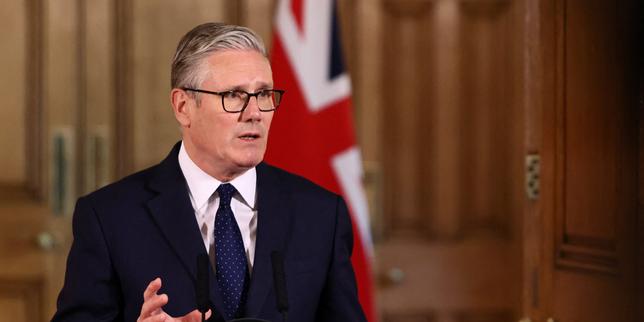
Andrew Bailey, the Governor of the Bank of England, sat in a room far removed from Sarah’s kitchen recently, but his words landed there like a stone in a well. His message was stripped of the usual central-banker jargon. He wasn't talking about abstract yield curves or liquidity injections. He was talking about a "systemic shock" originating thousands of miles away in the Strait of Hormuz and the deserts of Iran. He was telling the British public that he is out of ammunition. You might also find this related story useful: How the London antisemitic attack changed European intelligence forever.
Central banks are often viewed as the ultimate economic deities, capable of printing stability or hiking interest rates to tame the wilder impulses of the market. But Bailey’s admission was an exercise in radical, uncomfortable honesty. If tensions in the Middle East cause oil and gas prices to verticalize, the Bank of England cannot—and will not—stop the bill from hitting your doormat.
The Illusion of the Safety Net
We have grown accustomed to the idea that the government or the central bank acts as a buffer. When the pandemic hit, the buffers were deployed. When the initial energy spike of 2022 arrived, subsidies cushioned the fall. We began to believe that "the economy" was something that could be managed, steered, and ultimately fixed by men in grey suits. As highlighted in latest coverage by TIME, the implications are significant.
That belief is dying.
Consider the mechanics of an energy shock. When supply lines are threatened in the Middle East, the global price of Brent Crude doesn't just nudge upward; it leaps. Because energy is the "master resource"—the thing required to make, transport, and sell every other thing—inflation becomes a contagion. It starts at the pump, moves to the fertilizer used for your bread, infects the plastic in your toothbrush, and ends in the price of a pint of milk.
Bailey’s point is that the Bank of England’s primary tool, the interest rate, is a blunt instrument designed to cool down an overheating domestic economy. If people are spending too much money on holidays and new cars, raising rates works. It makes borrowing expensive and encourages saving. It slows the pulse.
But you cannot "cool down" a crisis that is imported. Raising interest rates does nothing to lower the price of a barrel of oil priced in US dollars on the global market. In fact, if the Bank tries to fight an energy-driven inflation spike by hiking rates too aggressively, they risk a double-blow: citizens paying more for their heating while simultaneously watching their mortgage payments explode.
A Geography of Anxiety
This isn't just about spreadsheets. It is about the specific, localized anxiety of a rainy Tuesday in October.
The Iranian energy shock is a hypothetical that feels increasingly like a certainty to those watching the headlines. For a family in the UK, the "Middle East" is no longer a distant theater of geopolitics; it is the silent partner in their monthly budget. When a tanker is diverted or a refinery is shuttered, the ripples travel through subsea cables and global exchanges until they manifest as a notification from an energy app on a phone in Birmingham.
Bailey’s candor is a warning against complacency. He is essentially saying that the UK is an island that cannot isolate its prices from the world's volatility. We are price-takers, not price-makers.
The human cost of this is a return to a "seasonal" way of living that many thought we had outgrown. It is the "heat or eat" dilemma, rebranded for a new era of geopolitical instability. We are talking about the elderly man who keeps his coat on inside his own living room. We are talking about the small business owner—the baker or the dry cleaner—whose margins are erased not by poor service, but by the price of the gas powering their ovens and boilers.
The Myth of the Soft Landing
For months, the narrative in the City of London was about the "soft landing." The idea was that inflation would drift back to the 2% target, interest rates would slowly descend, and we would return to a state of beige normalcy.
An Iran-led energy shock shatters that porcelain dream.
If energy prices skyrocket, the Bank faces a nightmare. If they ignore the inflation and keep rates low, the pound could weaken, making those very same energy imports even more expensive. If they raise rates to protect the pound, they crush the remaining disposable income of a population already reeling from a decade of stagnant wage growth.
There is no "win" here. There is only a choice of which kind of pain to endure.
Bailey’s role in this is perhaps the most difficult of any Governor in recent memory. He has to manage expectations without triggering a panic. He has to explain to a public that is already exhausted by the "permacrisis" that the shield they thought they had is actually made of paper.
The Invisible Stakes
What happens to a society when the basic requirements of life—light, warmth, movement—become luxury goods?
The stakes aren't just financial. They are social and psychological. Inflation of this kind acts as a regressive tax, hitting the poorest hardest while the wealthy see it as a mere annoyance. It erodes the sense of a "fair go." It makes the future feel unpredictable and threatening.
When a central banker says he cannot shield you, he is also saying that you are on your own. He is admitting that the globalized world we built—a world of just-in-time delivery and total energy dependence on volatile regions—has a trapdoor. And we are standing right on top of it.
The conversation Sarah has with herself in that Sheffield kitchen isn't about geopolitics. She isn't thinking about the intricacies of the Iranian regime or the logistics of the Hormuz Strait. She is thinking about the £2.50 she might save today if she doesn't use the tumble dryer.
But the two things are identical. The tumble dryer and the tanker are linked by an invisible, unbreakable chain.
We are living through a period where the "macro" has become the "micro" with terrifying speed. The decisions made in Tehran or the boardrooms of the Bank of England are no longer abstract news items for the Sunday papers. They are the direct architects of our daily lives, determining whether we feel a draft under the door or whether we can afford to drive to see a relative.
The Weight of the Truth
There is a certain dignity in Bailey’s refusal to provide false hope. In an era of political spin and magical thinking, being told that a situation is beyond the control of the authorities is a cold shower. It is unpleasant, but it is necessary.
It forces a different kind of conversation. Instead of asking "What will the Bank do for us?", the question becomes "How do we build a country that isn't this vulnerable?"
That is a much harder question. It involves decades of investment in energy independence, a complete overhaul of our housing stock to prevent heat from leaking into the atmosphere, and a rethinking of our place in a world that is no longer interested in being stable.
But for now, the reality is much smaller and much more immediate.
The evening draws in across the hills of South Yorkshire. The sky turns a bruised purple. Sarah finally presses the switch on the kettle. The water begins to bubble, the sound filling the quiet room. It is a simple, domestic act, the most basic of comforts. Yet, in the shadow of a global energy shock, that small clouds of steam feels like a fragile defiance against a world that has become suddenly, sharply expensive.
The Governor has spoken. The lights are still on, but the glow feels a little dimmer than it did yesterday. We are waiting for the next shift in the wind, knowing that when it comes, we will have to weather it ourselves, one cold morning at a time.