Hong Kong is panicking over a math problem it refuses to solve.
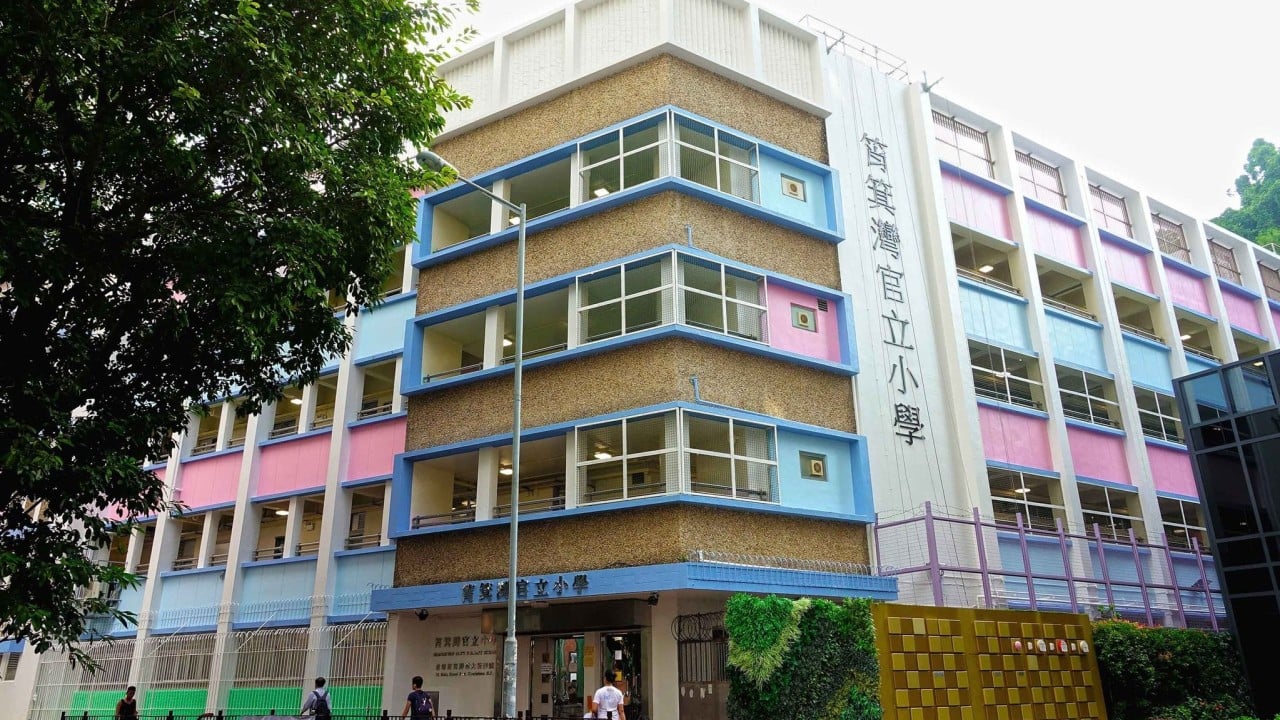
The headlines are bleeding with "tragedies" about 15 schools facing the axe because they can’t find enough six-year-olds to fill a classroom. The narrative is predictable: falling birth rates are a "crisis," the Education Bureau is "heartless," and the "survival" of these institutions is the only metric of success.
It is a lie.
The closure of these schools isn't a sign of decay; it is a long-overdue market correction for a bloated, inefficient system that has prioritized institutional legacy over student performance for decades. We are witnessing the creative destruction of a stagnant monopoly. If a school cannot attract 16 students in a city of seven million, it isn't a victim of demographics. It is a failed product.
The Myth of the Sacred School Building
We treat schools like religious cathedrals rather than service providers. When a restaurant fails because the food is mediocre and the customers moved away, we call it business. When a school fails because parents—who are more informed and mobile than ever—refuse to send their children there, we call it a social catastrophe.
Let’s be blunt: most of the schools currently on the "hit list" are relics. They are often under-resourced, stuck in pedagogical ruts, and located in aging districts that no longer serve young families. Forcing the government to subsidize a school with five students in a primary one class is not "supporting education." It is burning taxpayer money to maintain a ghost ship.
I have seen the internal audits of struggling districts. The overhead costs per student in a dying school are nearly triple that of a high-performing, high-capacity school. We are effectively penalizing successful schools by diverting funds to keep the lights on in empty hallways.
The Quality over Quantity Delusion
The "lazy consensus" among teachers' unions and concerned parents is that smaller classes automatically equal better education. They argue that falling numbers are an opportunity to shift to "small-class teaching" across the board.
This is a fundamental misunderstanding of educational economics. Small classes only work when they are a choice backed by elite resources, not a default state caused by a lack of interest. A class of eight students in a crumbling school with demoralized staff and zero extracurricular budget is not a boutique learning experience. It is a vacuum.
In a hyper-competitive city like Hong Kong, "face" and peer effects matter. Students need a critical mass of peers to develop social skills, engage in team sports, and participate in a diverse range of elective subjects. When you "save" a school with critically low enrollment, you are actually trapping those remaining students in a sub-par environment where they lack the stimulus of a vibrant student body.
The Elephant in the Room: The "Bunker" Mentality
Why are parents fleeing? The competitor articles blame the "emigration wave" and the "low birth rate." Those are convenient scapegoats. They ignore the fact that while local schools are "risking closure," international schools and high-tier Direct Subsidy Scheme (DSS) schools have waiting lists that stretch into the 2030s.
The market is speaking. Parents aren't just leaving Hong Kong; they are leaving the local system.
The Education Bureau’s Primary One Admission (POA) system is a bureaucratic nightmare that treats children like lottery tickets. Parents are tired of the "bunker" mentality—the obsession with rote memorization and the refusal to adapt to a globalized job market. The schools currently facing closure are largely those that failed to differentiate themselves. They offered a generic, 1990s-style education in a 2026 world.
If these schools were providing undeniable value, parents would travel across districts to get in. They don’t. They are choosing to exit.
The Real Cost of "Saving" Everyone
Every dollar spent propping up a failing school is a dollar stolen from:
- Integrating AI and advanced tech into high-performing schools.
- Increasing salaries for the city's top 10% of teachers to prevent them from moving to Singapore or London.
- Mental health resources for students who are actually in the system.
By refusing to let the weak institutions die, the government is dragging down the median quality of the entire sector. We are subsidizing failure and taxing success.
Imagine a scenario where we took the real estate from these 15 closing schools and converted them into specialized vocational hubs, high-tech incubators, or youth housing. The social utility would skyrocket. Instead, the "status quo" warriors want to keep them as half-empty monuments to a demographic that no longer exists.
The Professionalism of Brutality
There is a cold comfort in the Education Bureau’s "Primary One ban" for schools that fail to hit the 16-student threshold. It is the only honest policy they have. It sets a hard floor. It tells administrators: "Innovate or evaporate."
The outcry from the Professional Teachers’ Union (and its remnants) focuses on job security. Let’s address that. Teaching is a profession, not a guaranteed-for-life civil service perk. If there are fewer students, we need fewer teachers. This is the time to purge the "quiet quitters" and the "dead wood" from the system. The remaining pool of educators should be the best of the best, compensated accordingly because the per-student funding can finally be concentrated where it matters.
Stop Asking "How Do We Save the Schools?"
The question is a trap. It assumes the schools deserve to be saved.
Instead, we should be asking: "How do we leverage this contraction to build a world-class elite system for the children who remain?"
- Consolidate and Conquer: Merge the struggling schools. Don't leave three schools at 30% capacity; create one school at 90% capacity with triple the facilities.
- Deregulate the Curriculum: Let the schools that are "at risk" throw out the rulebook. Give them total autonomy to experiment with Montessori, project-based learning, or tech-first models. If they're going to die anyway, let them be laboratories.
- Asset Liquidation: If a school is in a prime location and the enrollment is dead, sell the land. Use the billions in revenue to create an endowment for student scholarships.
The "death" of these 15 schools is the birth of a leaner, more competitive Hong Kong education sector. The only people crying about it are the ones who benefit from the inefficiency.
Parents aren't mourning. They've already moved on. It’s time the bureaucrats and journalists did the same.
Stop romanticizing the brick and mortar. Start focusing on the brainpower. If the building has to go so the system can live, pull the trigger.
Don't mourn the closure. Demand more of them.