A fluorescent bulb hums overhead. It is a sterile, buzzing sound that fills the gaps when the room falls quiet. On the table sits a plastic toy truck with a broken wheel and a stack of standard government intake forms. Outside, the Texas heat translates into a heavy, shimmering haze, but inside this facility, the air conditioning is cranked down to a shivering chill.
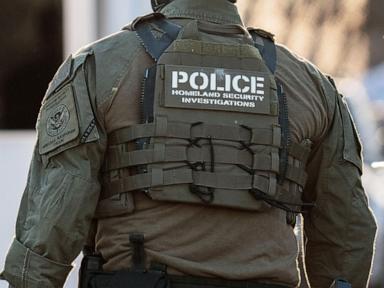
A government official steps into the room. He holds a heavy clipboard. He represents the Department of Homeland Security, an agency whose very name evokes armor, borders, and enforcement. But today, his directive is different. He is here to look at the children.
When we talk about immigration policy, the conversation quickly hardens into concrete statistics, budget battles, and political theater. We hear numbers in the tens of thousands. We see aerial footage of crowded holding sectors. But the human mind cannot genuinely process a statistic. We cannot empathize with a spreadsheet. To truly understand what happens when the machinery of a nation meets the vulnerability of a child, you have to look at the quiet spaces where they actually intersect.
Recently, high-ranking officials from the Department of Homeland Security began a series of unannounced site visits to various non-profit shelters and community organizations. These are the places tasked with housing and caring for unaccompanied migrant minors—children who crossed the border without a parent or legal guardian. The official goal of these visits was accountability and oversight. The real story, however, lies in the vast, complicated web of human anxiety and hope that these visits exposed.
The Weight of the Welcome
To understand the stakes, consider a hypothetical teenager named Mateu. He is fourteen years old. He arrived at the southern border after traveling twelve hundred miles from Honduras, mostly on foot and on the roofs of freight trains. He has not seen his mother in three years. His shoes are held together by gray duct tape, and he speaks a dialect of Maya that few people in the United States understand.
When Mateu crosses into the United States, he enters a massive legal and bureaucratic pipeline. By law, DHS must process him quickly and transfer him to the Office of Refugee Resettlement, which falls under the Department of Health and Human Services. From there, he is placed in a temporary shelter run by a non-profit organization until a sponsor—usually a relative already living in the country—can be vetted and approved.
This is where the tension thickens.
The non-profit shelters operate in a permanent state of triage. They are caught between two conflicting realities. On one hand, they are humanitarian sanctuaries trying to provide therapy, hot meals, and a sense of safety to deeply traumatized children. On the other hand, they are federally funded facilities bound by rigid government regulations, subject to sudden inspections by the very enforcement agency that detained the children in the first place.
When a black SUV pulls up to a community shelter and officials in windbreakers step out, the atmosphere changes instantly. For the administrators, it is a test of compliance. Are the beds spaced correctly? Is the food up to nutritional standards? Are the background checks for the staff immaculate? But for the children watching from the windows, those jackets carry a different meaning. They represent the force that can deport them, the authority that holds their futures in a manila folder.
Inside the Rooms Where Policy Meets Flesh
During these recent visits, officials walked through dormitory-style bedrooms and classrooms where kids learn basic English. They checked the intake logs. They looked at the recreational yards.
The advocates running these centers face a delicate balancing act. They must show the government that every dollar is accounted for and every safety protocol is followed, all while trying to keep the environment from feeling like a prison. It is incredibly difficult to make a facility with locked doors and mandated schedules feel like a place of healing.
Think about the physical reality of these spaces. The walls are often painted in soft, pastel colors—blues and pale greens meant to soothe nervous systems shattered by violence and long journeys. Yet, the windows are reinforced. The schedules are absolute. Breakfast is at seven. Education is at nine. Recreation is at noon. Case management happens in small, windowless offices where a social worker tries to coax a life story out of a child who has learned that revealing too much can be dangerous.
The DHS visits were prompted by mounting pressure from watchdog groups and lawmakers who expressed grave concerns over the duration of time children spend in custody. The longer a child remains in a institutional setting, the deeper the psychological wounds become. Sleep regressions, severe anxiety, and profound depression are common. The officials with the clipboards are looking for efficiency, trying to find ways to accelerate the release of these minors to safe sponsors. But efficiency in a bureaucracy often moves like molasses.
Consider what happens next when a bottleneck occurs. If the vetting process for a sponsor takes three months instead of three weeks, the shelter becomes crowded. The staff becomes stretched thin. The individual attention a frightened ten-year-old needs evaporates into the logistical chaos of managing a shifting population of hundreds of kids.
The Invisible Network Holding the System Together
The true burden of this crisis does not fall on the bureaucrats in Washington, nor does it fall entirely on the federal budget. It falls on the local staff—the caseworkers, the cooks, the night-shift monitors who earn barely above minimum wage.
These individuals are the shock absorbers of the immigration system. They are the ones who sit on the edge of a bed at three o'clock in the morning when a child wakes up screaming from a nightmare about the cartel members who chased them across a river. They are the ones who have to explain, using gestures and broken translation apps, that a court date has been delayed and they will have to wait another month to see if they can stay.
The DHS inspections are meant to ensure these workers are doing their jobs correctly. But a checklist cannot measure the emotional toll of this work. It cannot audit the secondary trauma carried by a caseworker who hears five stories of sexual assault and extortion before lunchtime.
When the government leaves, the reports are filed. They note whether the fire extinguishers were up to date and if the staff-to-child ratio was maintained. These metrics are clean. They fit into neat columns on a spreadsheet. They give the illusion of control over a situation that is fundamentally chaotic and deeply unpredictable.
The Core Defect in the Machine
We have spent decades treating immigration as a logistical problem to be solved with better enforcement, faster processing, and more secure facilities. We look at the influx of unaccompanied minors as a wave to be managed or a crisis to be contained.
But the real problem lies elsewhere. The system is designed around the concept of a border—a line in the dirt that separates "us" from "them." A child, however, does not understand geopolitics. A child understands fear, hunger, and the instinctual need to find a parent. When we try to fit a human humanitarian crisis into a rigid law enforcement framework, the gears inevitably grind and crush the very people they are supposed to protect.
The DHS officials who conducted these visits undoubtedly saw the strain on the faces of the children and the exhaustion in the eyes of the shelter workers. They saw the limitations of their own policies written on the walls of these temporary homes. No matter how clean the facility, no matter how nutritious the food, a shelter is still a cage of time, a waiting room where childhood is put on hold.
The sun begins to drop below the horizon outside the facility, casting long, dark shadows across the recreational yard. The official packs up his clipboard, slides his pen into his pocket, and walks toward the exit. His report will be synthesized into a briefing. It will be read by policy advisors and perhaps mentioned in a congressional hearing.
Behind him, in the dining hall, a small boy sits at a long table. He ignores the plate of food in front of him. Instead, he uses his finger to trace a pattern in the condensation on a cup of ice water, drawing a tiny, fragile shape that looks exactly like a house.