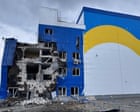
A Russian drone just slammed into a building used for storing spent nuclear fuel near the Chornobyl Exclusion Zone. Let's not sugarcoat it. This isn't just another "unfortunate" incident in a long war. It's a direct hit on a facility that handles some of the most dangerous materials on the planet. While officials say the radiation levels are currently stable, the margin for error in these situations is basically zero.
The strike happened at 02:10 local time on June 7, 2026. A Shahed-type drone, specifically a Geran-2, hit the container reception building at the Centralised Spent Fuel Storage Facility (CSFSF). This site is about 15 kilometers (9 miles) from the infamous Chornobyl power plant itself. The blast partially destroyed the facade and windows of the reception building. It even damaged a nearby administrative building used by the International Atomic Energy Agency (IAEA).
The close call we can't ignore
You might hear that no fuel was inside the specific building that got hit. That's true. But it's also incredibly lucky. Rafael Grossi, the IAEA Director General, pointed out that massive amounts of nuclear material were being held in storage just meters away from the impact site. This wasn't a stray bullet hitting a shed in the woods. It was a precision-capable loitering munition hitting a critical part of a nuclear waste hub.
Ukraine's state nuclear operator, Energoatom, confirmed a fire broke out over about 40 square meters. Emergency crews put it out within an hour. No one died. No one was even injured this time. But the message from Moscow is loud and clear. They're willing to play chicken with a second Chornobyl disaster to keep Kyiv on edge.
Why this facility is a prime target
The CSFSF isn't just some old Soviet relic. It’s a modern facility designed to store spent fuel from Ukraine's operating nuclear plants. For years, Ukraine sent its spent fuel to Russia for processing, paying hundreds of millions of dollars for the privilege. Building this site near Chornobyl was a massive move toward energy independence.
By hitting this specific spot, Russia isn't just threatening a leak. They're trying to break the backbone of Ukraine's nuclear logistics. If you can't safely move or store spent fuel, you eventually have to throttle your reactors. That means the lights go out in Kyiv. It's a calculated, cold-blooded strategy of nuclear blackmail.
Tracking the pattern of escalation
This wasn't an isolated "oops" moment. Look at the timeline.
- February 2025: A drone hit the New Safe Confinement arch over the ruined Reactor 4.
- May 2024: Multiple strikes near the Zaporizhzhia plant.
- June 2026: Direct hit on the spent fuel reception building.
The SSU (Security Service of Ukraine) has already classified this latest strike as a war crime. They've opened a criminal investigation under Article 438 of the Ukrainian Criminal Code. They found pieces of the Geran-2 drone at the site. It’s hard to claim "electronic warfare interference" when the drone flies straight into the reception bay of a nuclear site.
The global response is too slow
The IAEA Board of Governors is meeting in Vienna on June 8 to talk about this. Honestly, talking doesn't feel like enough anymore. President Zelenskyy called the attack "extremely vile" and pointed out that Russia's "sky-high arrogance" has reached a new peak. The "Seven Indispensable Pillars" of nuclear safety that the IAEA keeps talking about? Russia hasn't just ignored them—they've used them as a target list.
If you're wondering what happens next, watch the radiation sensors. You can check real-time maps provided by SaveEcoBot or the Ukrainian state emergency services. Don't wait for a press release if things go south.
What you should do now
Stop treating these headlines as background noise. The risk of a radiological incident in Europe is higher now than it has been in decades.
- Monitor the data: Follow the IAEA's official updates, but cross-reference them with local Ukrainian reports from Energoatom.
- Support nuclear safety initiatives: Organizations like the EBRD have been funding the safety structures at Chornobyl for years. They need the political backing to demand demilitarized zones around these sites.
- Pressure for sanctions: The global nuclear industry still has ties to Russia's Rosatom. This strike proves that those ties aren't just a business conflict—they're a security risk.
We got lucky on June 7. The wind didn't carry a plume of dust, and the drone missed the actual storage casks by a few dozen meters. Next time, we might not be writing about "normal radiation levels."