A bipedal machine just outran Usain Bolt. Think about that for a second. At the second annual World Humanoid Robot Games inside Beijing's National Speed Skating Oval, a Tiangong Ultra humanoid robot torched the 100-meter dash in a blistering 8.86 seconds.
For context, Bolt set the human world record at 9.58 seconds back in 2009. This metal runner left that legendary mark in the dust. But before you panic about an impending machine uprising, look closer at what actually happened on the track.
The Chaotic Reality Behind the Speed
Crossing the finish line first is one thing. Surviving the momentum is entirely another.
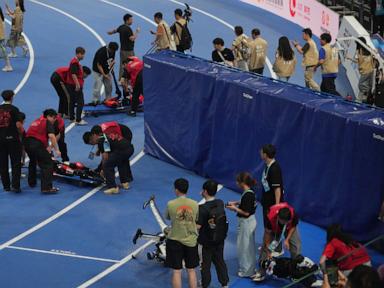
When the Tiangong Ultra clocked its 8.86-second feat, it didn't casually coast to a stop. It slammed straight into a padded barrier, tipping over with sparks flying from its waist. Another competitor, Honor's Lightning, also smashed past the old human record earlier in the week, only to collapse violently and require a stretcher.
This isn't sleek science fiction where shiny droids glide gracefully to a halt. It's raw, messy engineering. Building a bipedal machine that can move at high velocity exposes brutal physics challenges.
Dennis Hong, a robotics professor at UCLA, noted that as speed climbs, variables like actuator performance, ground impact, and mechanical robustness multiply in difficulty. You can program a motor to spin fast. Getting a two-legged metal frame to handle the shock of deceleration without tearing itself apart is a nightmare.
Beyond the Track Hype
Why are researchers pushing robots to sprint anyway? Nobody needs a delivery bot that can clear the 100-meter dash faster than an Olympic athlete.
The real breakthrough here involves control systems and dynamic balance. The massive jump from last year's winning time of 21.50 seconds down to sub-nine seconds shows how fast hardware and artificial intelligence algorithms are converging.
China has positioned humanoid development as a core strategic industrial push, pouring capital and engineering talent into the sector. We saw the commercial pulse of this movement when market valuations for participating firms skyrocketed during recent public debuts.
Yet, the true test of these machines isn't a straight line on a running track. It's how they handle chaos.
What Comes Next for Bipedal Machines
The games feature over two thousand robots tackling everything from table tennis to emergency response scenarios. While running fast grabs headlines, household and industrial utility require entirely different skill sets.
A robot that wins a sprint but catches fire or crashes into a wall upon stopping isn't ready to fold your laundry or work safely beside humans in a warehouse. Engineers must now pivot from chasing raw speed records to mastering safe deceleration, obstacle navigation, and instant error recovery.
Keep your eyes on the practical validation phase. The real industrial revolution won't be won by the fastest runner, but by the machine that knows how to stop.