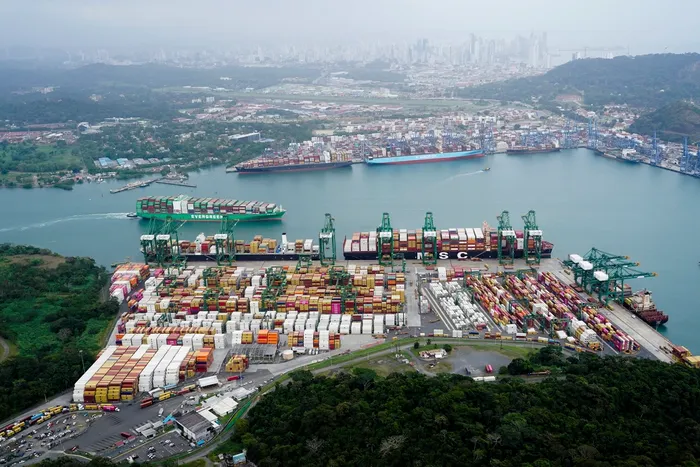
The maritime world is witnessing a calculated squeeze. Over the past year, Chinese port authorities have intensified their scrutiny of Panama-flagged vessels with a precision that suggests something far more deliberate than routine safety inspections. This isn't just about rusty hulls or faulty lifeboats. It is a geopolitical maneuver masquerading as maritime regulation. Washington is watching the numbers climb, recognizing that the "Open Registry" system—the backbone of global trade—is being weaponized in a quiet war over supply chain dominance and territorial signaling.
Panama maintains the world's largest shipping registry. Because of this, it is the primary target for any nation looking to disrupt the flow of goods without firing a shot. By flagging an unusual volume of these ships for "deficiencies" and forcing them into lengthy detentions at mainland Chinese terminals, Beijing is effectively holding the global logistics chain hostage. This creates a ripple effect. One ship stuck in Ningbo-Zhoushan for ten days might seem like a minor clerical hurdle, but when scaled across dozens of vessels, it creates a systemic delay that raises insurance premiums, increases fuel costs, and forces Western commodity buyers to rethink their reliance on certain routes.
The Mechanics of Port State Control as a Weapon
To understand why this is happening, you have to look at how Port State Control (PSC) works. Under international law, a port has the right to inspect foreign-flagged ships to ensure they meet safety and environmental standards. It is a necessary safeguard. However, the line between a legitimate safety check and a bureaucratic ambush is thin.
Chinese inspectors have become notoriously granular. They are no longer just checking the main engine or the fire suppression systems. They are citing vessels for minor documentation errors, slight discrepancies in record books, or specific technical configurations that were ignored for years. When a ship is "detained," it cannot leave the berth. The clock starts ticking, and the costs for the shipowner begin to spiral.
We are seeing a pattern where Panama-flagged ships, particularly those owned by entities with ties to the United States or its regional allies, are subjected to much higher inspection rates than domestic Chinese vessels or those flagged in "friendly" jurisdictions. This isn't a coincidence. It is a stress test of the Panamanian registry's resolve and a direct message to the maritime industry: your choice of flag carries a political price.
Why Panama is the Target
Panama’s "Flag of Convenience" model has always been a target for criticism, but its sheer scale makes it indispensable. It provides the legal framework for nearly 8,000 vessels. For Beijing, the Panamanian registry represents a bottleneck. If China can make the Panama flag "high risk" in the eyes of international shipping regulators, they can force a mass migration of shipowners to other registries—perhaps those more aligned with Chinese interests or those less susceptible to Western sanctions.
There is also the matter of the Panama Canal. The relationship between Panama City and Beijing has been a source of anxiety in the Pentagon for years. By squeezing Panamanian shipping in the East, China gains leverage in negotiations regarding canal infrastructure and port concessions in Central America. It is a classic pincer movement. They are using their status as the world’s largest exporter to dictate terms to the nation that controls the world’s most important shortcut.
The US State Department and the Coast Guard have begun tracking these detentions with increased frequency. They see the data points forming a clear trend line. When a specific flag is targeted, it undermines the neutrality of the high seas. If the world accepts that a port state can use safety inspections to punish a flag state for its diplomatic leanings, the entire foundation of the United Nations Convention on the Law of the Sea (UNCLOS) begins to crumble.
The Economic Fallout for Global Trade
The cost of a detention is staggering. A standard Capesize bulk carrier can cost upwards of $30,000 a day to operate, even when sitting idle. When you add in port fees, the cost of emergency repairs demanded by inspectors, and the potential for lost contracts due to missed delivery windows, a single "safety" stop can wipe out the profit margin for an entire voyage.
Hidden Costs of Regulatory Targeting
- Insurance Spikes: As Panama-flagged ships get hit with more detentions, their risk profile increases. Underwriters at Lloyd’s of London and other major hubs take note. This leads to higher premiums for any ship flying the sovereign stars and stripes of Panama.
- Logistical Rerouting: Savvy operators are already starting to build "China delays" into their scheduling. This means fewer ships are available for other routes, tightening the global supply of tonnage and driving up freight rates for everyone.
- The "Blacklist" Threat: If the detention rate stays high, the Panama flag risks being moved to the "Grey" or "Black" list of various regional shipping MoUs (Memorandums of Understanding). Once a flag is blacklisted, its ships are targeted even more aggressively worldwide.
This is the goal. By forcing Panama into a corner, China is attempting to reorganize the hierarchy of the merchant marine. They want to prove that Western-aligned maritime structures are no longer the safest or most efficient option for moving cargo.
The US Response and the Limits of Diplomacy
Washington finds itself in a difficult position. The US does not have direct control over the Panamanian registry, but it relies on it for the vast majority of its imported goods. If the US pushes back too hard, it risks escalating a trade war into a full-blown maritime blockade. If it does nothing, it allows China to set a precedent for "regulatory sovereignty" that could eventually be used against any nation that crosses Beijing.
The current strategy involves "monitoring and reporting." It’s a passive approach that does little to help the captain of a bulk carrier currently being interrogated by PSC officers in Shanghai. There is a growing call among maritime analysts for a more reciprocal approach. If Chinese inspectors continue to target Panama-flagged vessels without clear cause, the US and its allies could theoretically begin a "safety blitz" of Chinese-flagged ships in Western ports.
However, this is a dangerous game. Global trade depends on the assumption that safety is the only factor in port inspections. Once that mask is removed, every port becomes a political gatekeeper.
Tactical Shifts for Shipowners
Shipowners are not waiting for a diplomatic solution. Many are already exploring "re-flagging" options. Moving a fleet from Panama to the Marshall Islands or Liberia is a massive administrative headache, but it is becoming a necessary defensive move for companies that frequent Chinese ports.
We are also seeing a shift in how contracts are written. "China Risk" clauses are appearing in charter parties, attempting to shift the financial burden of these detentions from the owner to the charterer. It is a sign of a market that no longer trusts the rules of the road.
The data doesn't lie. The surge in detentions is not a result of a sudden decline in Panamanian maintenance standards. It is the result of a deliberate policy shift in Beijing. They have identified a vulnerability in the way the West moves its goods, and they are pressing down on it with all the weight of their massive port infrastructure.
The Surveillance Component
Beyond the economic impact, there is a darker side to these detentions. When a ship is held in a Chinese port, the authorities have unfettered access to the vessel. They can inspect the bridge electronics, the communication systems, and the crew's documentation. In an era where "smart ships" are increasingly connected to global networks, a detention provides a perfect window for cyber-espionage or the mapping of sensitive logistical software.
The US intelligence community is particularly concerned about what is being extracted during these long "safety" inspections. A ship's data logs can reveal a wealth of information about trade patterns, fuel efficiencies, and even the specific encryption used for secure communications. By detaining these ships, China isn't just stopping the flow of iron ore or grain; they are harvesting data.
Fragility of the Open Registry System
The current crisis exposes the inherent flaw in the Flag of Convenience system. While it offers tax advantages and flexible labor laws, it provides very little in the way of sovereign protection. When a US-flagged ship is harassed, the US Navy and State Department have a direct mandate to intervene. When a Panama-flagged ship—owned by a Greek company and managed from Singapore—is harassed in a Chinese port, the lines of responsibility are blurred.
Panama lacks the naval power to protect its fleet. It lacks the economic weight to retaliate against China. It is a flag of convenience, and right now, it is becoming very inconvenient.
This power vacuum is exactly what Beijing is exploiting. They know that no one is coming to the rescue of these vessels. The shipowners are on their own, forced to navigate a maze of shifting regulations and mounting fines. It is a slow-motion siege of the merchant marine.
Preparing for the Next Phase
The maritime industry needs to wake up to the reality that the period of neutral trade is over. The "monitoring" by the US is merely a prelude to a more fractured maritime environment. We are moving toward a world where your flag is your uniform, and if you're wearing the wrong one in the wrong port, you're going to pay.
Shipowners must now conduct a rigorous audit of their fleet's exposure to Chinese ports. This isn't just about checking the engine room; it's about checking the political temperature. If you are flying a Panama flag and your route takes you through the South China Sea, you are a target. You need to have legal teams on standby in Shanghai, and you need to have your documentation so perfect that even the most motivated inspector can't find a foothold.
The era of the "safe" open registry is ending. In its place is a landscape where every stop is a potential confrontation. The surge in detentions is the first shot in a long, bureaucratic war for the soul of the shipping industry. Those who fail to adapt to this new reality will find their assets rotting at a pier in northern China while the rest of the world moves on.
Check your manifests. Check your flag. The rules have changed, and the inspectors are already at the gangway.