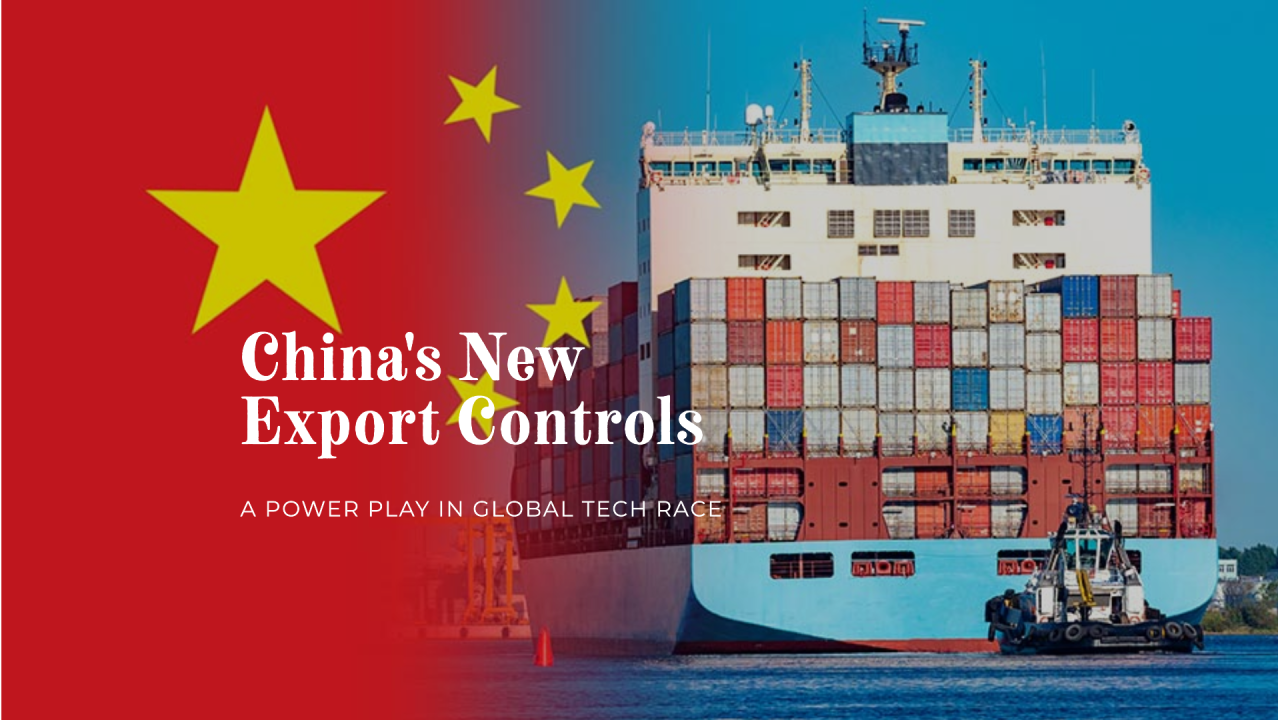
China is no longer playing defense. For years, the global trade narrative focused on how the U.S. used "chokepoints" to stall Chinese tech. But the script flipped. Beijing is now leaning hard into its own version of economic warfare, and it's doing so with a precision that should make every supply chain manager lose sleep.
It's not just about "tit-for-tat" anymore. It's about total leverage. If you look at the recent explosion of export controls coming out of Beijing, you'll see a clear pattern: China is identifying every single material and technology where the West is vulnerable and turning the key.
The New Strategic Playbook
Beijing’s Ministry of Commerce (MOFCOM) isn’t just adding a few items to a list. They're rebuilding the entire legal architecture of how China interacts with the world. By early 2026, we’ve seen the "Dual-Use Items and Technology Import/Export License Management Catalogue" balloon in size. We're talking about hundreds of new items—ranging from rare earth alloys like holmium and erbium to the specialized machinery needed to make high-end lithium batteries.
Think about that for a second. It's one thing to control the minerals; it's another to control the machines that process them. Beijing is doing both.
Why the Licensing Game is a Trap
Don't be fooled by the word "control." It sounds less scary than "ban," but in practice, it’s often the same thing. When China requires an export license for gallium or germanium—minerals essential for semiconductors and night-vision goggles—they aren't saying "no." They're saying "maybe."
And that "maybe" comes with a price. To get a license, foreign companies often have to disclose exactly who the end-user is and what the product will be used for. In many cases, especially for U.S. firms, those licenses simply never arrive. By August 2025, reports showed that Beijing had cleared less than 15% of rare earth license requests from European firms. It’s a slow-motion strangulation.
The Antimony Squeeze
Take antimony as a case study. It’s a boring-sounding metal used in everything from flame retardants to ammunition. China dominates the market. When they slapped export controls on it in late 2024, the price didn’t just tick up—it soared by 200%. If you're a defense contractor in the West trying to build missiles, you don't just need a "alternative." You need a miracle, because the infrastructure to mine and refine this stuff elsewhere doesn't exist yet.
Breaking the Extraterritorial Barrier
One of the most aggressive shifts we've seen lately is China’s use of "extraterritorial reach." This is a direct page out of the American playbook. Historically, China only controlled what left its borders. Now, under the 2024 and 2026 regulations, they’re claiming the right to control Chinese-origin items even after they’ve left the country.
If a company in Vietnam uses Chinese-origin rare earth magnets to build a motor, and then tries to sell that motor to a "restricted" entity in the U.S., China now claims the right to block it. This puts global manufacturers in an impossible spot. Do you follow Chinese law or Western sanctions? You can’t do both.
The Targeted Hit on Japan
In early 2026, Beijing took a massive swing at Japanese entities. MOFCOM issued "Announcements 11 and 12," placing several Japanese firms on a "Control List" and a "Watch List." This wasn't a random move. It was a surgical strike against firms involved in dual-use technologies that Japan had previously restricted at the behest of Washington.
The message is loud and clear: if you join the U.S. in "containing" China, your access to the Chinese supply chain evaporates.
Diversification is Harder Than it Looks
You'll hear politicians talk about "de-risking" or "de-coupling" like it’s a weekend project. It’s not. China currently refines 19 out of 20 critical strategic minerals. Even when the West finds a new mine in Australia or the U.S., they often end up shipping the raw ore to China for processing because that’s where the specialized equipment is.
Beijing knows this. That’s why their 2025 and 2026 controls specifically target processing technology. They aren't just hoarding the ingredients; they’re hiding the recipe and locking the kitchen.
What You Should Do Now
If you’re running a business that relies on high-tech components or specialized materials, the "wait and see" approach is dead. You need to act.
- Audit Your Tier 2 and Tier 3 Suppliers: You might think you're buying from a "safe" country, but where do their raw materials come from? If there's Chinese-origin content, you're at risk of an extraterritorial block.
- Stockpile Strategically: It sounds like 1970s advice, but when license approvals drop below 15%, "Just-In-Time" manufacturing becomes "Just-In-Case" hoarding.
- Invest in Processing, Not Just Mining: Finding a lithium deposit is easy. Building a refinery that doesn't rely on Chinese-patented tech is the real challenge.
- Watch the "Watch List": If your suppliers or partners end up on MOFCOM’s list, you need a transition plan immediately.
The "trade truce" we saw in mid-2025 was a band-aid, not a cure. China has realized that its dominance in the middle of the supply chain is a more potent weapon than any tariff. They’re flexing that muscle now, and they aren't going to stop until they’ve rewritten the rules of global commerce.