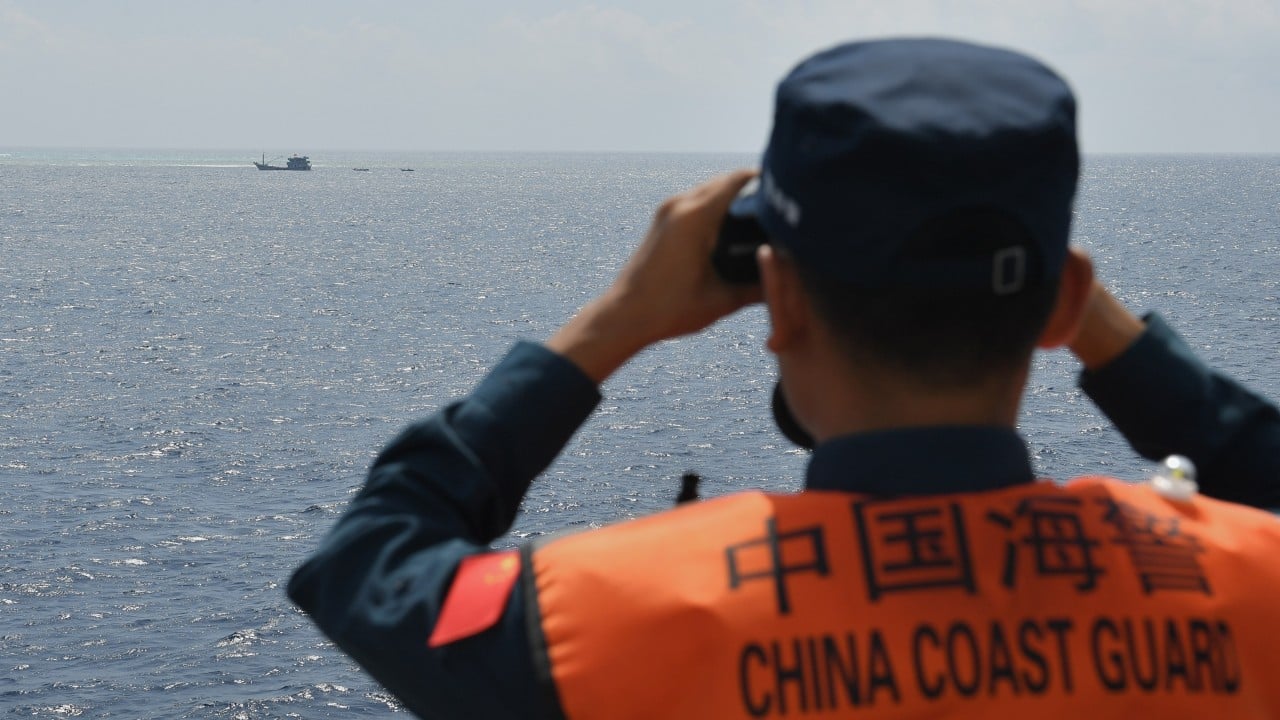
If you look past the standard headlines about military jets and diplomatic posturing, a much quieter operation is changing the map of East Asia. Beijing is using coast guard cutters, research vessels, and administrative announcements to slowly choke off the concept of a median line.
Recent tracking data shows that mainland Chinese government vessel sightings around Taiwan hit record numbers for the third consecutive month. It is not a random spike. It is a calculated strategy to normalize administrative control over waters that Taipei and its allies consider international.
The Numbers Behind the Shift
Taiwan's defense ministry monitors everything coming across the water. The data tells a stark story. In June, sightings of mainland coast guard and survey ships surged. July broke that record. August surpassed both.
Before this summer, monthly totals rarely cleared fifty official vessels. Now, triple-digit counts are becoming the standard baseline. Vessels like the research ship Tongji regularly shadow sensitive zones near the Penghu islands and waters east of Taiwan. They are mapping the seabed, testing response times, and daring Taipei to make a move that could trigger a wider escalation.
Why now? The timing connects directly to regional diplomacy. Following Tokyo and Manila's maritime boundary talks earlier in the year, Beijing expanded its footprint eastward to counter any coordinated regional pushback. China wants to signal that it holds veto power over any cooperative security architecture in the region.
Gray Zone Tactics and Psychological Pressure
You will often hear analysts call these "gray zone" tactics. That is a clean, academic term for a messy reality. It means using non-military or quasi-military ships to exhaust an opponent without firing a single shot.
Think of it as death by a thousand cuts. Coast guard ships behave like law enforcement agencies, boarding and inspecting vessels or declaring sudden "traffic controls" under the guise of typhoon safety. These moves are designed to create facts on the water. When Beijing announces safety controls or conducts joint drills with foreign navies east of Taiwan, it is trying to project a sense of absolute jurisdiction.
Taiwan's coast guard has to respond every single time. They dispatch patrol boats, broadcast warnings, and shadow these ships closely. It drains fuel, strains crews, and forces Taipei into a perpetual state of high alert.
The Global Supply Chain Vulnerability
Most people treat these maritime standoffs as regional disputes that only matter to diplomats. That is a dangerous mistake. The Taiwan Strait and the surrounding shipping lanes form the literal spine of global high-tech manufacturing.
Billions of dollars in semiconductors, raw materials, and commercial cargo pass through these waters every week. When Beijing attempts to assert traffic authority or stages live-fire exercises, commercial shippers get nervous. Insurance rates spike. Routes get adjusted. Any disruption here ripples instantly through factories in Detroit, Seoul, and Frankfurt.
Beijing knows this. By normalizing a heavy coast guard presence, China is building a permanent checkpoint in one of the world's busiest commercial bottlenecks. They want the international community to accept their patrols as the new cost of doing business in the region.
What Happens Next on the Water
Taipei is adjusting its defense posture to deal with this sustained pressure. Recent military drills, such as the expanded Han Kuang exercises, have shifted away from traditional beach-landing scenarios to focus heavily on counter-blockade measures, infrastructure protection, and maintaining digital networks during a maritime crisis.
Yet, intercepting research vessels and issuing verbal warnings does not stop the underlying trend. The goal for Beijing is persistence. By keeping ships permanently stationed just outside territorial waters, they are betting that the rest of the world will eventually grow tired of watching and simply accept the new boundaries.
If you want to track where this is heading, stop watching the sky for fighter jets. Watch the slow-moving hulls of the survey ships cutting across the strait. They are drawing the real borders of tomorrow.