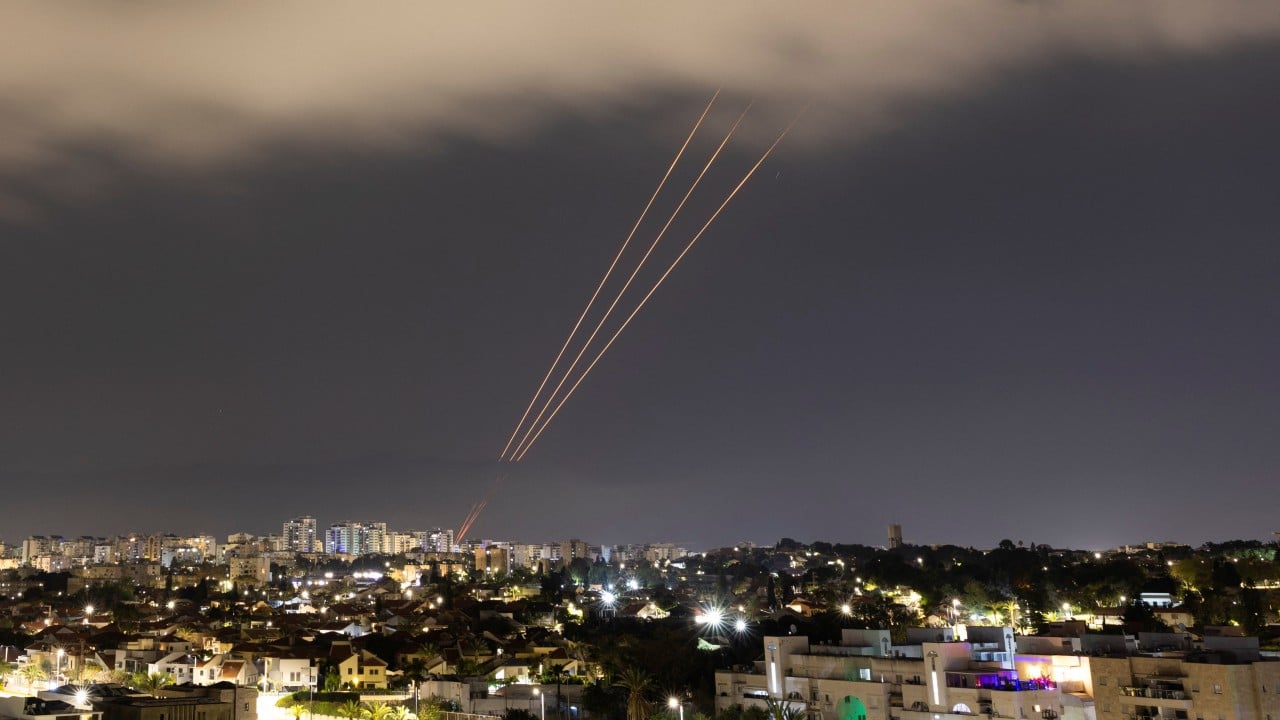
The recent exchange of fire between Iran, Israel, and the United States wasn't just a regional flare-up. For the People's Liberation Army (PLA) in Beijing, it was a high-stakes laboratory experiment. While most of the world focused on the political fallout of the February 2026 strikes, Chinese generals were staring at the radar data. They weren't looking at who won the day; they were looking at how many expensive American interceptors it took to stop a single, relatively cheap Iranian drone.
The math for a potential conflict in the Taiwan Strait is shifting. China has watched the "Golden Dome"—the integration of Iron Dome, Arrow 3, and U.S. THAAD systems—struggle under the weight of sustained, multi-wave salvos. If Iran's aging arsenal can force the U.S. to pull Patriot batteries from South Korea just to keep up with consumption, what happens when the PLA unleashes a force ten times that size?
The Interception Gap and the Cost of Survival
The most striking lesson from the 2026 Iran conflict is the "interceptor exhaustion" problem. During the opening salvos, the U.S. and Israel achieved high hit rates, often cited at 92%. But that number is a trap. It ignores the sheer volume of munitions required to maintain it.
We've seen reports of the U.S. Army losing a high-value THAAD radar to a simple drone strike. That's a nightmare scenario for any military. In the Middle East, the U.S. had to rapidly deplete its stockpiles of SM-3 and PAC-3 interceptors. These aren't things you can just pick up at a hardware store. They take years to build. China's takeaway? You don't need to be more advanced than the U.S. to win; you just need to be more persistent.
The PLA's strategy has always leaned on "saturation." By watching Iran, they've confirmed that even the most sophisticated defense "orchestra" has a breaking point. When Iran used cluster-warhead ballistic missiles, it forced a brutal choice on Israeli commanders: fire the $3 million Arrow 3 interceptor or risk submunitions hitting the ground. Most of the time, the budget won, and the bomblets fell.
Real World Testing for Chinese Tech
It's no secret that Iran’s defense tech has a heavy Chinese influence. From the YLC-8B anti-stealth radars to the HQ-9B surface-to-air systems, Tehran is basically a showroom for Beijing’s hardware. The 2026 war gave China something money can't buy: live data on how their sensors perform against F-35s and F-22s.
- Stealth Tracking: Iranian crews, likely using Chinese-provided electronic warfare suites, claimed to track American stealth signatures. Whether they could get a "weapons-grade" lock is debatable, but the data is already back in Beijing.
- Navigation Resilience: Iran's reliance on the BeiDou satellite system instead of GPS allowed their missiles to maintain precision despite Western jamming efforts.
- The Drone Democratization: Cheap, mass-produced UAVs served as "interceptor sponges," forcing the defense to waste million-dollar missiles on $20,000 plastic planes.
This isn't just about Iran's survival. It's a dress rehearsal. China is looking at the "radar signature" of every U.S. asset in the region. They're seeing exactly how long it takes for a Patriot battery to reload and where the supply chain kinks are.
The Taiwan Strait Connection
If you think this is just about the Middle East, you're missing the bigger picture. The Ministry of National Defence in Taipei is already scrambling. They’ve seen how quickly U.S. stockpiles vanish. They’re now pivoting toward "low-cost interception" because they realize they can't afford to play the PAC-3 game forever.
Beijing’s 2027 deadline for being "invasion-ready" feels a lot more real after watching the U.S. pull assets from the Pacific to plug holes in the Gulf. The PLA has noted that the U.S. cannot fight two high-intensity missile wars at once. Every SM-3 fired over Tehran is one less available for a carrier strike group in the Philippine Sea.
Why Precision Might Be Overrated
For decades, Western military thought focused on "quality over quantity." We wanted the smartest missile that hits the center of the target. Iran proved that "good enough" quantity creates its own quality. When you launch 400 missiles, it doesn't matter if 350 get intercepted. The 50 that get through—or the fact that the defender is now out of ammo—is what changes the war.
China is currently accelerating the production of solid-fuel precursors and "intelligentized" weaponry. They aren't trying to match the U.S. in a fair fight. They're trying to make the cost of defense so high that the U.S. decides the price isn't worth it.
If you’re tracking global security, keep your eyes on the replenishment rates. The next few months will show if the U.S. can actually rebuild the "Eroding Shield" faster than China can help Iran (and itself) build more spears.
Check the latest defense procurement reports for the PAC-3 and SM-3 production numbers. That's where the real war is being won or lost right now.