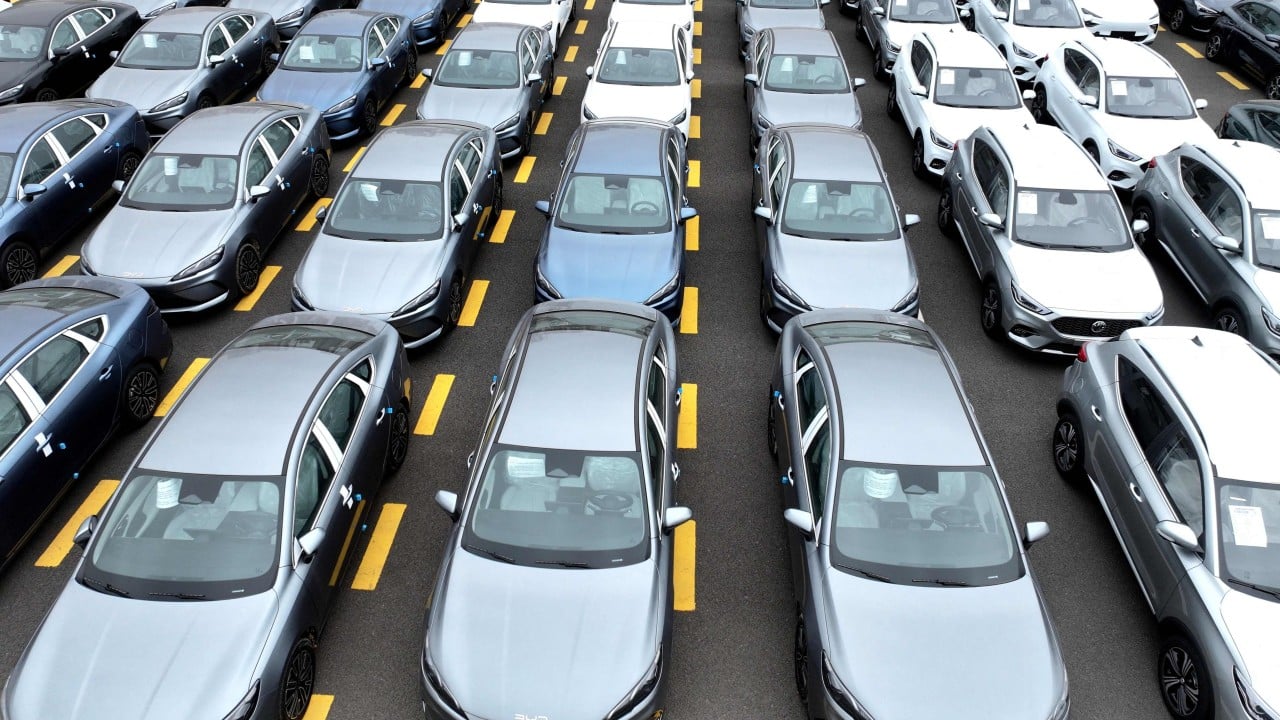
A Showroom in Hangzhou
The smell of fresh paint and cheap coffee hung thick in the air.
Inside a sprawling dealership on the outskirts of Hangzhou, Li Wei stood in front of a sleek, pearl-white electric sedan. The car practically glowed under the recessed LED spotlights. For months, Li—a thirty-two-year-old mid-level accountant—had tracked the price of this specific model. He knew its battery range down to the single kilometer. He knew every trim option by heart.
More than anything, he knew the government discount.
For years, buying an electric vehicle in China felt less like making a major consumer purchase and more like receiving a gift from the state. You walked into a showroom, selected your vehicle, and watched thousands of dollars in purchase tax simply vanish from the invoice. The government picked up the tab. Local municipalities threw in free license plates—a prize worth nearly ten thousand dollars on its own in congested megacities like Shanghai or Beijing.
Li signed the paperwork, drove his new car off the lot, and felt like he had outsmarted the system.
He hadn't outsmarted anything. He was simply playing his assigned role in the greatest industrial experiment of the twenty-first century.
Between 2009 and 2023, the Chinese government poured an estimated $230 billion into its electric vehicle sector. It wasn't just cash thrown at factory doors; it was a carefully calibrated engine of tax breaks, consumer rebates, research grants, and subsidized charging infrastructure.
It worked. Oh, how it worked.
China built an industrial titan from scratch. It bypassed the century-old mastery of Western internal combustion engines entirely, forging a domestic supply chain so dominant that it forced global giants in Detroit, Stuttgart, and Tokyo into a defensive panic. Millions of drivers like Li traded gasoline for kilowatts.
Then came the turn of the key.
The Arithmetic of Intervention
Industrial subsidies are a high-stakes deal. They exist to spark a market where none exists, to pull a costly future into an affordable present. But they are never meant to last forever. They are supposed to be training wheels.
Eventually, the state expects the child to ride the bicycle on its own.
China began rolling back its national purchase subsidies for electric vehicles, gradually tapering off the direct cash incentives that once drove massive sales volumes. The full purchase tax exemption, once a permanent fixture of the EV buying experience, shifted toward a capped system. The training wheels didn't just come off; they were stripped down in stages.
What happens when the government stops paying you to buy a car?
The immediate result was a stark, cold bath of economic reality.
When artificial demand subsides, raw demand is all that remains. Small, marginal EV startups—companies that existed primarily to harvest government subsidies while churning out mediocre vehicles—began to collapse like paper lanterns in a rainstorm. Hundreds of brands evaporated. Factory floors went quiet. Dust settled over inventory lots filled with unsold, unloved cars.
For the survivors, the pressure shifted instantly from production capacity to cutthroat survival.
Consider the math confronting an executive at a mid-tier EV maker in Shenzhen. Without the government tax breaks absorbing a sizable chunk of the retail price, your car suddenly costs five to fifteen percent more to the average family overnight. You have two options. You can raise your prices to protect your razor-thin profit margins and watch your sales volume plummet. Or you can swallow the cost difference yourself, slashing your margins to the bone just to keep the assembly lines moving.
Most chose the second option. They had no choice.
A brutal, desperate price war broke out across the entire country. Market leaders cut prices. Struggling players matched them, losing money on every single chassis that rolled off the line. Survival meant scaling up at all costs, hoping to achieve enough volume to push down manufacturing expenses before the cash reserves bled out entirely.
It was a bloodbath masked as a bargain basement for consumers.
The Human Ripple
Walk through the supply chain and you see the true weight of policy shifts.
An hour south of Ningbo, in a factory that smells of machine oil and hot aluminum, a plant manager named Chen oversees the production of battery casings. Chen doesn't read macroeconomic policy whitepapers from Beijing every morning, but he feels their impact in his bones.
When the tax breaks began to sunset, Chen's order book didn't just shrink; it became volatile. Automobile manufacturers began demanding immediate ten percent cost reductions on components.
"If we can't lower our bill of materials," an executive from a major automaker told him flatly during a tense meeting, "we will source our aluminum housings elsewhere by next Tuesday."
Chen had to rework his entire operation. Shift workers saw their overtime hours cut. Suppliers of raw lithium and nickel felt the crunch downstream. The entire ecosystem, built on the assumption of infinite state-backed growth, had to relearn how to breathe underwater.
This is the hidden cost of ending an industrial honeymoon.
Subsidies do not merely build industries; they distort them. They create an environment where hyper-competition is fueled by cheap money rather than sustainable margins. When the tax credits clear away, the underlying structural reality is revealed.
It turns out that building millions of electric cars is relatively easy when the state pays for the momentum. Building a profitable electric car company without state assistance is terrifyingly hard.
Beyond the Border
When domestic markets tighten and tax exemptions dry up, a crowded room starts searching for an exit door.
For Chinese EV makers, that exit door was the rest of the world.
Over-capacity at home pushed a wave of hyper-efficient, highly affordable Chinese electric vehicles toward foreign ports. Ships laden with thousands of cars began arriving in Europe, Southeast Asia, and South America. These weren't the flimsy, unreliable models of two decades past. These were polished, feature-heavy, competitively priced machines born from the crucible of the world's most aggressive domestic market.
The arrival of these vehicles sent shockwaves through international capital cities.
European regulators looked at the surge of imported vehicles and saw the ghost of the subsidy system that created them. They launched investigations into state support, raising tariffs to shield their own legacy automakers from a flood of low-cost competition. North American markets shuttered their doors behind massive trade barriers.
The tax breaks that started in local government offices in Beijing had officially become a flashpoint for global trade policy.
Yet the core paradox remains.
Western nations want a rapid transition to clean energy. They need affordable electric vehicles on their roads to meet ambitious carbon reduction goals. But the very cars that could accelerate that transition most effectively were forged in an ecosystem built on the exact subsidies foreign trade officials condemn.
We want the destination, but we recoil at the road taken to get there.
The Ground Beneath the Wheels
Back in Hangzhou, Li Wei drives his pearl-white sedan through the evening drizzle. The digital dashboard hums silently, projecting a neon-blue route onto the windshield.
His car is brilliant. It is fast, silent, and packed with software that makes traditional vehicles feel like relics of a steam-powered age. From a purely technical standpoint, the policy was a triumph. China set out to lead the world in next-generation transportation, and it achieved that goal in less than a generation.
But as Li pulls into a fast-charging station, he notices something new.
The station is crowded, but the atmosphere isn't triumphant. Drivers sit in their quiet, glowing cabins, staring at their smartphones while electricity flows into their batteries. They talk about energy rates during peak hours. They talk about resale values—which have cratered across the industry as newer, cheaper models flood the secondary market every six months.
The romance of the revolution has faded into the mundane mechanics of maintenance, depreciation, and market forces.
The tax breaks served their purpose. They built the factories, trained the engineers, convinced the public, and laid millions of miles of infrastructure. They transformed an ambitious dream into heavy steel and lithium-ion cells.
Now, the market must learn to stand without its scaffold.
Some car companies will vanish before the year ends, swallowed by debt or folded into larger competitors. The profit margins will remain razor-thin. The global trade spats will escalate.
The state built the machine and set it in motion. Now, it is stepping back to see if the engine can run on its own fuel.
Li unplugged the charging cable with a heavy click, settled back into the driver's seat, and merged into the dense, endless stream of taillights heading into the city.