The coffee in the thermos had gone lukewarm hours ago, tasting faintly of metallic grit and stale desperation.
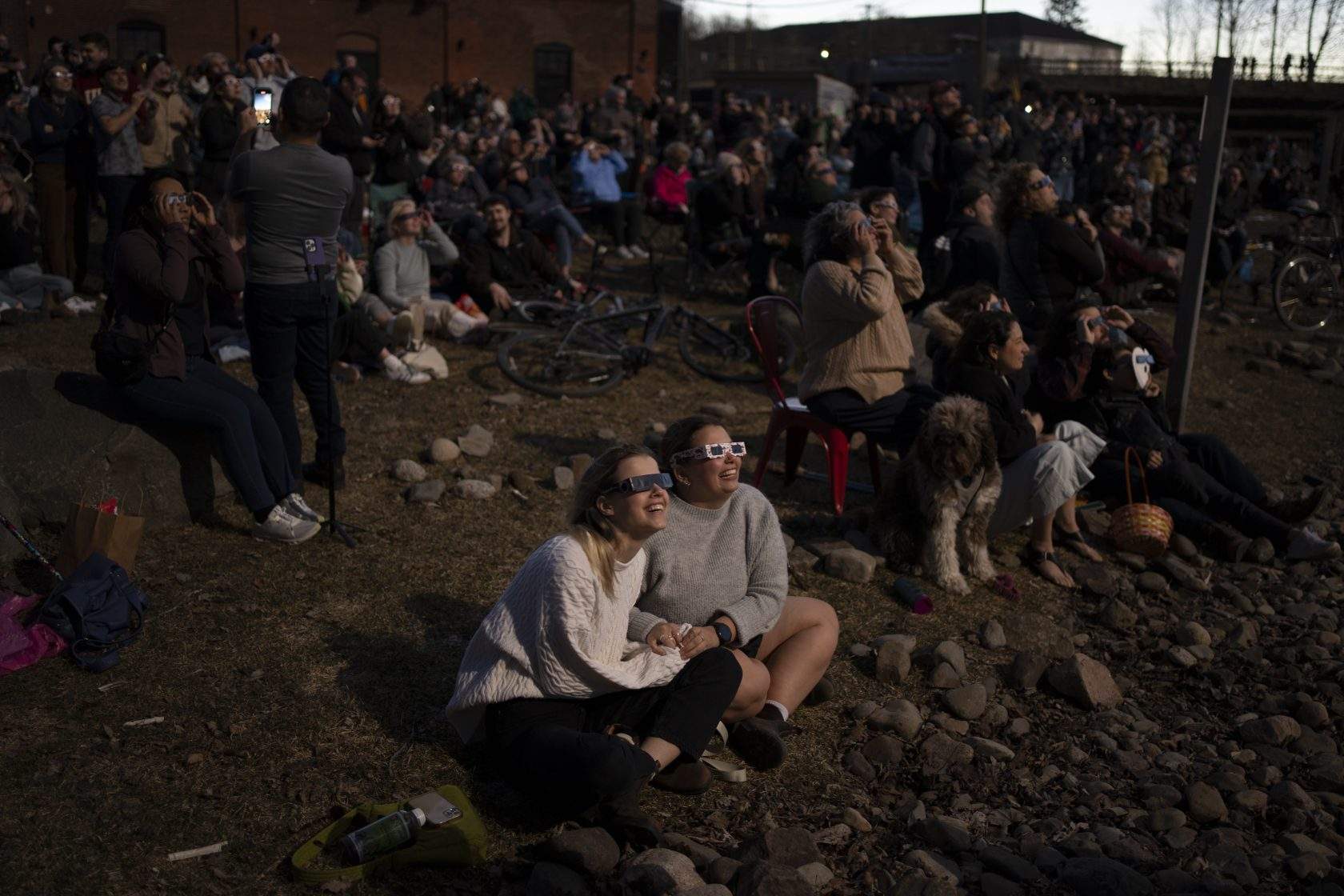
Around me, three hundred people sat on collapsible nylon chairs in the middle of an unforgiving Nevada desert flat, staring at a patch of sky that looked entirely empty. Nobody spoke. The silence was heavy, thick with the shared anxiety of anyone who has driven five hundred miles on pure faith and a five-day-old weather forecast.
We were waiting for the moon to take a bite out of the sun.
Most people treat the cosmos like a television schedule. They assume eclipses and meteor showers are neat little calendar alerts, arriving with the predictable precision of a commuter train. They check an app, step onto their back porch at the appointed hour, glance upward for thirty seconds, and wonder why the universe failed to entertain them. They feel cheated. They feel like the universe oversold its product.
They missed the point entirely.
The raw math of astronomy is cold. It deals in orbital planes, nodes, radians, and atmospheric refraction. But the human experience of looking up is fundamentally emotional. It is about vulnerability. It is about standing beneath an indifferent sky and realizing, with a sudden punch to the gut, how remarkably small you are.
To give yourself the actual odds—the real, fighting chance to see a solar eclipse or a meteor storm—you have to stop acting like a tourist and start acting like a strategist.
The Anatomy of a Missed Moment
Consider Mark. (This is a hypothetical scenario, though it has played out a thousand times on every continent.) Mark spent six hundred dollars on plane tickets, booked a roadside motel with a view of a concrete parking lot, and trusted a generic weather widget on his phone. When the day of the annular eclipse arrived, a stubborn, localized layer of high-altitude cirrus clouds sat directly over his motel.
From orbit, the eclipse was majestic. From Mark's exact coordinates, it looked like a dirty grey smudge against a milk-white sky.
Mark blamed luck. He shouldn't have.
Weather is not a static backdrop; it is a living, breathing fluid dynamics problem. When you stay fixed in one spot because your hotel reservation is non-refundable, you are gambling against a house that holds every card. The seasoned observer—the person who has dust in their car vents and grease under their fingernails from chasing shadows for decades—operates differently.
They look at micro-climates. They look at topography. They watch the jet stream the way a poker player watches a rival's hands.
If you want to see a total solar eclipse or catch the peak of the Perseids without cloud cover ruining your life, you need to understand the concept of cloud climatology. NASA and various meteorological agencies publish historical satellite data showing cloud cover percentages for specific coordinates over decades. That is your baseline. That is your map of the minefield.
Never trust a single forecast three days out. Instead, look at the satellite loops twenty-four hours before totality. Be mobile. Rent a car with unlimited mileage. Be willing to drive two hours north at midnight because the predictive models show a clearing trend over the salt flats.
The Physics of Wonder
Let us talk about meteors for a moment, because human beings have a terrible habit of looking at the wrong time in the wrong direction.
Most backyard astronomers make the fatal mistake of staring directly at the radiant point of a meteor shower—say, the constellation Perseus during August. It feels intuitive. If the shooting stars come from Perseus, look at Perseus.
It is also the fastest way to see almost nothing.
Think of it like standing directly beneath a firehose. If you look straight up at the nozzle, the water streams blur past you so quickly your eyes cannot register their trajectory. But if you look forty-five degrees away, across the arc of the spray, the streaks stretch out into long, elegant signatures of light.
Meteors are debris left behind by ancient comets, tiny grains of cosmic sand—mostly no larger than a pea—slamming into our upper atmosphere at forty miles per second. At that speed, kinetic energy instantly vaporizes the particle, ionizing the air around it into a glowing tube of plasma.
When you see a Perseid streak across the dark, you are watching the ghost of Comet Swift-Tuttle, a traveler that last passed through the inner solar system in 1992 and will not return until 2126. That photon hitting your retina left a piece of debris that was orbiting the sun before the Roman Empire fell.
And yet, most people ruin this experience by turning on their cell phones to check Instagram.
Your eyes require roughly twenty to thirty minutes to achieve full dark adaptation. Every time you flip open your screen to check the time or snap a blurry, useless photo of a dark sky, you reset your biological night vision. You are voluntarily blinding yourself to the faint, wispy trails of the cosmos in exchange for a digital artifact that looks like a black square with a single white pixel.
Put the phone away. Leave it in the glovebox. Let your pupils dilate until the Milky Way arches across the sky like a spilled container of salt.
The Logistics of the Chase
Preparation for a major celestial event is equal parts science and paranoia.
First, your horizon matters. If you are standing in a mountain valley or a dense forest, you have cut your available sky in half. For solar eclipses, you need a clear, unobstructed view of the sun's path throughout the entire duration of the event. For meteor showers, you need an open dome. Find a pasture, a desert wash, or an elevated ridge line.
Second, check your gear—and keep it minimal. You do not need a three-thousand-dollar telescope to enjoy a meteor shower or an eclipse. In fact, telescopes are a liability when trying to track wide-angle events. A good pair of seven-by-fifty binoculars and a reclining lawn chair will outperform a complex optical rig every single time because they keep you flexible.
Third, respect the equipment you do use for the sun. Staring at a partial solar eclipse without certified ISO 12312-2 safety filters is a fast track to permanent retinal damage. Do not trust sunglasses, smoked glass, or exposed photographic film. If you wouldn't stare directly at an electric welding arc, don't stare at the sun.
Yet, the moment totality arrives—the exact, breathtaking seconds when the moon completely masks the solar disk—the filters must come off.
Nothing in nature prepares you for totality.
The temperature plummets twenty degrees in sixty seconds. Crickets start chirping, confused by the sudden, eerie twilight. The horizon erupts into a 360-degree sunset, glowing a strange, bruised copper. And there, hanging in the black velvet void of the daytime sky, is the corona—a ghostly, ethereal crown of white plasma streaming millions of miles into space.
People scream. People cry. Grown men drop to their knees in the dirt. I watched a stoic geologist from Houston weep uncontrollably into his camera strap during the 2017 eclipse, entirely forgetting to take a single photograph.
He didn't care about the photos anymore. He had seen the machinery of the solar system laid bare.
The Return to Earth
Back on that Nevada desert flat, the temperature dropped. The wind died down to an absolute hush.
The sun shrank into a thin, agonizingly bright crescent, and then—with a suddenness that felt almost violent—the moon slid into place. The diamond ring effect flashed for a fraction of a second, blindingly bright, and then vanished.
The corona bloomed.
For two minutes and fourty-two seconds, the universe stopped keeping score. We weren't tourists with itineraries or consumers with expectations. We were primates staring up at the fire, stunned by the sheer, improbable luck of existing on a wet rock that happens to orbit at the exact distance required to turn day into night.
When the light returned, flooding back across the desert floor with harsh, uncompromising brilliance, nobody rushed for their cars. We sat there in the warming air, blinking against the glare, waiting for our eyes to adjust to the ordinary world again.
The thermos was cold. The drive home would be eight hours of bumper-to-bumper traffic on a two-lane highway.
It was worth every single mile.