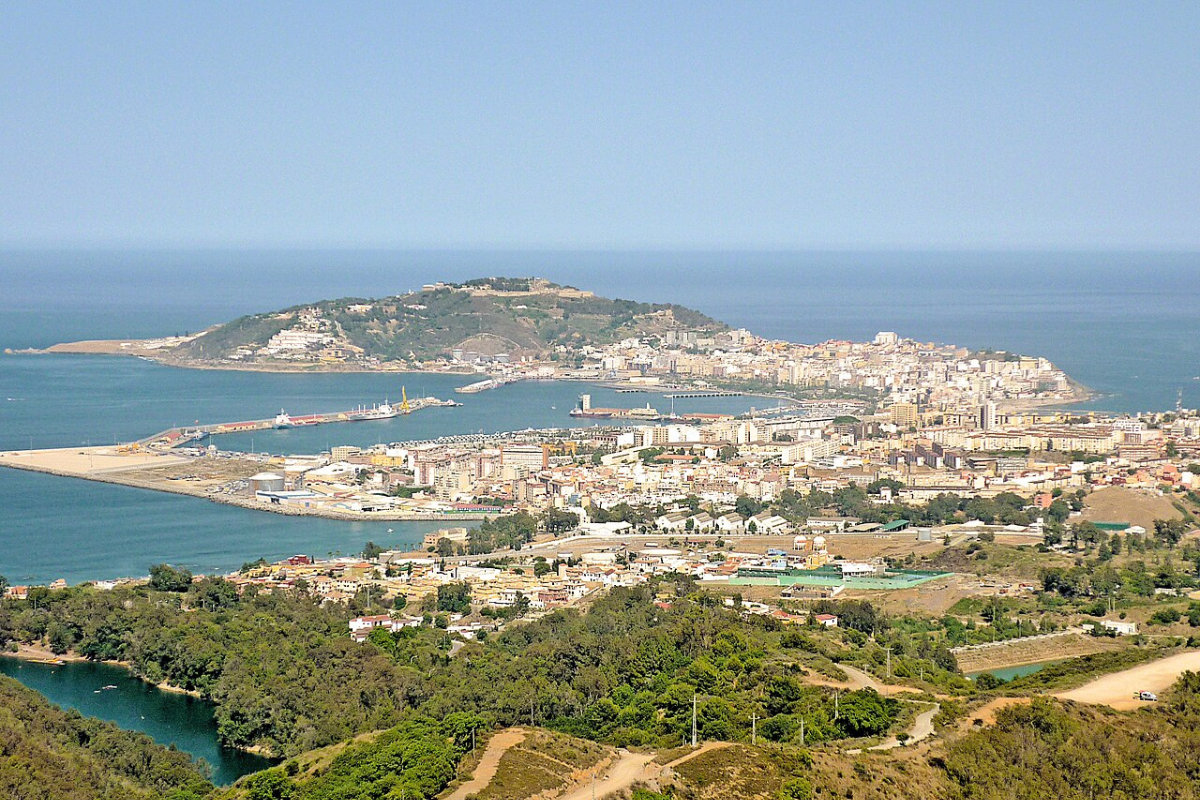
Residents of Spain's Ceuta shut down a far-right anti-migrant rally on a Tuesday that felt heavier than most. The enclave, squeezed against the northern coast of Africa, is a pressure cooker. History here is written in concrete, barbed wire, and the daily friction of two continents rubbing raw against each other. When political actors from the European mainland tried to import imported culture wars into this delicate borderland, they miscalculated the local pulse. Ceuta is not a television studio. It is a home to a multi-ethnic population that knows the cost of division better than any political strategist in Madrid.
The Geography of Tension
To understand why the mobilization failed, one must look at the map. Ceuta shares a heavily fortified land border with Morocco. It measures just about nineteen square kilometers. Space is tight. Neighbors live shoulder-to-shoulder across cultural and religious lines that would fracture other cities.
For decades, the economy relied on cross-border trade, petty commerce, and the unique legal status that tied it to the Spanish mainland. When diplomatic rows between Spain and Morocco choke that border, everyone suffers. People here do not view migration through the sterile lens of cable news broadcasts. They see it through the faces of schoolmates, local merchants, and overworked public servants.
Mainland politicians often treat border enclaves as ideological weapons. They fly in for afternoon rallies, wave flags, shout slogans about cultural invasion, and catch the evening flight back to safety. They do not have to live with the aftermath. The residents of Ceuta do. When outsiders attempt to stoke ethnic panic in a community built on a fragile coexistence, the reaction is rarely passive compliance. It is defensive rejection.
Anatomy of a Failed Mobilization
The far-right faction arrived with high-end cameras and scripted talking points. They expected a sympathetic crowd or at least a passive audience too intimidated to respond. Instead, they found neighborhood residents blocking the streets.
It was not an organized riot. It was a spontaneous eruption of local civic defense. Shopkeepers stepped out from behind counters. Youth leagues abandoned practice fields. Grandmothers stood on street corners shaking their heads. The message was simple. Take your manufactured outrage somewhere else.
Why the Rhetoric Misses the Mark in the Enclave
Mainland nationalist rhetoric relies on abstraction. It paints migration as an invisible flood threatening a monolithic culture. In Ceuta, that abstraction collapses under the weight of daily reality.
- Interdependence: Families are mixed. Neighborhoods are integrated.
- Economic Reality: The local economy requires stability, not constant friction with its southern neighbor.
- Fatigue: Residents are tired of being used as props for national political campaigns.
When outsiders arrive preaching division, they threaten the delicate social contract that keeps the enclave functioning. The counter-protest was less about partisan politics and more about protecting local peace. People understand that stability is fragile. They guard it fiercely.
The Broader European Horizon
Ceuta is a canary in the coal mine for European border politics. As populist movements across the continent double down on anti-immigrant messaging to secure media cycles, local communities are increasingly pushing back against outside interference.
The strategy of importing regional friction to score national points is losing its efficacy where the stakes are highest. When theory meets lived reality, theory usually loses. The politicians who organized the rally wanted a spectacle. They wanted images of confrontation to feed their digital fundraising apparatus.
Instead, they got something far more damaging to their brand. They got quiet, resolute defiance from ordinary citizens who simply refused to play their game.
The border remains complex. The socioeconomic challenges facing the enclave are real and demand serious policy solutions, not theatrical posturing from visiting agitators. But for one afternoon, the people of Ceuta drew a hard line in the dust of their own streets. They reminded the political class that communities living on the edge of Europe possess their own agency, their own voice, and a deep-seated immunity to imported hatred.
The trucks packed up and left before dusk. The streets cleared. Life resumed its normal, complicated rhythm under the Mediterranean sun.