The cobblestones of Santo Domingo hill are cold at seven in the morning, even in July. They smell of spilled beer, stale sweat, and the faint, metallic tang of anticipation. If you stand there barefoot, you can feel the history vibrating through the granite. It is a terrifying, intoxicating place to wait.
A hundred years ago, a young man with a bruised ego and a notebook stood in these exact streets. Ernest Hemingway was not yet the mythic figure of American literature; he was just a journalist running away from the ghosts of the First World War. What he found in Pamplona was not just a festival. He found a mirror for a broken generation. When he published The Sun Also Rises in 1926, he took a localized, deeply traditional Spanish fiesta and injected it straight into the global bloodstream.
Today, the world still bleeds from that injection.
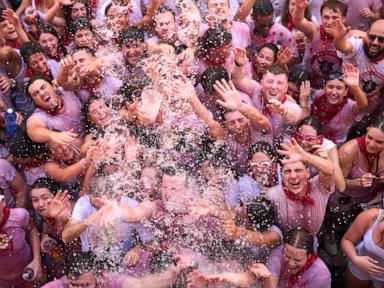
Every year, thousands of people descend upon this small city in Navarre. They wear the uniform: white trousers, white shirt, a red scarf knotted at the neck. They look like a sea of matching paper dolls from above. But look closer at their faces. You will see the universal architecture of human fear. Some are shivering despite the summer heat. Others are laughing too loudly, a hysterical defense mechanism against the realization of what they are about to do.
They are waiting for the rocket.
The Chemistry of the Chute
Let us look at a hypothetical runner. We will call him Thomas. Thomas is twenty-six, works in a climate-controlled office in London, and has never faced anything more dangerous than a delayed commuter train. He is here because he felt numb. Modern life is a series of padded corners. We have engineered discomfort out of our existence, and in doing so, we have accidentally suffocated something vital.
Thomas wants to feel alive. He is about to get his wish.
At exactly eight o'clock, a firecracker tears through the morning air. The corral gates swing open. Six fighting bulls, each weighing over half a ton, are unleashed onto the narrow, barricaded streets.
To understand the mechanics of the run, you must understand the animals. These are not docile pasture cows. They are toros bravos, bred for centuries for aggression, speed, and muscle. When they run in a pack, they are a single, terrifying engine of momentum. A human being cannot outrun them. The top speed of a fighting bull can clock in at thirty-five miles per hour. The fastest human sprint ever recorded tops out around twenty-seven.
Do the math. You do not run from the bulls. You run with them, for a few fleeting, desperate seconds, before letting them pass.
Consider what happens next: the crowd ahead of Thomas begins to buckle. The sound hits first. It is not a roar; it is a rhythmic, heavy thudding, like a massive heart beating against the stone earth. Slip. Someone falls. The crowd trips over the fallen body. A human pile-up forms at the curve of Mercaderes street.
This is the infamous Callejón, a bottleneck where the street narrows before opening into the bullring. It is a trap. If a bull separates from the pack here, it loses its sense of direction and begins to charge at anything that moves.
The Phantom of the Lost Generation
When Hemingway walked these streets, Europe was suffering from a collective case of whiplash. The Great War had obliterated the old certainties. Honor, duty, and progress felt like cruel jokes to the men who had survived the mud of the Somme.
The author recognized that the bull run was a manifestation of the tragedy they had just escaped. It was an arena where death was not an anonymous piece of shrapnel falling from the sky, but a physical, majestic adversary with horns. You could face it. You could look it in the eye. If you survived, it meant something.
The book changed everything. Before 1926, the San Fermín festival was a regional affair. Afterward, it became a pilgrimage site for foreigners seeking an antidote to their own disillusionment.
But the romanticism of the written word often obscures the brutal reality of the asphalt. Since records began in 1910, sixteen people have lost their lives on this route. The last was Daniel Jimeno Romero in 2009, a twenty-seven-year-old Spaniard who was gored in the neck. Dozens more are hospitalized every single year, their bodies torn open by horn wounds or crushed beneath the stampede of panicked tourists.
The local Basques view the fiesta with a mix of reverence and exhaustion. For them, it is an ancestral rite, a test of courage handed down through grandfathers and fathers. They know how to read the bulls. They know when to step aside. The foreigners, fueled by sangria and Hemingway-induced bravado, often lack that intuition. They treat the street like a theme park ride, forgetting that the safety bars do not exist.
The Morning After the Century
A hundred years have passed since that first publication. The world is unrecognizable compared to the one Hemingway inhabited. We are connected, digitized, and monitored. Yet, the allure of Pamplona remains completely intact.
Why?
Because the fundamental human condition has not changed. We still carry that internal emptiness, that quiet anxiety that whispers we are missing out on the raw texture of existence. We watch life through screens, liking and sharing the adventures of others while our own joints grow stiff.
Thomas survives his run. He is clipped by the flank of a black bull named Volador, thrown against a wooden barrier, and left with a bruise that will turn purple and green over the next three weeks. But when he stands up in the dust of the bullring, gasping for air, his heart hammering against his ribs like a trapped bird, he feels a profound, shattering clarity. The sky is bluer. The air tastes sweeter. He is acutely, undeniably alive.
The festival will continue long after this centenary has passed. The crowds will still gather at Santo Domingo, the red scarves will still flutter, and the rockets will still tear the morning open. We do not run to escape death. We run to remind ourselves that we haven't died yet.
The red scarf is tied tightly around the throat, a reminder of the martyr San Fermín who was decapitated for his faith. But as you watch the white shirts blur into the distance, you realize it looks less like a symbol of faith and more like a fresh, permanent scar across the neck of time.