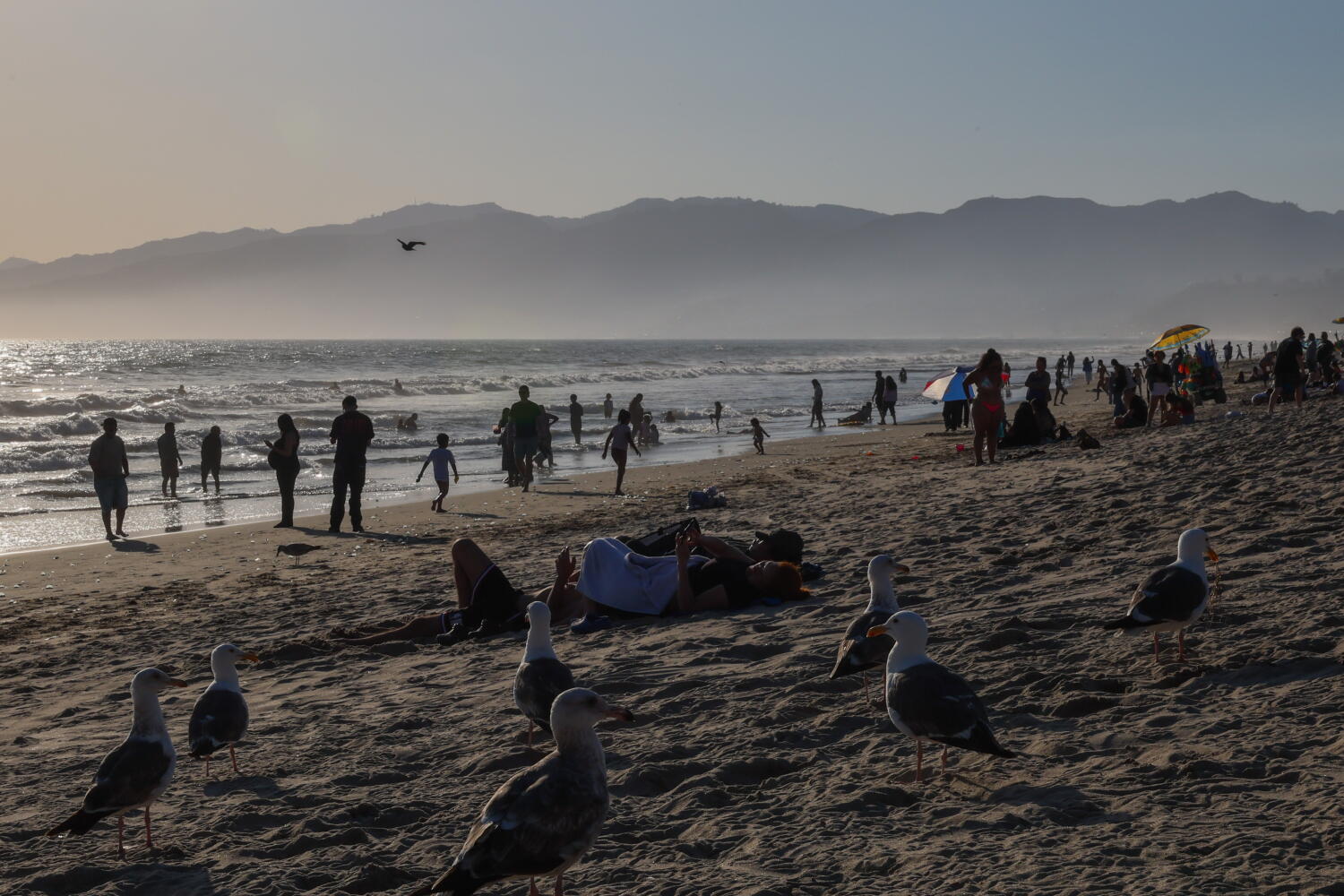
For half a century, California has treated its 1,200-mile coastline like a sacred relic under glass. When mainstream columnists pop champagne because a late-night legislative carve-out gets shelved, they cheer for a system that keeps housing scarce, prices astronomical, and working-class families banished to the inland baking deserts. The lazy consensus of the environmental establishment treats any friction against the California Coastal Act as a corrupt backroom gambit. They miss the macro reality. The real scandal is not an eleventh-hour exemption for a Frank Gehry-designed project in Santa Monica; the scandal is that California's suffocating regulatory veto power has morphed into a machine for generational exclusion.
I have watched developers flush tens of millions of dollars down the drain trying to navigate environmental reviews that stretch longer than the average corporate lifecycle. We need to define terms precisely. Environmental protection, when decoupled from basic common-sense economics, stops being stewardship and starts being zoning apartheid. The California Coastal Commission operates less like an arbiter of ecological health and more like a medieval guild protecting property values for entrenched coastal homeowners under the green banner of conservation.
Look at the mechanics of how this plays out. Imagine a scenario where a municipality wants to build high-density, mixed-income housing near transit corridors adjacent to the ocean, replacing a dilapidated parking lot. Under current rules, every litigious neighborhood group with a clipboard and an axe to grind can weaponize the Coastal Act to delay, shrink, or kill the project entirely. They call it protecting the coast. The data tells a different story. It protects ocean views for millionaires while forcing nurses, teachers, and firefighters to commute three hours each way from Palmdale.
The political class panics the moment a donor's name gets attached to a procedural fast-track because it exposes the rot at the core of the state's planning apparatus. If a project makes sense, it shouldn't take an act of God or a backdoor political favor to build it. The fact that an exemption was even necessary proves the baseline rules are broken. When a regulatory framework is so structurally dysfunctional that basic urban infill requires special legislative dispensation, the framework itself is what needs dismantling, not just the occasional workaround.
Critics point to the 50-year legacy of the Coastal Act as an unmitigated triumph. Sure, it stopped some egregious sprawl along the bluffs. But let us look at the trade-offs honestly. What did stopping that development buy us? It bought a median home price north of one million dollars along the coast and an unprecedented youth exodus to Texas and Nevada. Environmental purity without housing affordability is just a country club membership subsidized by state police power.
Economists at the Terner Center for Housing Innovation at UC Berkeley have repeatedly demonstrated that housing undersupply is the primary driver of California's poverty crisis. Yet the coastal elite treats cement trucks like an invasive species while rolling out the red tape carpet for endless environmental impact reports that achieve nothing except enriching land-use lawyers. The Coastal Commission boasts about protecting wetlands, which is vital, but weaponizes that mandate to block urban density where people actually want to live, reducing carbon footprints by cutting down commutes.
We keep asking how to preserve the coast from development, which is entirely the wrong question. The question we should be asking is how to protect future generations from the artificial scarcity manufactured by our own zoning laws. Treating any attempt to bypass regulatory gridlock as a "shameful gambit" ignores the baseline catastrophe of a state that cannot house its own workforce.
If you want a functioning economy, you stop treating every square foot of coastal dirt as a museum exhibit. Tear down the procedural roadblocks, strip the veto power from local NIMBY syndicates, and let builders build. Victory isn't killing a developer's exemption. Victory is a California where a young family can afford to live within twenty miles of the Pacific Ocean without hitting bankruptcy. Until we realize that our obsessive coastal gatekeeping is the disease, not the cure, we will keep celebrating pyrrhic victories while the state crumbles from within.