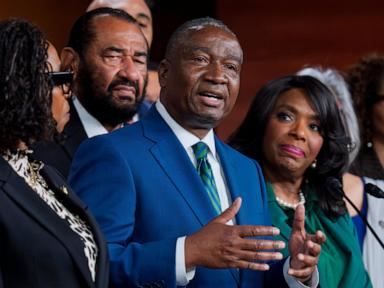
The Congressional Black Caucus (CBC) identifies as the conscience of the nation, but that conscience is currently under a coordinated legal and legislative siege. A series of recent Supreme Court rulings and lower-court challenges have moved beyond mere political friction. They represent a fundamental shift in how power is apportioned in the United States. For decades, the CBC relied on the Voting Rights Act (VRA) to carve out a seat at the table. Now, the table is being dismantled.
The core of the crisis lies in the erosion of Section 2 of the Voting Rights Act. When the Supreme Court issued its decision in Allen v. Milligan, there was a brief moment of relief for voting rights advocates. The Court upheld the need for a second Black-majority district in Alabama. However, that victory masked a much more dangerous trend. While the Court occasionally protects the status quo, the broader legal movement is shifting toward "colorblind" jurisprudence. This philosophy argues that any consideration of race in districting—even to correct historical disenfranchisement—is unconstitutional.
If the "colorblind" movement wins, the CBC doesn't just lose influence. It loses its members.
The Legal Trapdoor Beneath Minority Districts
To understand the threat, you have to look at the math of redistricting. The CBC’s strength is built on majority-minority districts. These are geographic areas where Black voters make up more than 50% of the population, ensuring they can elect a candidate of their choice.
Opponents of these districts are now using the Fourteenth Amendment as a weapon. They argue that creating a district specifically to ensure Black representation is a form of racial gerrymandering. It is a brilliant, if cynical, legal maneuver. By using the very amendment designed to protect formerly enslaved people, challengers are seeking to outlaw the mechanisms that ensure their descendants have a voice in Congress.
The strategy is clear. If you can't beat the CBC on policy, you remove the voters who put them there.
The Ripple Effect of Alexander v. South Carolina State Conference of the NAACP
In 2024, the Supreme Court ruled in favor of South Carolina Republicans who had moved tens of thousands of Black voters out of a swing district. The Court’s reasoning was a blow to the CBC’s long-term security. The justices ruled that the map was a "partisan" gerrymander, not a "racial" one.
This distinction is a distinction without a difference in the American South. In many states, race and party affiliation are so closely aligned that you cannot target one without hitting the other. By allowing "partisan" gerrymandering even when it has a disparate impact on Black voters, the Court has given state legislatures a green light to dilute CBC power under the guise of simple political hardball.
The Conscience vs. The Machine
The CBC has always occupied a strange space in Washington. It is a caucus within a party, often pushing the Democratic leadership to be more aggressive on civil rights, police reform, and economic equity. When the CBC is weakened, the entire progressive agenda loses its anchor.
We are seeing this play out in the halls of power right now. Without the guaranteed leverage of a large, unified Black voting bloc, the caucus loses its ability to extract concessions from party leadership. They become a "nice to have" rather than a "must-have."
Why Corporate Interests Are Quietly Cheering
There is an economic dimension to this that few are discussing. The CBC has historically been the loudest critic of predatory lending, environmental racism, and inequitable healthcare systems.
- Financial Services: CBC members often lead the charge against high-interest payday loans and discriminatory mortgage practices.
- Environmental Policy: The caucus focuses on "Cancer Alley" and other areas where industrial runoff disproportionately affects minority communities.
- Labor Rights: They are a reliable vote for minimum wage increases and union protections.
By shrinking the CBC through redistricting, corporate lobbyists effectively remove their most consistent opposition. It is much easier to pass a bill that favors the 1% when the representatives of the bottom 20% have been gerrymandered out of existence.
The Internal Strain of a Shrinking Map
The pressure isn't just coming from the outside. As districts are redrawn, veteran CBC members are often forced to run against each other or compete in territories that are increasingly white and conservative. This forces a tactical shift.
A representative from a safe, majority-Black district can afford to be the "conscience." They can speak truth to power without fear of losing their primary. But a representative in a "crossover" district—where they need a significant percentage of white voters to win—must moderate their tone. They have to pull their punches.
This moderation is the goal of the anti-VRA movement. They don't just want fewer Black representatives; they want quieter ones.
The Myth of the Crossover District
There is a popular argument among some political scientists that majority-minority districts are no longer necessary. They claim that America has moved past the era of "racial bloc voting" and that Black candidates can win in majority-white areas.
The data tells a different story. While there are notable exceptions, the vast majority of Black representatives in Congress still come from districts with significant minority populations. In the deep South, the correlation between race and voting remains nearly absolute. To suggest that we can do away with protected districts is to ignore the reality of the American electorate. It is a fantasy used to justify the dismantling of the VRA.
The Strategy of Permanent Minority Status
The endgame of these legal challenges is to relegate the CBC to a permanent minority within the minority. If the caucus drops from 60 members to 40, or 30, its ability to influence the Speaker of the House or the President evaporates.
Think about the George Floyd Justice in Policing Act. That legislation moved because the CBC had the numbers to make it a priority. Without those numbers, such bills never even make it to a committee hearing. They die in the darkness of legislative apathy.
The Looming Threat to Section 2
The next big fight involves whether private individuals and groups—like the NAACP—even have the right to sue under Section 2 of the Voting Rights Act. Currently, most VRA lawsuits are brought by private citizens. However, some conservative judges are now arguing that only the U.S. Attorney General can bring these suits.
This would be a death blow. If the right to sue depends on who is in the White House, then voting rights become a political favor rather than a legal guarantee. Under a hostile administration, the Department of Justice could simply refuse to challenge even the most blatant acts of disenfranchisement. The CBC would be left watching from the sidelines as their districts are carved up with surgical precision.
The Survival Blueprint
If the CBC is to survive this era, it cannot rely on the courts. The judiciary has made its intentions clear. The survival of Black political power will require a shift in strategy.
Aggressive Federalism
States where the CBC still holds sway must pass their own versions of the Voting Rights Act. New York and Connecticut have already moved in this direction. By codifying protections at the state level, they create a firewall that the federal Supreme Court cannot easily breach.
New Coalitions
The caucus must broaden its base of support without losing its identity. This means forming deeper alliances with Latino and Asian American voting blocs who are facing similar threats from redistricting. The future of the "conscience of Congress" depends on its ability to lead a multi-racial coalition that recognizes the threat to one is a threat to all.
Economic Leverage
Political power flows from economic power. The CBC needs to lean into its relationship with Black business leaders and organized labor to create a cost for disenfranchisement. If state legislatures realize that gerrymandering Black voters leads to divestment or labor strikes, the math changes.
The High Cost of Silence
The tragedy of the current moment is the lack of public outcry. Because redistricting is seen as a dry, technical process, it rarely captures the national imagination like a protest or a scandal. But this technical process is where the future of American democracy is being decided.
When you change the boundaries of a district, you change the boundaries of what is possible in Washington. You decide which voices are heard and which are silenced. You decide whether the "conscience of Congress" remains a powerful force or becomes a historical footnote.
The current trajectory is toward the latter. The legal framework that supported the growth of Black political power since 1965 is being stripped for parts. If the CBC is to remain the conscience of the nation, it must first survive the attempt to legislate it out of the room. The fight isn't just about seats in a chamber; it is about the fundamental right of a people to be heard in the halls of power they helped build.
The architects of the new maps know exactly what they are doing. They are not just drawing lines; they are erasing a legacy. To ignore this is to accept a future where the "conscience" is nothing more than a whisper in a room designed to ignore it.
The math is cold, the legal theory is precise, and the intent is unmistakable.