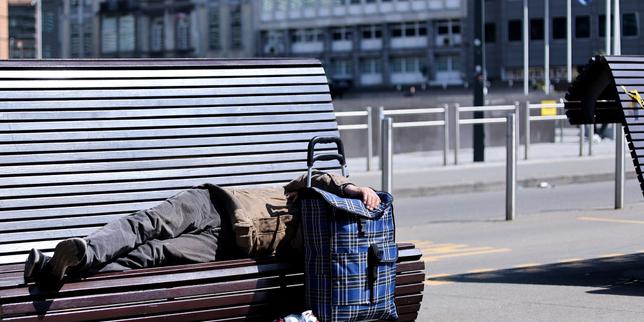
The narrative is tired. It surfaces every time a journalist wanders through certain Brussels neighborhoods, notebook in hand, desperate for a tragedy to document. The story is always identical: Brussels, the supposed heart of European bureaucracy, is rotting from within. We hear about pockets of poverty, surging inequality, and the abandonment of the urban core. It makes for excellent copy. It is also fundamentally illiterate regarding how cities actually function.
I have spent years navigating the corridors of European power and the streets that allegedly house this encroaching ruin. I have watched billions in regional funding disappear into bureaucratic black holes. I know the smell of performative concern. The mainstream obsession with these so-called poverty pockets ignores the cold reality of urban evolution. Brussels is not failing; it is undergoing a violent, necessary, and uneven restructuring.
The Myth of Stagnant Decay
The common critique posits that inequality is a sign of policy failure. This assumes that a city should be a flat, egalitarian plane where every neighborhood maintains parity with the next. That is a fantasy. Cities are not static museums; they are dynamic, competitive markets for space, labor, and capital.
When observers point to concentrated hardship in municipalities like Saint-Josse or parts of Schaerbeek, they label it a crisis of governance. They are wrong. What they see is the friction caused by the city’s transition from an industrial service hub to a knowledge-based, hyper-connected node. The people left behind in these pockets are not victims of a lack of social policy—there is no shortage of social transfers in this city—but victims of a mismatch between their historical skill sets and the requirements of a modern, internationalized economy.
Imagine a scenario where the government successfully froze the urban status quo through massive rent controls and permanent subsidies. You would not get a thriving, equitable city. You would get a mausoleum. You would destroy the very mobility that allows capital to flow into underutilized areas, eventually dragging them toward higher productivity.
Brussels is a Tale of Two Realities
The frustration stems from a refusal to acknowledge the internal mechanics of a city that hosts more than just the European Commission. Brussels is a dual economy. On one side, you have the expatriate bubble—highly mobile, well-paid, and largely untethered from the local social fabric. On the other, a local workforce historically tethered to manufacturing and logistics, sectors that have been hollowed out by automation and shifting supply chains.
The gap between these two groups is not a policy error; it is a structural necessity of globalization. Attempting to bridge this gap through traditional welfare—the default answer of the political class—only entrenches the dependency. It creates a class of citizens who exist in a holding pattern, supported by public funds but disconnected from the actual economic engine of the city.
The Failure of the Institutional Response
I have sat in meetings where bureaucrats propose another localized development program, another community center, another "social cohesion" initiative. These programs are vanity projects. They exist to satisfy audit requirements and reassure the public that the government is "doing something." They do nothing to move the needle on actual human capital.
The problem is not that these neighborhoods lack infrastructure. They are serviced better than many mid-sized cities in the rest of Europe. The problem is a lack of integration into the globalized marketplace. The obsession with "poverty pockets" misses the fact that many of these residents are essentially trapped by the very policies designed to help them. When you subsidize an existence in a low-productivity area without providing a clear path to high-productivity labor, you are not aiding the resident. You are sentencing them to a lifetime of managed scarcity.
Why Your Compassion Is Misguided
You want to help? Then stop calling for more of the same. The current approach is an addiction. It focuses on symptoms while ignoring the root cause: an educational and vocational system that is a relic of the mid-twentieth century.
Instead of dumping more money into the same broken social conduits, the capital needs to move toward radical labor mobility and skills disruption. We need to stop treating neighborhoods as permanent demographic silos. If a neighborhood cannot provide a path to prosperity, the goal should not be to keep people there indefinitely through state-funded life support. The goal should be to give them the tools to leave, to compete, and to thrive elsewhere.
The uncomfortable truth that no politician will admit is that some areas must change their function entirely. If the housing stock in a central district is dilapidated and the local economy is non-existent, the solution isn't to force people to stay there while pretending it can be saved by a new park or a community garden. The solution is economic transition.
The Cost of Honesty
I recognize the backlash this takes will provoke. You will call it callous. You will say it ignores the human element of displaced families. You are mistaking tactical pragmatism for a lack of empathy. Empathy without efficacy is just cowardice. I would rather see a system that functions brutally and efficiently than a system that preserves misery under the guise of social justice.
The Brussels that everyone loves to critique is doing exactly what it was designed to do: attract global capital and serve as the headquarters for the continent’s most powerful institutions. The poverty you see is not the result of the city’s ambition; it is the result of its inability to drag the entire population along at the same velocity.
There is no "fix" for this. There is only the decision to either accelerate the transition or pay the rising cost of social inertia. Every euro spent on maintaining the current structure is a euro taken away from the future of a generation that has the potential to outgrow these imaginary borders.
Stop looking for policies that feel good. Start looking for structural shifts that force the city to modernize, even if it creates temporary friction. If you are waiting for a government report or a new committee to solve the plight of the city, you have already lost. The city moves with or without you, and it has no interest in your sentimentality.
Leave the hand-wringing to the commentators. The real work is in the upheaval.