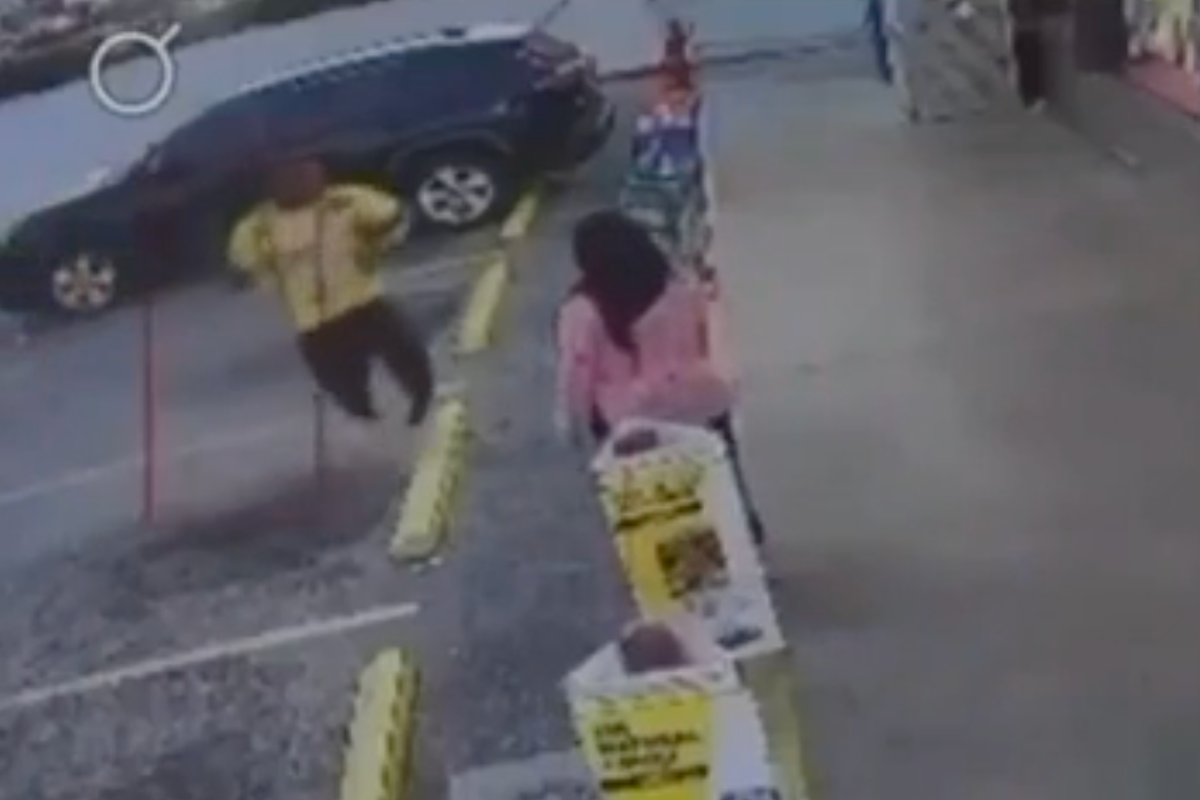
The media is currently vibrating with a scripted, performative outrage. The latest flashpoint involves a late-night social media post by a political figure featuring raw, unedited footage of a violent crime. The consensus is predictable. They call it a "meltdown." They call it "dangerous." They demand immediate censorship to "protect the public."
They are lying to you. Not about the violence, but about the motivation for hiding it.
The push to scrub raw reality from our feeds isn't about protecting your mental health or honoring victims. It is about maintaining a monopoly on narrative. When a platform or a politician bypasses the filters to show you the ugly, jagged edges of the world without a three-minute preamble from a teleprompter reader, the establishment panics. Why? Because raw data is harder to spin than a curated summary.
The Myth of the Controlled Information Environment
We have been conditioned to believe that "responsible journalism" means seeing the world through a thick layer of digital Vaseline. We get the sanitized version: the grainy, blurred still-frame; the solemn voice-over; the expert "contextualizing" the horror. This isn't journalism. It is a curated reality designed to keep your emotional response within a manageable range.
When you see the unedited video—the real, visceral documentation of a Florida murder or a border skirmish—the middleman disappears. You are forced to confront the failure of policy, the reality of crime, and the fragility of the social contract without a safety net.
The "meltdown" narrative is a defensive crouch. By labeling the act of sharing raw footage as a psychological break, the media avoids discussing the content of the footage itself. They want to talk about the "post," not the "problem."
Transparency Is Not a Meltdown
Let’s dismantle the premise that sharing graphic content is inherently irrational. In a digital age, visibility is the only currency that matters. If a politician wants to highlight a perceived failure in public safety, showing the raw result of that failure is the most effective rhetorical tool available. It’s brutal. It’s ugly. But it’s not a "meltdown." It’s a calculated strike against the apathy of the 24-hour news cycle.
I’ve spent years watching how digital platforms handle "sensitive content." The rules are never about the content; they are about the optics. A Hollywood movie can depict a thousand deaths in high definition, and we call it art. A news organization can show a war zone from a drone’s-eye view, and we call it reporting. But the moment an individual shares the same reality to make a political point, the "safety" sirens go off.
The reality is that we are being infantalized. The assumption is that you, the citizen, cannot handle the truth of the world you live in without a "fact-checker" holding your hand. This paternalism is more dangerous than any video. It breeds a population that is disconnected from the stakes of its own governance.
The Cognitive Dissonance of Digital Safety
The "safety" crowd loves to cite the trauma of the viewer. This is a hollow argument. The same people arguing for the removal of violent Truth Social posts will happily scroll through a Twitter thread detailing the most horrific historical atrocities or watch a true-crime documentary that reenacts the very murders they claim are "too dangerous" to see in raw form.
The difference is the frame.
- Sanitized Violence: Fits the narrative. Validates the existing power structure.
- Raw Violence: Disrupts the narrative. Demands immediate, uncomfortable action.
By removing the "shock," we remove the urgency. When we blur the face of the perpetrator or the pain of the event, we turn a tragedy into a statistic. We make it easy to ignore.
The High Cost of the Filter
What happens when we successfully scrub the internet of everything that "violates community standards"? We end up with a hall of mirrors. We see only what the algorithms deem "safe," which is another word for "profitable."
The competitor's article focuses on the "late-night" timing and the "unedited" nature of the post to paint a picture of instability. This is a classic distraction technique. It focuses on the how to avoid the why.
Imagine a scenario where a local government insists that a city is safe despite a massive spike in violent crime. The local news, reliant on police press releases and government access, reports the "official" numbers. Then, a citizen uploads a raw, brutal video of a daylight robbery that contradicts the entire "safe city" campaign.
Under current "safety" standards, that video is flagged. It’s "graphic." It’s "violates policies." It’s removed. The narrative of safety remains intact, while the reality of danger persists. Who does that serve? Not the victim. Not the citizen. It serves the people in charge of the narrative.
Information Warfare and the End of the Middleman
We are in the middle of a total collapse of the traditional media gatekeeper. The outrage over "unedited videos" is the sound of a dying industry realizing it no longer controls the "Play" button.
When a politician or an influencer posts something "shocking," they are effectively saying: "Look at this. Don't listen to what they say about it. Just look at it."
That is the ultimate threat to the status quo. It demands that you use your own eyes and your own moral compass. It bypasses the editorial board, the sensitivity reader, and the corporate lawyer.
The downside is obvious: it’s messy. It’s traumatizing. It’s loud. But the alternative is a world where we only know what we’re told, and we only see what we’re allowed to.
Stop Asking for Protection and Start Demanding Reality
The "People Also Ask" sections of the internet are filled with queries like "How can I avoid seeing violent content?" and "Why do platforms allow graphic videos?"
These are the wrong questions.
You should be asking: "Who decided I wasn't allowed to see the reality of my own country?" and "What else are they blurring out to keep me compliant?"
The moment you demand a filter, you are handing someone else the right to decide what you know. You are trading your autonomy for a false sense of peace. You aren't being protected; you're being blinded.
The next time a major news outlet tells you a public figure is having a "meltdown" because they shared something raw, ignore the commentary. Watch the video. Look at the data. Decide for yourself if the "shock" is a sign of instability or a desperate attempt to wake you up from a curated coma.
Truth isn't a "safe space." It’s a battlefield. If you can’t handle the sight of the world as it actually exists, you have no business trying to change it. Stop crying for a moderator and start looking at the screen.