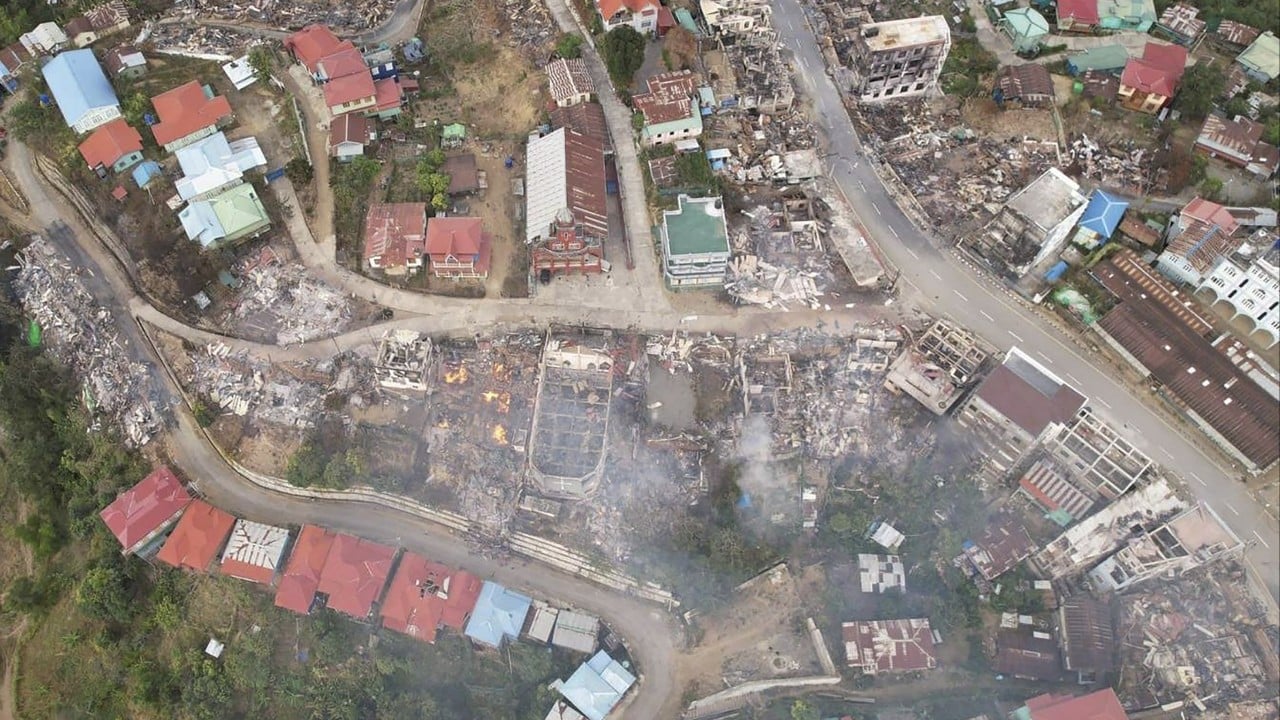
Timor Leste has officially shattered the quiet consensus of Southeast Asia by opening a criminal case against Myanmar’s military junta for war crimes and crimes against humanity, exposing deep structural fractures within the Association of Southeast Asian Nations (ASEAN).
When the judicial authorities in Dili appointed a senior prosecutor to examine a criminal dossier targeting junta leader Senior General Min Aung Hlaing, they did more than offer solidarity to a battered civilian population. They blew a hole straight through the traditional doctrine of non-interference that has insulated regional autocrats from accountability for decades.
The Mechanics of Universal Jurisdiction
For years, the political architecture of Southeast Asia relied on a polite fiction. Member states agreed to look away from internal atrocities, treating domestic brutality as a sovereign right protected by regional diplomatic protocol.
Timor Leste bypassed this diplomatic paralysis by invoking the principle of universal jurisdiction. This legal doctrine permits national courts to prosecute grave international crimes regardless of where they occurred or the nationalities of the perpetrators and victims.
The criminal file, submitted by the Chin Human Rights Organisation, contains detailed documentation of atrocities, including unlawful killings, sexual violence, and systemic persecutions committed by the military regime since the 2021 coup. By accepting this dossier, the Timorese judiciary established a stark precedent: membership in a regional economic bloc does not grant immunity from international criminal law.
Why Dili Refuses to Play by the Old Rules
To understand why a microstate with a developing economy is willing to pick a fight with entrenched regional power brokers, one must look closely at its historical DNA.
The collective memory of Timor Leste is forged from a quarter-century of brutal occupation, systematic displacement, and crimes against humanity that the international community largely ignored for decades. Leaders like Nobel Peace Prize laureate José Ramos-Horta understand the heavy cost of international silence.
Having fought its own arduous battle for self-determination and statehood, Dili views institutionalized indifference to foreign violence as an existential moral failure. When Timor Leste formally acceded to ASEAN, traditionalists within the bloc expected the new member to adopt the quiet conformity of its neighbors. Instead, Dili chose to treat its regional integration as an obligation to export the rule of law rather than a license to compromise on human rights.
The Retaliatory Spiral and Regional Anxiety
The reaction from Naypyidaw was swift and predictable. Within days of the legal proceedings coming to light, Myanmar’s military junta ordered Timor Leste’s top diplomat in Yangon to leave the country within a strict seven-day window.
This retaliatory expulsion revealed the deep vulnerability of the junta. Confined to controlling a fraction of Myanmar's territory while facing an unrelenting armed resistance, the regime fears legal accountability abroad far more than it fears rhetorical rebukes from regional summits.
Meanwhile, the expulsion placed the rest of ASEAN in an uncomfortable diplomatic vise. The regional bloc has spent years hiding behind its toothless Five-Point Consensus, issuing repetitive statements of concern while achieving virtually nothing on the ground. Timor Leste’s independent judicial action strips away that diplomatic cover, forcing member states to choose between upholding universal human rights or defending an isolated clique of generals.
The Cost of Compliance
ASEAN operates on consensus, a mechanism designed to prevent polarization but frequently weaponized to enforce collective inaction. When one member steps outside the boundaries of polite regional fiction, the entire structural model begins to strain.
Other nations in the region, such as Indonesia, have occasionally flirted with shifting legal frameworks regarding universal jurisdiction, but none have integrated it quite as aggressively into active interstate friction as Timor Leste has.
If Dili’s courts proceed with indictments or issue international warrants, cooperating governments will face intense pressure from global partners to execute them. This dynamic threatens to turn regional meetings into ideological battlegrounds where the cost of maintaining the status quo becomes too high to ignore.
The junta in Myanmar can expel a charge d'affaires and seal its borders against diplomatic reprimands, but it cannot legislate away the reach of independent foreign courts. Timor Leste has fundamentally rewritten the terms of engagement in Southeast Asia, proving that moral clarity does not require a massive military or an expansive economy—only the willingness to enforce the law when everyone else chooses to look away
Timor-Leste opens unprecedented legal proceedings against Myanmar junta
This video provides an in-depth breakdown of Timor Leste's historic legal challenge against the Myanmar military and the broader geopolitical implications for the region.