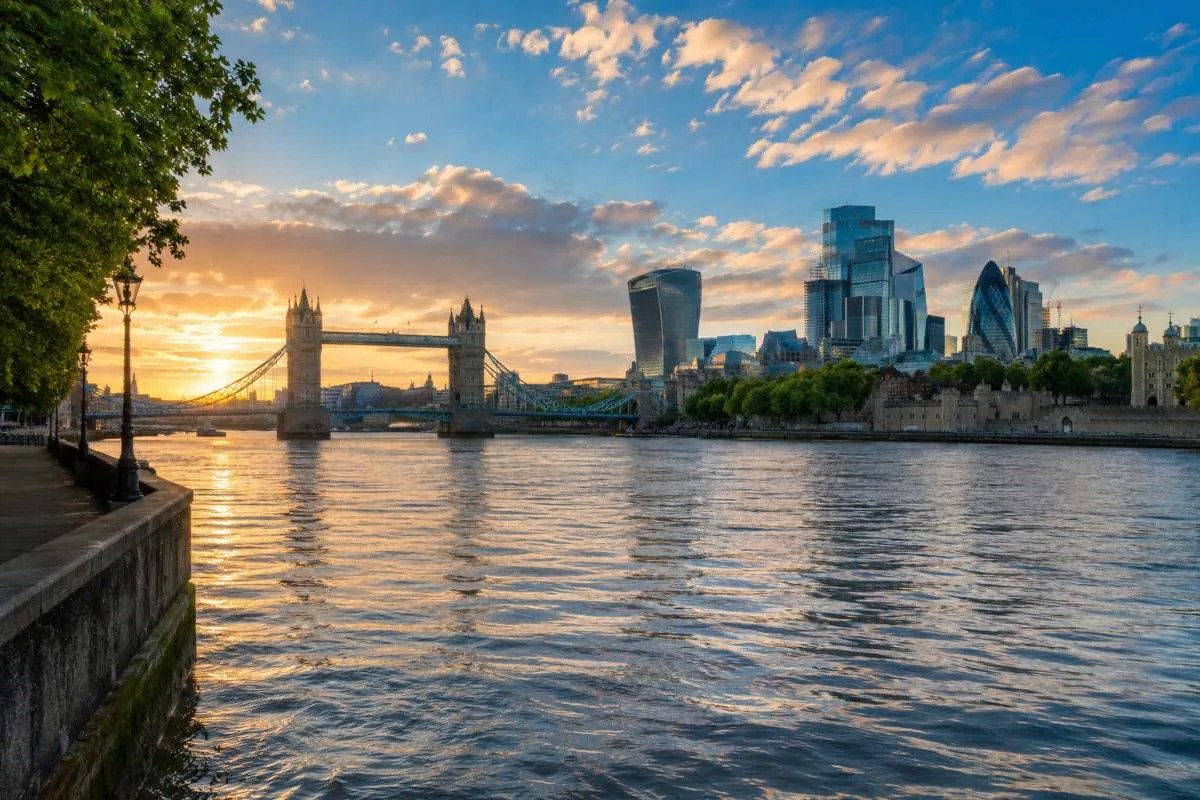
River cleanup efforts in India, particularly around the Ganga and Yamuna basins, frequently draw comparisons to international success stories like London's River Thames. Commentators love to point out how the Thames was once declared biologically dead during the nineteenth century before staging a remarkable ecological comeback. They ask a simple question: if an industrialized Western metropolis can rescue its historic waterway, why can India not achieve the same feat with its sacred rivers?
The answer is not found in a lack of political will or financial expenditure. Billions of rupees flow into initiatives like the Namami Gange programme, funding hundreds of sewage treatment plants and riverfront developments. Instead, the real reason river restoration in India lags behind British milestones lies in a fundamental divergence of geography, population density, governance scale, and hydrological realities. Treating the Thames and the Ganga as equivalent administrative challenges is an analytical error that obscures systemic roadblocks.
The Scale Mismatch That Defies Simple Comparisons
London sits on a tidal river that runs for roughly 346 kilometers from its source to the North Sea, with a basin area covering about 12,935 square kilometers. The Thames flows through a tightly regulated, highly centralized urbanized zone where municipal authorities exercise absolute control over waste discharge, pipe connections, and industrial zoning.
Contrast that framework with the Ganga. The main stem stretches over 2,500 kilometers, draining a massive basin that spans more than 860,000 square kilometers across multiple states with distinct political priorities, administrative bottlenecks, and legal frameworks. Millions of people depend directly on the Ganga and Yamuna for agriculture, religious rituals, industrial cooling, and daily survival.
When a river basin intersects multiple state boundaries, jurisdiction fragments. Upstream states might prioritize industrial output and agricultural irrigation over downstream ecological flow, while municipal bodies struggle to maintain basic sewage infrastructure. The sheer volume of wastewater generated by hundreds of rapidly growing urban centers along the Ganga completely overwhelms installed treatment capacities.
The Engineering Challenge of Intermittent Flow
In Victorian London, engineer Joseph Bazalgette solved the city's infamous sanitation crisis by intercepting raw sewage and redirecting it away from central districts through massive brick gravity tunnels, discharging it far downstream where tidal action helped flush it out. Later decades brought stringent environmental regulations, advanced biological treatment plants, and a legal penalty system that made illegal dumping financially ruinous for corporations.
Copying this interceptor model onto the Ganga and Yamuna encounters a brutal physical obstacle: flow volume and seasonality.
During the monsoon months, Himalayan rivers swell into raging torrents, carrying immense sediment loads. But during the dry pre-monsoon season, upstream barrages and canals divert massive quantities of water for irrigation and drinking supply. In cities like Kanpur and Delhi, stretches of the Ganga and Yamuna are reduced to a fraction of their natural flow, with treated or untreated wastewater making up the vast majority of the channel's volume.
Without adequate ecological flow, known as aviralta, dilution fails. Even if every municipal sewage treatment plant operated at maximum efficiency, a river stripped of its natural freshwater volume cannot self-purify effectively. Pumping treated effluent back into a nearly dry riverbed turns the waterway into a drain rather than a living ecosystem.
Industrial Effluent and the Enforcement Deficit
Municipal sewage is only part of the equation. Tanneries, textile mills, chemical plants, and sugar refineries discharge complex industrial effluents into the river networks. While effluent treatment plants exist on paper, monitoring compliance across thousands of small- and medium-scale industrial units remains an enormous enforcement hurdle.
Regulatory bodies often face severe resource constraints. Inspecting every factory outlet across thousands of kilometers of riverbanks requires an army of honest, well-equipped inspectors insulated from local political pressures. When penalties for illegal dumping are lower than the operational cost of running proper effluent treatment plants, corporations choose the fine as a routine cost of doing business.
The Thames cleanup succeeded only when regulatory bodies possessed the legal muscle to prosecute polluters without hesitation, backed by courts that enforced strict environmental liability. Establishing an equivalent deterrence model in South Asia requires dismantling complex local patronage networks and upgrading municipal accountability from top to bottom.
Rethinking the Path Forward
Blaming administrative failure alone ignores the deep socio-cultural dimensions of Indian river basins. Rivers like the Ganga are living cultural entities, tied to mass religious gatherings such as the Kumbh Mela, where millions of pilgrims bathe within compressed timeframes. Managing sanitation and crowd waste during such monumental events requires hyper-localized infrastructure that operates flawlessly under extreme pressure.
Incremental improvements are visible. River surface cleaning mechanisms, afforestation projects along upper catchments, and biodiversity restoration efforts like the return of Ganges river dolphins indicate that targeted interventions yield results. Water quality parameters in certain upper segments meet bathing criteria consistently.
Yet, transforming urban drainage into pristine waterways demands an honest reckoning with urban planning realities. Cities cannot continue treating rivers as convenient open sewers for untreated domestic runoff. Until municipal authorities mandate 100 percent sewer connections for every household, eliminate illegal bypasses, guarantee year-round environmental flow, and enforce zero-tolerance policies on industrial polluters, comparisons to European river revivals will remain hollow rhetoric. The hard truth is that saving these rivers requires a total restructuring of urban life, water pricing, and local governance, far beyond the scope of any superficial foreign template.