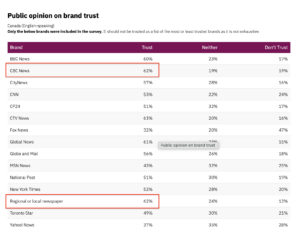
The journalism industry is obsessed with shiny objects. For a decade, media executives have chased every technical fix in sight, from "pivoting to video" and implementing algorithmic paywalls to experimenting with blockchain-verified reporting and AI-generated summaries. Yet, despite these expensive tactical shifts, newsrooms continue to shrink, trust continues to erode, and the fundamental product remains broken. The failure is not one of technology or even business modeling. It is a failure of character.
We have spent too much time trying to fix the plumbing while the foundation of the house is rotting. Journalism is dying because it has traded its distinct identity for the shallow metrics of the attention economy. By mimicking the behaviors of the tech giants that cannibalized their revenue, news organizations have effectively surrendered their greatest competitive advantage—a unique, high-trust culture that values truth over engagement.
The Revenue Myth
Most industry post-mortems focus on the loss of classified ads or the dominance of search and social platforms. While those economic realities are undeniable, they are symptoms of a deeper rot. The business of news was never just about moving information; it was about the social contract between an institution and its audience.
When hedge funds and private equity firms began stripping newsrooms to their studs, they didn't just cut staff. They destroyed the institutional memory and the mentorship structures that defined the craft. Young reporters are now thrown into a meat grinder of high-volume content production without the benefit of a seasoned editor who has the time to challenge their assumptions or sharpen their prose. This creates a feedback loop of mediocrity.
When the product is indistinguishable from the noise on a social media feed, why would anyone pay for it?
The industry’s pivot to subscriptions was hailed as a savior. The logic seemed sound: move away from volatile ad markets and toward direct reader support. However, this shift revealed a different problem. To maintain high churn-reduction rates, many outlets began catering to the specific ideological biases of their most loyal subscribers. This transformed journalism from a public service into a luxury good for the politically entrenched. It is a profitable business practice, but it is a disastrous cultural one.
The High Cost of Safe Thinking
A peculiar brand of conformity has settled over modern newsrooms. In the past, the "crusty" newsroom environment was defined by a healthy skepticism of everything—including the opinions of the journalists themselves. Today, that has been replaced by a cautious adherence to narrative consistency.
The fear of professional or social backlash has turned investigative units into cautious observers. We see an over-reliance on official sources and a desperate need for peer approval. This creates a massive blind spot. When every journalist at a major outlet shares the same educational background, lives in the same three cities, and consumes the same digital media, they lose the ability to see the stories that actually matter to the broader public.
Consider the "prestige" media’s handling of industrial decline or rural healthcare. These topics are often treated as ethnographic studies of a foreign land rather than essential beat reporting. The cultural gap between the people writing the news and the people reading it has become a chasm. Bridging that gap requires more than a new newsletter or a TikTok strategy. It requires a fundamental shift in who is hired and how they are encouraged to think.
Metrics Are a False God
Data should inform a newsroom, not lead it. When a managing editor looks at a dashboard and sees that a story about a celebrity’s divorce out-performed a three-month investigation into municipal corruption, the temptation to "optimize" is overwhelming. This is where the culture breaks.
A newsroom that prioritizes clicks is a newsroom that has abandoned its mission. Once the staff realizes that the rewards—promotions, bonuses, social media clout—go to those who produce the loudest content rather than the most important content, the culture shifts permanently. You cannot "optimize" your way to credibility.
Credibility is built in the moments when you choose to publish something that your audience might hate, or when you spend weeks chasing a lead that might never turn into a headline. It is built in the friction.
The Ghost of Objectivity
We are currently witnessing a messy, public debate over the nature of objectivity. Many younger journalists argue that the "view from nowhere" is a lie used to protect the status quo. Meanwhile, veterans worry that abandoning the appearance of neutrality will alienate everyone but the core base.
Both sides are missing the point.
The public doesn't demand that journalists have no opinions. They demand that journalists have a process. They want to see the work. They want to know that a reporter talked to people who disagreed with them and that they checked the facts even when those facts were inconvenient to their personal worldview.
The "culture of journalism" used to be defined by this process-oriented rigor. It was a trade, like carpentry or medicine, with specific standards of evidence. When we replaced that rigor with "authenticity" and "personal branding," we signaled to the audience that our work is no more valuable than a well-worded post from an influencer.
Reclaiming the Authority
To fix this, news organizations must stop behaving like tech startups. A startup's goal is to scale rapidly and disrupt. A news organization's goal should be to endure and verify. These two goals are fundamentally at odds.
Rebuilding a newsroom culture starts with a few uncomfortable steps:
- Decentralize the Hiring. Stop recruiting exclusively from the same five elite universities. If your newsroom doesn't have people who have worked in trades, served in the military, or lived in "flyover" states, your reporting will always feel hollow.
- Protect the Dissenters. A healthy newsroom should be a place of constant, respectful argument. If everyone in the morning meeting is nodding in agreement, the meeting is a failure.
- Slow Down. Accuracy is a better brand than speed. In a world where everyone knows what happened thirty seconds after it occurs, the value lies in explaining why it happened and what it actually means.
- Decouple Compensation from Traffic. Journalists should be evaluated on the depth of their reporting and the impact of their work, not their ability to go viral.
The industry is currently obsessed with "business models," but a business model is just a way to collect money. It doesn't tell you what to produce or why anyone should care. The New York Times didn't survive the digital transition because it had the best app; it survived because it maintained a culture that convinced people its reporting was worth paying for.
The Local Vacuum
The most dangerous aspect of the current cultural failure is the death of local news. While national outlets can survive on a subscription model fueled by outrage, local papers cannot. When a town loses its newspaper, it doesn't just lose a source of info; it loses its connective tissue. Corruption increases, civic engagement drops, and the community becomes more polarized as residents get their "news" from national cable networks and Facebook groups.
Fixing local news won't happen through a more efficient ad-buying platform. it will happen when we treat local reporting as a vital civic infrastructure, much like the fire department or the library. This requires a cultural shift among philanthropists and local business leaders who have spent the last two decades letting these institutions wither.
The Problem with Philanthropy
Non-profit news is often cited as the way forward. While there are success stories, there is also a hidden danger. When a newsroom relies on a handful of wealthy donors or foundations, the culture shifts toward satisfying the "mission" of those donors. This can be just as restrictive as the pressure to generate clicks.
A truly independent newsroom needs a diverse revenue stream, but more importantly, it needs an iron-clad editorial firewall. That firewall isn't a piece of software; it’s a shared understanding among the staff that the work is more important than the funding.
Beyond the Paywall
We have spent years talking about how to get people to pay for news. We haven't spent nearly enough time talking about how to make news worth paying for.
The current landscape is cluttered with "explainers" that don't explain, "analysis" that is just partisan opinion, and "breaking news" that is just a rewrite of a tweet. This is the result of a culture that has lost its confidence. We are afraid of being bored, afraid of being wrong, and afraid of being ignored.
A journalist's job is not to be liked. It is not to be a brand. It is to be a witness.
When newsrooms rediscover the quiet, stubborn pride of the witness, they will find their audience again. This means doing the work that doesn't scale. It means sitting in city council meetings until 11 p.m. It means reading five-hundred-page lawsuits. It means knocking on doors in neighborhoods where the residents don't have high-speed internet.
The industry doesn't need a new "paradigm." It needs to return to its old one. It needs to stop apologizing for its existence and start proving its worth through the sheer, undeniable quality of its output.
Stop looking for the next digital savior. There isn't one. There is only the work, the editor, and the courage to tell a story that people don't want to hear. Everything else is just noise.