The illusion of a diplomatic solution in the Persian Gulf has vanished. A massive wave of American airstrikes hitting 90 targets inside Iran, paired with immediate Iranian missile and drone retaliation against U.S. bases in Kuwait and Bahrain, has shattered the fragile interim ceasefire known as the Islamabad understanding. Washington's decision to revoke Tehran's short-lived license to sell crude oil openly on the global market triggered a rapid, violent unraveling that military planners warned was inevitable. The conflict has moved past proxy skirmishes, entering a dangerous phase of direct state-on-state warfare.
This is not a temporary breakdown of communications. This is the structural collapse of a flawed diplomatic framework that attempted to balance maritime freedom with Iranian territorial ambitions.
The Flawed Architecture of the Islamabad Understanding
The interim agreement was built on quicksand from its inception. Signed in the chaotic aftermath of the February 28 death of Supreme Leader Ayatollah Ali Khamenei, the agreement attempted to impose a 60-day pause on hostilities to allow for broader peace negotiations. The fundamental mistake made by international mediators was ignoring the core point of friction: the sovereignty of the Strait of Hormuz.
Iran interpreted the temporary agreement as an implicit recognition of its right to manage traffic through the waterway. Tehran immediately demanded the authority to alter shipping routes and levy transit fees on commercial vessels. Washington and its maritime allies viewed this as an absolute red line. Decades of international maritime law dictate that the strait remains an international waterway open to free transit. When the U.S. Navy began actively assisting commercial ships through the strait without paying Iranian fees, a return to kinetic warfare became a matter of when, not if.
The economic dimensions of this failure are stark. The table below outlines the core pillars of the temporary agreement and how they systematically collapsed over the first week of July.
| Agreement Pillar | Intended Mechanism | Reality of Collapse |
|---|---|---|
| Maritime Freedom | 60-day fee-free transit through the Strait of Hormuz | Iran demanded route control and unilateral fees; targeted the Qatari tanker Al Rekayyat. |
| Economic Sanction Relief | Temporary U.S. Treasury license allowing open Iranian oil sales for USD | Revoked by the White House following attacks on shipping, cutting off Tehran's legal revenue. |
| Regional De-escalation | Simultaneous ceasefires across fronts including Lebanon | Hezbollah attacks continued, prompting Israeli ground operations and invalidating the multi-front peace clause. |
The Direct Kinetic Escalation
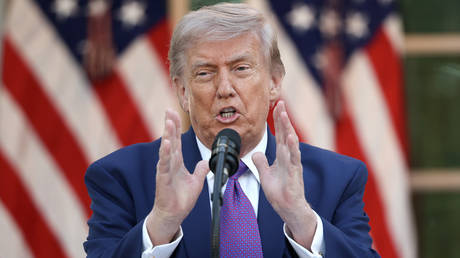
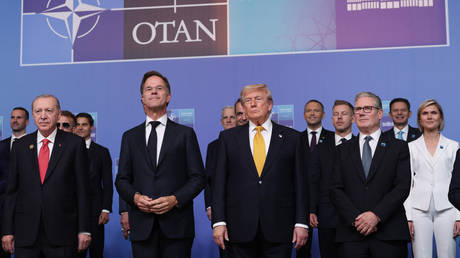
The current escalation sequence began when Iranian Revolutionary Guard Corps (IRGC) fast-attack craft and drones targeted three commercial vessels, including a Qatari energy tanker, off the coast of Oman. The response from the White House was swift and punitive. Speaking from the NATO summit in Turkey, President Donald Trump declared the ceasefire dead and ordered U.S. Central Command (CENTCOM) to execute a pre-planned, multi-layered air campaign designed to cripple Iran's coastal defense infrastructure.
Over ninety distinct military targets were struck across southern and western Iran. The scale of the operation indicates that CENTCOM was not merely sending a political message but attempting to systematically dismantle the IRGC’s regional denial capabilities.
Targeted Infrastructure Sectors
- Command and Control Nodes: Main tracking radars and maritime surveillance infrastructure in Bandar Abbas and Qeshm Island were neutralized in the opening minutes of the assault.
- Logistics and Transit Links: For the first time since the initial outbreak of the war, American ordnance targeted civilian-military dual-use bridges. A critical railway bridge in Golestan province, a key trade corridor connecting Iran with Russia, was destroyed.
- Asymmetric Warfare Assets: More than 60 specialized fast-attack boats utilized by the IRGC Navy to harass commercial shipping were destroyed at their berths in Bandar-e Mahshahr and Sirik.
Tehran’s response bypassed proxy forces entirely. The IRGC launched ballistic missiles and long-range attack drones directly from Iranian soil toward major Western military concentrations in the southern Gulf states.
"The air raid sirens sounding over Manama and the activation of Patriot batteries in Kuwait mark a clear departure from the proxy model. Iran is now openly signaling that any strike on its homeland will result in a direct kinetic tax on the hosting infrastructure of America's regional allies."
In Kuwait, home to a massive concentration of U.S. Army personnel, air defense systems intercepted a coordinated package of three ballistic missiles, a cruise missile, and ten drones. Debris field impacts wounded at least one individual and damaged logistical infrastructure near Ali Al Salem Air Base. In Bahrain, where the U.S. Navy’s Fifth Fleet is headquartered, multiple missile alerts sent civilian populations and military personnel to hardened shelters as the IRGC targeted the naval infrastructure at Juffair and the airfield at Sheikh Isa.
The Succession Vacuum and Hardline Dominance
The internal political situation in Tehran explains the aggressive, uncompromising nature of the Iranian response. The country is in the final hours of a prolonged, state-mandated mourning period for the late Supreme Leader Ali Khamenei. His burial in the religious center of Mashhad is occurring under the shadow of American cruise missile craters. U.S. airstrikes intentionally hit infrastructure along the Mashhad transport corridor just hours before the scheduled funeral services.
This timing was viewed by the Iranian security establishment as a profound, calculated humiliation.
With the supreme leadership vacant, power has effectively consolidated within the Supreme National Security Council, currently dominated by senior IRGC commanders and hardline parliamentarians led by Speaker Mohammad Bagher Ghalibaf. The pragmatic faction within the Iranian Foreign Ministry, which had pushed for the Islamabad agreement to secure long-term sanctions relief, has been completely sidelined. The hardliners are using the external military threat to justify a permanent domestic security state and to dictate the terms of the eventual leadership succession.
For the IRGC, showing weakness during Khamenei’s funeral would be politically fatal. They have chosen a path of maximum defiance, calculations driven by domestic survival rather than international diplomatic norms.
The Strategic Miscalculation of Total Denial
Washington’s strategy appears rooted in the belief that overwhelming economic pressure, combined with precise military degradation, can force Iran back to the negotiating table on Western terms. This is a severe miscalculation that misunderstands the nature of the Iranian regime's economic resilience. By revoking the oil export license, the U.S. stripped Tehran of its primary incentive to maintain the ceasefire.
When a state has nothing left to lose economically, its military decision-making becomes untethered from traditional cost-benefit analyses.
Iran has already demonstrated an ability to bypass standard Western banking channels. For years, black-market crude oil sales to independent refineries in China provided the financial baseline for the IRGC's regional operations. By forcing those sales back into the shadows, the U.S. did not stop the flow of Iranian oil; it merely removed the diplomatic leverage it possessed while those sales were legal, regulated, and conducted in U.S. dollars.
The economic blowback will not be contained to Tehran. The complete halt of commercial traffic through the Strait of Hormuz has sent global energy markets into a tailspin. Insurance premiums for maritime transport in the region have increased tenfold in 48 hours. This effectively blocks access to a waterway that previously carried twenty percent of the world’s liquefied natural gas and crude oil. The resulting inflationary pressure on global consumer goods will be felt far beyond the borders of the Middle East.
The Geopolitical Alignment
The conflict is rapidly drawing in external superpowers. The destruction of the Golestan railway bridge directly impacts Russian supply lines and trade agreements negotiated over the past year. Beijing, similarly, relies heavily on stable Gulf energy exports to fuel its industrial base. By widening the target list to include critical logistics infrastructure linked to northern trade routes, the United States has elevated a regional border war into a theater of friction with major global competitors.
The Gulf states find themselves trapped in an impossible geopolitical position. Nations like Kuwait and Bahrain host significant American military footprints, making them automatic targets for Iranian retaliation. Yet, they possess little to no control over the unilateral decision-making process in Washington or the operational planning of CENTCOM. They are absorbing the physical impacts of a war they did not choose and cannot stop.
The current trajectory points to a sustained war of attrition. The American air campaign has degraded Iran’s conventional coastal defenses, but it cannot eliminate the hundreds of mobile missile launchers hidden deep within the Zagros Mountains. These underground facilities remain entirely functional, capable of sustaining drone and missile salvos against Gulf targets for months. Washington must now confront the reality that its tactical successes in destroying 90 targets have achieved no strategic deterrence, leaving the region on the precipice of an open-ended, multi-theater war with no viable diplomatic off-ramp in sight.