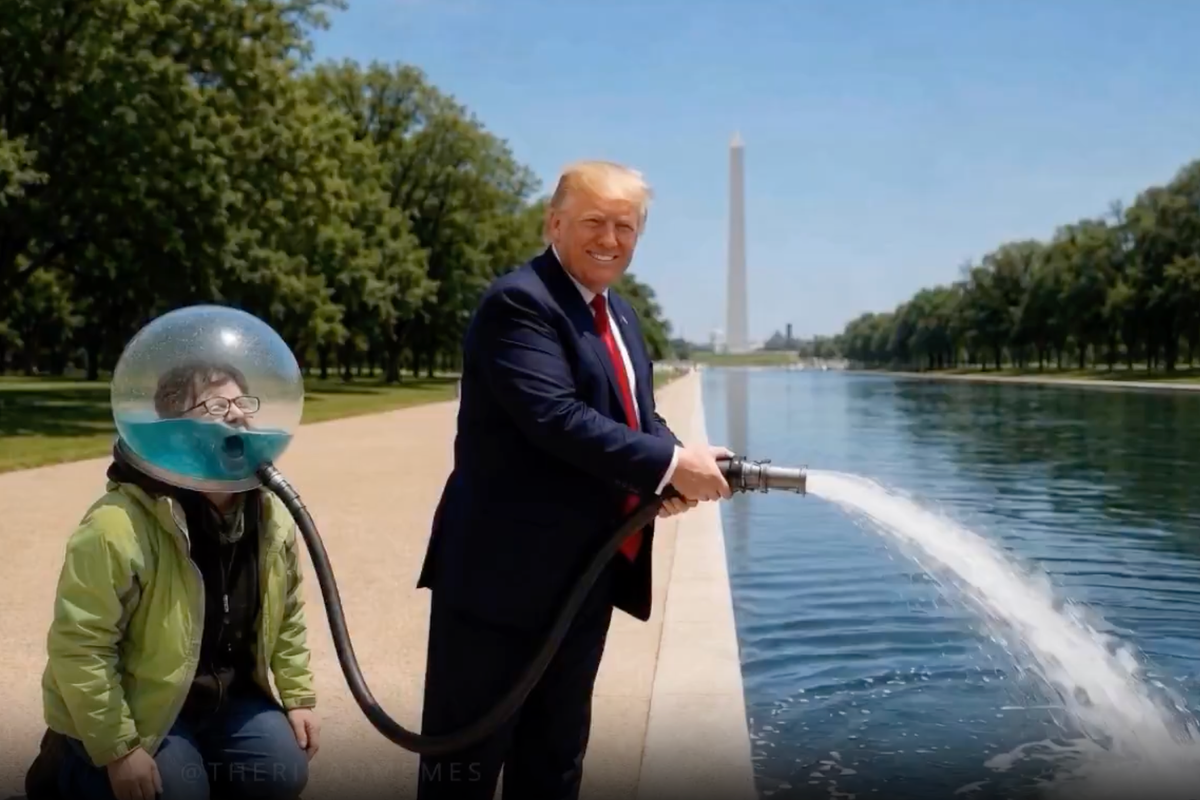
The physical transformation of Washington, D.C., is no longer confined to brick, mortar, or congressional appropriations. It is happening via generative algorithms weaponized for executive branding.
When the Lincoln Memorial Reflecting Pool began refilling with water, it marked the completion of a highly controversial, $2 million structural overhaul ordered by the Oval Office. The shallow granite basin, spanning more than 2,000 feet along the National Mall, had been drained, scraped, and coated in an industrial chemical finish the administration calls American flag blue.
To commemorate the moment, a series of surreal, AI-generated videos and images circulated directly from the executive branch. One video depicted the iconic reservoir being filled to the brim with the tears of a giant, weeping political adversary. Another, widely shared image showed hyper-stylized, deepfake versions of senior cabinet officials lounging shirtless in the water.
Mainstream media outlets covered the event as an eccentric internet sideshow, treating the digital media as a bizarre joke. That interpretation completely misses the point.
This is not a failure of online decorum. It is a highly calculated blueprint for modern executive power. By superimposing synthetic media onto real-world municipal infrastructure, the administration is bypassing traditional civic oversight, fast-tracking massive architectural revisions, and fundamentally rewriting how public land is claimed.
The Logistics of Executive Aesthetics
Civic architecture on the National Mall has historically moved at the pace of a glacier. Altering a monument typically requires years of environmental impact studies, approvals from the Commission of Fine Arts, and strict budget allocations from Congress.
The current administration has circumvented this entire framework by reclassifying structural alterations as routine aesthetic maintenance.
The decision to coat the National Mall’s signature water feature in a swimming-pool cerulean shade was reportedly triggered by a casual complaint from a visiting foreign dignitary, who described the natural, algae-tinted water as dark and unappealing. Within weeks, heavy machinery arrived on site. The administration used executive authority over federal parks to bypass the standard multi-year review process entirely.
To silence critics who argued that the bright blue finish turned a solemn historical site into a theme park, the White House deployed a flood of synthetic media.
Reflecting Pool Overhaul Economics:
+------------------------+------------------+-----------------------+
| Project Component      | Cost Estimate    | Regulatory Pathway    |
+------------------------+------------------+-----------------------+
| Industrial Coating     | $2,000,000       | Emergency Maintenance |
| East Wing Ballroom     | Pending Court    | Appeals Panel Review  |
| 250-Foot Stone Arch    | Unknown          | Preliminary CFA App.  |
+------------------------+------------------+-----------------------+
The AI-generated video of the pool filling with tears functions as an aggressive political shield. By framing a infrastructure dispute as a culture-war victory, the administration transforms a complex debate over historic preservation into a simplified narrative of political dominance. The synthetic media is designed to provoke outrage from opponents and celebratory engagement from supporters, effectively burying the boring, technical questions about procurement, environmental runoff, and municipal overreach.
Normalizing the Synthetic Presidency
The use of generative tools by political figures has traditionally focused on deepfake hit pieces or automated campaign ads. This situation represents a distinct shift. The state is now using generative content to manifest its own reality.
When an administration releases an image of senior leadership floating inside a national monument, it serves a dual purpose. First, it acts as a trial balloon for real-world development. If the public accepts the digital caricature of a commercialized National Mall, the political cost of actually constructing a pedestrian promenade or adding commercial amenities drops significantly.
Second, it establishes a precedent where public officials can rewrite physical reality through digital decree.
This strategy extends far beyond a coat of blue paint. The administration is currently pushing forward with the demolition of parts of the White House East Wing to construct a massive private ballroom, a project that was briefly halted by a district judge before being rescued by a three-judge appeals court panel. Simultaneously, plans are moving forward for a 250-foot stone arch near the Mall, despite receiving thousands of public complaints during the brief comment window.
Digital distortion provides a vital smoke screen for these physical land grabs. When the news cycle is entirely consumed by the absurdity of an AI-generated video, no one is looking at the actual construction contracts, the line-item expenditures, or the circumvention of federal preservation laws.
The Permanent Architecture of Dictated Truth
The long-term danger of this media strategy is not that people will believe the AI-generated video is real. Nobody honestly thinks a giant human filled the Lincoln Memorial Reflecting Pool with actual tears.
The danger is the systemic erosion of verifiable truth.
When official government channels mix real-world infrastructure announcements with synthetic, cartoonish fabrications, the boundary between state policy and online performance art disappears. Physical monuments—built to anchor national identity in shared history—are reduced to backdrops for digital content.
The industrial blue coating sitting beneath the water on the National Mall is permanent, toxic, and highly visible. It alters a historic landscape designed by Henry Bacon to be a somber, neutral mirror for the sky. By painting it blue and mockingly celebrating the decision with algorithms, the executive branch has proven that with enough synthetic noise, you can alter the physical fabric of democracy, and the world will treat it like a meme.