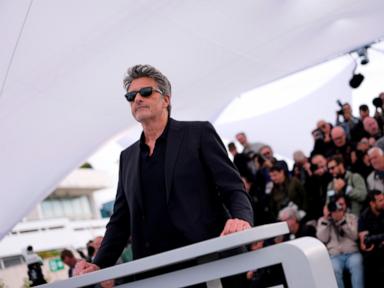
The red carpet on the Croisette is a theater of high-stakes cultural warfare where the winner takes everything and the losers fade into the relative obscurity of art-house streaming queues. As the Cannes Film Festival prepares to announce the Palme d’Or winner this Saturday, the air isn't filled with artistic appreciation so much as calculated desperation. Winning the top prize can boost a film's global distribution value by millions of dollars and transform a director from a niche auteur into a household name. But the process is rarely about finding the "best" film. It is a collision of ego, geopolitical posturing, and the specific whims of a nine-person jury locked in a room until they reach a consensus that often leaves everyone slightly dissatisfied.
To understand who will walk away with the trophy, you have to look past the standing ovations. Audiences at Cannes clap for everything; it is a ritual of polite endurance. The real story lies in the composition of the jury, led this year by Greta Gerwig, and the tension between traditional cinematic grandiosity and the push for modern, socially conscious narratives. The Palme d’Or is the ultimate validation, yet the history of the festival is littered with masterpieces that the jury ignored in favor of safe, middle-of-the-road dramas that haven't aged well.
The Jury Room Pressure Cooker
The mechanics of the Cannes jury are shrouded in a level of secrecy that would make a central intelligence agency blush. Nine people are tasked with distilling a year of global cinema into a single list of winners. This is not a democratic vote in the traditional sense. It is an intense, often exhausting debate where the loudest voice or the most stubborn personality frequently dictates the outcome.
Greta Gerwig represents a shift toward a more commercial, yet still critically respected, sensibility. Her presence suggests the festival is trying to bridge the gap between "difficult" cinema and films that actually find an audience. However, a jury president doesn't rule by fiat. They have to navigate the disparate tastes of actors, directors, and writers from different cultures. If a jury is divided between two frontrunners, they often pivot to a "compromise" film—a third option that nobody hates, but nobody truly loves. This is how we end up with winners that feel like footnotes five years later.
The Myth of the Level Playing Field
Every film in the main competition technically has an equal shot. That is the official line. The reality is that momentum starts months before the first screening. Distribution powerhouses like Neon or Sony Pictures Classics pour resources into "campaigning" within the bubble of the festival. This involves private dinners, carefully placed interviews, and ensuring the right critics are in the right seats.
A film that screens early in the festival faces the "memory decay" problem. By the time the jury deliberates on the final Friday, the visceral impact of a movie shown ten days prior has often been replaced by the hype of the closing weekend. To win from an early slot, a film must be undeniable. It has to haunt the jurors for the duration of their stay.
The 2024 Heavyweights and the Art of the Provocateur
This year’s slate has been defined by a return of the "Grand Old Men" of cinema. Jacques Audiard, Francis Ford Coppola, and David Cronenberg have all returned to the competition. For the festival organizers, these names provide the gravity and prestige necessary to maintain Cannes' status as the premier film event in the world. But for a jury looking for the "future" of the medium, these legacy entries can feel like a look backward.
Emilia Pérez, Audiard’s musical about a Mexican cartel leader seeking gender-reaffirming surgery, is the kind of high-wire act that Cannes thrives on. It is bold, slightly absurd, and technically masterful. It challenges the jury to embrace a genre-bending narrative that refuses to be categorized. When a director takes this much risk, the jury usually rewards it with either the Palme d’Or or nothing at all. There is rarely a middle ground for a movie that tries to reinvent the musical.
The Coppola Gamble
The conversation around Francis Ford Coppola’s Megalopolis has moved beyond the film itself and into the territory of industry legend. When a director self-funds a $120 million epic, the jury is forced to decide if they are judging a piece of art or a monument to sheer willpower. Giving the Palme to Coppola would be a tribute to a lifetime of contribution, but it also risks making the festival look like an old boys' club. The film has polarized critics, with some calling it a visionary mess and others a self-indulgent disaster. In the jury room, such polarization is often fatal. Jurors who find a film "messy" are unlikely to be moved by the "visionary" argument when there are tighter, more disciplined films on the table.
The International Shadow Play
Cannes has long been criticized for being too Eurocentric. While the festival has made strides in including films from the Global South and Asia, the voting patterns often revert to familiar aesthetics. Pay close attention to All We Imagine as Light by Payal Kapadia. As the first Indian film in competition in three decades, it carries a different kind of weight.
Juries are often conscious of the message their choice sends to the wider industry. A win for a film like Kapadia's isn't just about the craft; it’s a signal that the festival is finally catching up to the reality of global cinema. However, the "message" can sometimes overshadow the "movie." The most successful juries are the ones that manage to find the intersection of political relevance and cinematic excellence without letting one compromise the other.
The Sean Baker Factor
Sean Baker has been chipping away at the American indie scene for years, and Anora represents his most polished attempt at a "big" festival film. Baker’s strength lies in his empathy for people on the margins of society—sex workers, hustlers, and the working poor. His films feel alive in a way that many stiff, formalist European entries do not.
If the jury is looking for a film with heart and a kinetic energy that translates across borders, Baker is the frontrunner. He represents a specific type of American filmmaking that is gritty but not nihilistic. The question is whether the jury considers his style "weighty" enough for the top prize. There is a lingering prejudice at Cannes that the Palme d’Or must go to something somber or intellectually taxing. A film that is "too much fun" can sometimes be dismissed as lightweight, regardless of its technical brilliance.
The Director’s Cut vs. The Jury’s Choice
We often see a disconnect between what the international press corps loves and what the jury chooses. The "Screen Daily" grid, which aggregates critic scores, is a reliable measure of what the "intellectuals" think, but it is a poor predictor of the Palme d'Or. Jurors are often insulated from the press. They aren't reading the reviews over their morning espresso; they are protected by a bubble designed to prevent outside influence.
This leads to the "Shock Winner." In 2021, Titane—a film about a woman who has sex with a car and goes on a killing spree—took the top prize. It was a choice that few critics predicted but one that perfectly reflected a jury that wanted to burn the old rules down. This year, keep an eye on The Substance by Coralie Fargeat. It is a body-horror critique of beauty standards that left audiences reeling. It is divisive, loud, and impossible to ignore. If the jury wants to make a statement about the visceral power of cinema, this is their vehicle.
The Economic Reality of the Trophy
While we discuss the "art," the producers are discussing the "arc." A Palme d’Or win is a marketing department’s dream. It allows a film to be sold in every territory with a "Gold Medal" already attached. For independent distributors, it is the difference between a theatrical release and a quiet drop on a VOD platform.
This economic pressure is felt, even if indirectly, by the jury. They know their choice has consequences for the industry. A win for a streaming-backed film (though Cannes still has strict rules about theatrical releases in France) would be a different kind of statement than a win for a small, independently financed drama from Eastern Europe. The "integrity" of the festival is constantly being weighed against its need to remain relevant in a world where the theatrical model is under siege.
Look for the "Unanimous" Sign
When the awards are handed out on Saturday, the order of the lesser prizes usually gives away the jury's mindset. If the "Grand Prix" (the runner-up) goes to a heavy favorite, it usually means the jury couldn't agree on it for the Palme and had to settle. The true Palme d’Or winner is often a film that emerged late in the discussion as a unifying force.
The "Best Director" and "Best Screenplay" awards are often used as "thank you" notes to films that the jury liked but didn't want to give the big prize. Because of the festival's "one film, one prize" rule (with some rare exceptions), the Palme d’Or winner is excluded from the other categories. This means that if a film is shut out of the acting and directing awards, its chances of winning the Palme actually go up.
The Final Deliberation
As Saturday approaches, the nine jurors will be sequestered in a villa, away from the noise of the parties and the paparazzi. They will argue about pacing, about political intent, and about the "feeling" a movie left them with. They aren't looking for perfection; they are looking for a spark.
The winner of the Palme d’Or will not be the movie that checked the most boxes. It will be the movie that survived the exhaustion, the ego clashes, and the intense scrutiny of nine people who know that their decision will define the cinematic year. The Croisette is a place of illusions, but the golden palm is real, and the fight for it is the most brutal game in the world of art.
The real winner isn't just the director who holds the trophy aloft; it's the film that manages to remain relevant once the red carpet is rolled up and the private jets have left the Nice airport. History has shown that the jury gets it right about half the time. The other half belongs to the audiences who decide which of these films actually matters in the long run.
Watch the stage on Saturday. The body language of the jury president as they open the envelope tells you more than the name inside. If they look relieved, it was a compromise. If they look electrified, we might have just witnessed the crowning of a new masterpiece.
.png?width=1200&auto=webp&trim=0%2C0%2C0%2C0)

