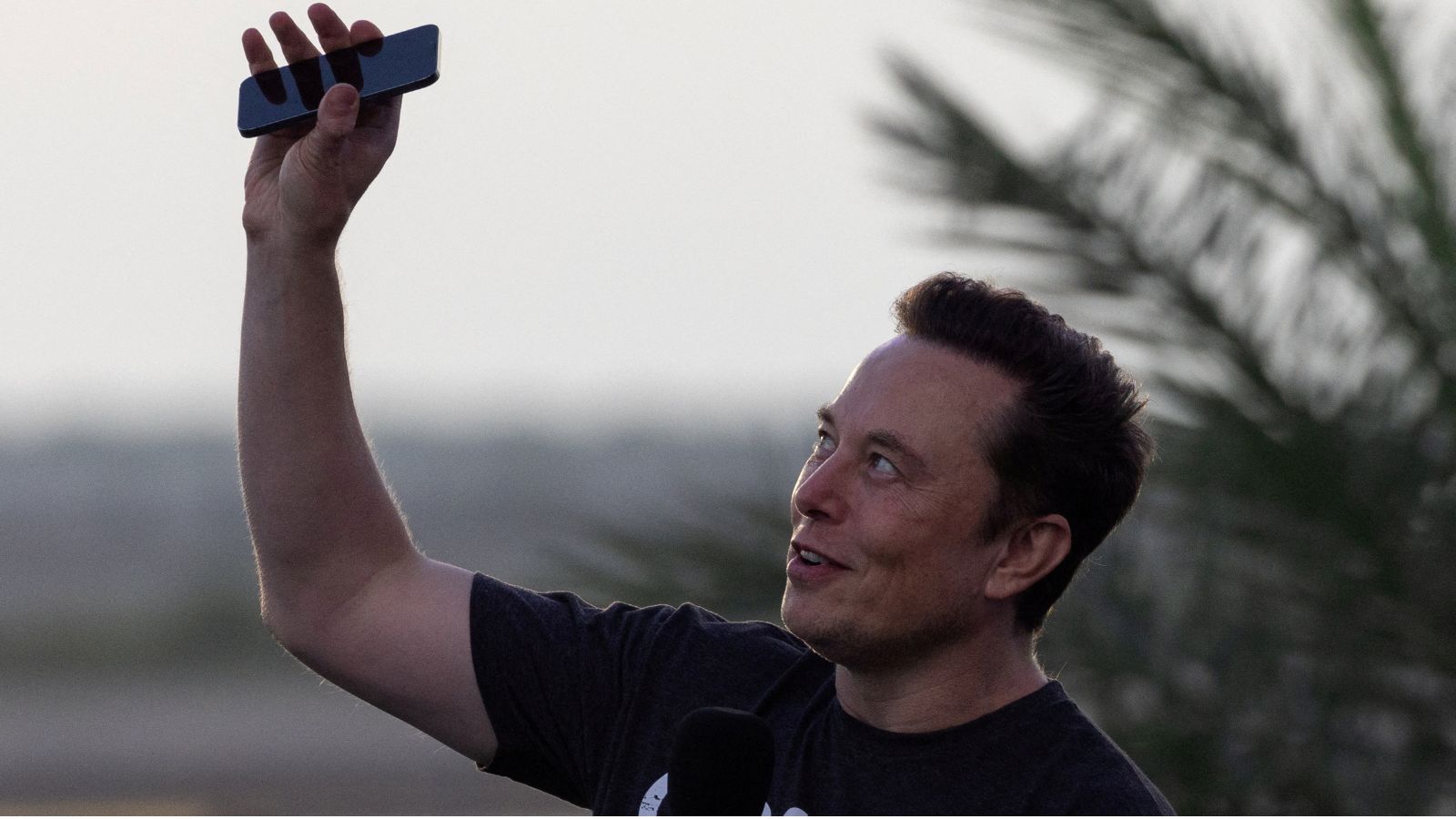
Elon Musk has officially crossed the thirteen-figure threshold, cementing his status as the world’s first trillionaire. This wealth explosion did not happen overnight, nor did it stem solely from the volatile swings of Tesla stock. Instead, the primary engine driving this unprecedented accumulation of capital is SpaceX, the aerospace giant that recently shifted from a tightly controlled private entity into a publicly traded powerhouse on the Nasdaq. Wall Street has long anticipated this moment, but the reality of a single individual holding $1,000,000,000,000 in personal net worth forces a hard look at the mechanics of modern corporate finance.
The public listing of SpaceX was not a standard corporate exit. For years, institutional investors treated private funding rounds as a game of musical chairs, bidding up the company's valuation based on Starlink’s global broadband dominance and the long-term promise of the Starship architecture. By taking the company public, Musk bypassed traditional underwriting constraints, capitalizing on an insatiable appetite for orbital infrastructure assets.
Yet, beneath the sensational headlines lies a complex web of financial engineering, regulatory scrutiny, and operational risk. To understand how Musk achieved this valuation, one must look past the media circus and examine the actual balance sheets, launch manifests, and the structural realities of the aerospace industry.
The Financial Architecture of a Thirteen Figure Net Worth
Paper wealth is a fickle metric. For billionaires, net worth is tied almost entirely to the equity they hold in the enterprises they founded or acquired. Musk’s ascent to trillionaire status relies on a specific equity structure that grants him massive chunks of stock based on performance milestones rather than traditional salaries.
The SpaceX Equity Engine
Unlike Tesla, which faced intense public short-selling pressure during its formative years, SpaceX grew up in the shadows of the private markets. This allowed the company to burn cash, iterate rapidly, and avoid the quarterly earnings pressure that destroys long-term R&D. Musk retained a massive equity stake, estimated at roughly 42% of the company, while controlling the vast majority of voting rights.
When SpaceX began trading on the Nasdaq, the market did not price it as a defense contractor or a traditional aerospace manufacturer. It priced it as a utility. The Starlink satellite constellation functions as a global internet service provider with zero legacy infrastructure, allowing for software-like profit margins once the capital expenditure of launching the hardware is sunk. Wall Street institutional analysts applied software multiples to a company that moves physical hardware into orbit, causing the valuation to skyrocket past $250 billion almost immediately upon listing.
The Problem of Liquidity
A trillion-dollar net worth exists largely on a computer screen. If Musk were to liquidate even a fraction of his holdings to fund other ventures, the mere act of selling would trigger a market panic.
- Stock as Collateral: Musk frequently uses his shares in Tesla and SpaceX as collateral for massive personal loans, allowing him to access liquid cash without triggering tax events or selling pressures.
- Margin Call Risk: If the broader tech sector experiences a prolonged correction, the value of that collateral drops, creating a systemic risk for the banks backing these loans.
- The Key Man Discount: Public markets hate single points of failure. If Musk were to step away from SpaceX, the stock would likely shed a third of its value in a single trading session.
Starlink and the Weaponization of Low Earth Orbit
The true driver of the SpaceX public valuation is not the Mars mission. It is the immediate cash-flow potential of Starlink. The aerospace industry has historically been defined by low volume and high margins, building custom satellites for billions of dollars over a decade. SpaceX flipped this model entirely.
Monopolizing the Orbital High Ground
By mass-producing satellites and launching them on reusable Falcon 9 rockets, SpaceX reduced the cost per megabit of data to a fraction of its competitors' costs. The company currently operates more than half of all active satellites in orbit. This is not just a commercial success; it is a geopolitical reality.
Legacy telecommunications companies rely on geostationary satellites parked 35,000 kilometers above the Earth. These satellites suffer from high latency and limited bandwidth. Starlink operates in Low Earth Orbit (LEO), roughly 550 kilometers up, offering speeds that compete directly with terrestrial fiber-optic cables. By publicizing this business unit through the Nasdaq listing, SpaceX unlocked capital from institutional funds that are legally barred from investing in private equity.
The Regulatory Moat
Building a competitor to Starlink is currently mathematically and financially impossible for private startups. The orbital slots and spectrum allocations granted by the Federal Communications Commission (FCC) and international bodies are finite. SpaceX secured the choice real estate early.
Furthermore, any competitor must pay a launch provider to get their hardware into space. Since SpaceX owns the lowest-cost launch vehicles in the world, any rival satellite constellation would essentially be paying their direct competitor for a ride to work. This structural monopoly justifies the premium that public market investors are willing to pay for SpaceX stock, directly inflating Musk’s personal balance sheet.
The Operational Perils of the Public Markets
Going public brings immense capital, but it also brings transparency. Private companies can hide failures, delay launches, and absorb losses without public outcry. The Nasdaq does not allow for such secrecy.
The Starship Variable
The financial viability of the current SpaceX valuation depends entirely on Starship, the massive, fully reusable launch system currently undergoing testing. Falcon 9 is a reliable workhorse, but it has reached its physical optimization limit. To deploy the larger, more powerful Starlink V2 satellites and fulfill NASA’s Artemis lunar contracts, Starship must become operational and reliably reusable.
[Private Space Valuation Growth vs Public Market Acceleration]
Every test flight that ends in an explosion now happens under the watchful eye of day traders, algorithmic funds, and retail investors. A string of high-profile launch failures could wipe out tens of billions of dollars in market capitalization in minutes, showing how fragile a trillion-dollar net worth can be when tied to experimental rocketry.
The SEC and Financial Scrutiny
Musk has a notoriously volatile relationship with financial regulators. His past tweets regarding Tesla privatization resulted in lawsuits, fines, and mandated legal oversight of his public communications. With SpaceX now on the Nasdaq, the level of scrutiny multiplies exponentially.
The company must now publish audited financial statements, disclose executive compensation, and answer to activist shareholders who may not share Musk’s long-term vision of multi-planetary colonization. Institutional investors care about quarterly free cash flow, not flags on Mars. This fundamental tension between Musk’s personal ambitions and the fiduciary duties of a public company will inevitably lead to boardroom conflict.
The Geopolitical Fallout of Private Power
Never before in modern history has a single private citizen wielded this much control over global infrastructure and strategic defense capabilities. SpaceX is no longer just a business; it is a geopolitical actor.
Sovereign Dependence on Private Hardware
The United States government, specifically NASA and the Department of Defense, relies heavily on SpaceX for orbital access. The Space Shuttle retirement left America dependent on Russia for astronaut transport; SpaceX broke that dependency. However, this has created a new vulnerability where the Pentagon is deeply reliant on a corporation controlled by one unpredictable individual.
The deployment of Starlink in active conflict zones highlighted this tension. When a private executive can decide where and when internet access is granted during a geopolitical crisis, the traditional boundaries of state sovereignty blur. Governments around the world are watching this concentration of power with deep unease, and regulatory blowback is a matter of when, not if.
The Trillionaire Tax Debate
Musk’s milestone will inevitably reignite the political firestorm surrounding billionaire wealth and corporate taxation. Because most of his net worth is tied up in unrealized capital gains, his actual tax bill is minuscule compared to his total wealth accumulation.
Proponents of wealth taxes will use the trillionaire headline as a rallying cry for structural tax reform. Any successful legislative effort to tax unrealized capital gains would force Musk to sell large blocks of Tesla and SpaceX stock annually, permanently altering the control he exerts over his companies and destabilizing the broader markets.
The transition of SpaceX to the Nasdaq made Elon Musk a trillionaire on paper, but it also exposed his empire to the unforgiving machinery of the public markets. The system that generated this historic wealth now possesses the tools to dismantle it if the operational reality fails to match the celestial hype.