The permanent shutdown of Canfor Corporation's Fox Creek sawmill in northwestern Alberta is not an isolated corporate tragedy. It is another casualty of a structural implosion sweeping the North American forestry sector. When chief executive Susan Yurkovich described these sweeping retrenchments as gut-wrenching during a quarterly earnings call, she captured the emotional toll on rural towns, but underplayed the clinical reality. The Canadian lumber industry is caught in a fatal crossfire of depleted raw materials, punishing protectionist trade barriers, and chronic oversupply. Understanding why these mills are closing requires looking past corporate press releases to examine the convergence of ecological exhaustion and trade warfare that is reshaping the continent's timber economy.
The Fiber Deficit Nobody Wanted to Face
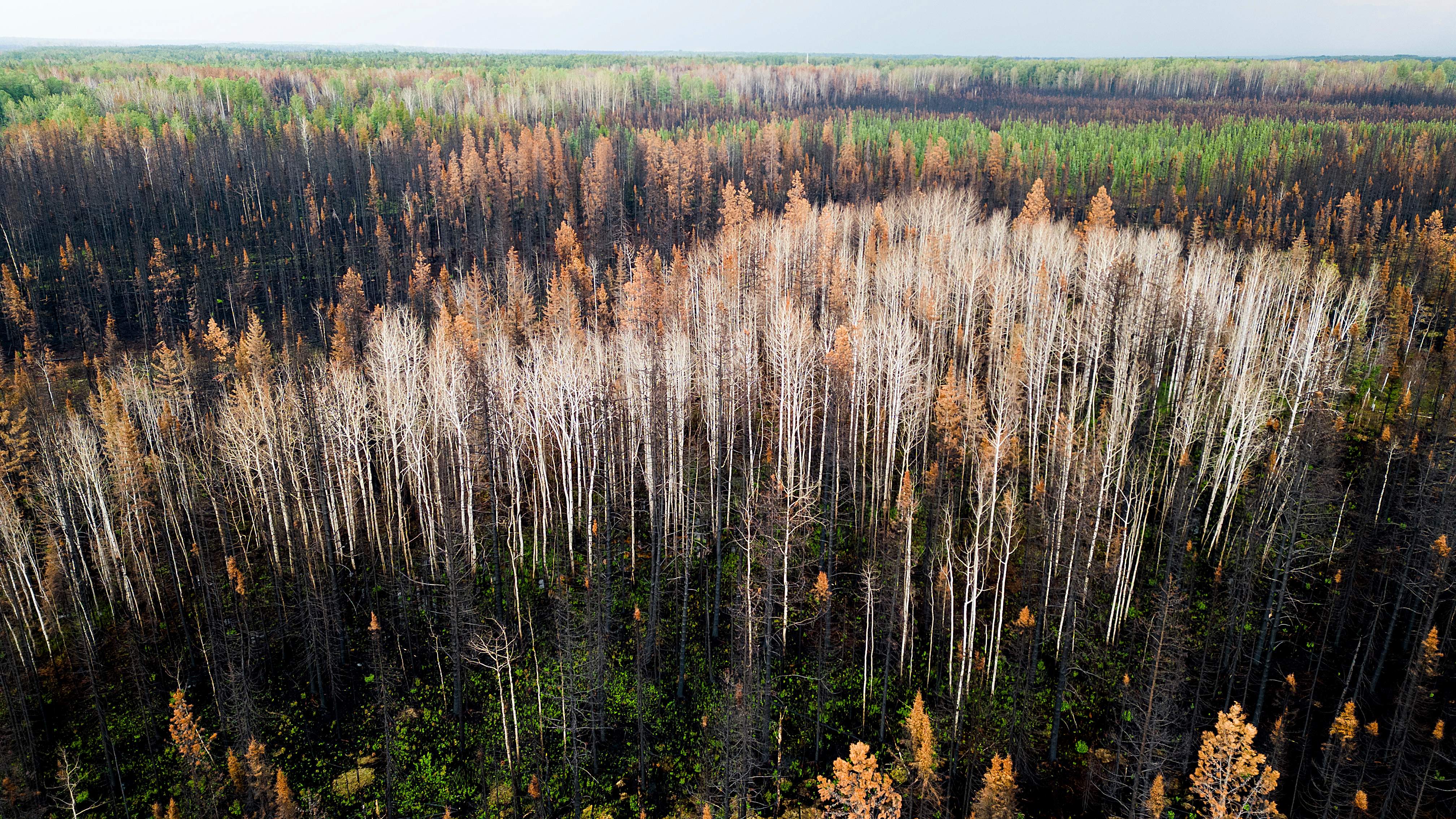
Decades of extraction have finally caught up with forest-products companies. To understand the collapse of facilities like Fox Creek, you have to look backward to the mountain pine beetle epidemic that ravaged western Canadian forests in the 2000s and 2010s. Provincial governments launched aggressive salvage strategies, pushing timber harvesting quotas to unprecedented highs to capture dead and dying trees before they rotted or burned. Mills scaled up to process this temporary glut. If you liked this article, you might want to read: this related article.
For years, that mountain pine beetle surge masked a fundamental truth: the baseline inventory of commercial timber was shrinking. Once the beetle populations collapsed following severe winters and natural population cycles, and once the wildfire-damaged timber was largely cleared or exhausted, the math stopped working.
Consider a hypothetical mill built in 2011 to process a localized surge of beetle-killed pine. When that surge artificially recedes and environmental regulations shift to protect remaining old-growth or watershed zones, the local fiber basket shrinks by half. Trucking logs from further away destroys profit margins because timber is heavy, bulky, and expensive to transport over long distances. When the wood basket dries up, the mill dies. It is simple industrial biology. Governments ended their beetle management strategies, leaving operators without the special harvesting concessions that kept marginal plants alive. For another angle on this story, refer to the latest update from The Motley Fool.
The Tariff Trap and Cross-Border Hostility
While regional fiber shortages starve mills from the inside, American trade policy suffocates them from the outside. Canadian softwood lumber producers have lived under the shadow of U.S. countervailing and antidumping duties for decades, but the tariff landscape has grown exponentially more hostile.
Washington's implementation of steep duties—compounded by auxiliary national security tariffs on wood-derived products—acts as a massive tax on cross-border trade. For a Canadian producer trying to sell structural lumber into the massive U.S. housing market, these duties crush operating margins. When lumber prices in Chicago futures markets slump due to high interest rates and sluggish residential construction, the fixed cost of U.S. tariffs becomes an unpayable ransom.
Canadian firms face a cruel paradox. They cannot survive by selling exclusively domestically because the Canadian population and construction market are a fraction of the United States' scale. Yet shipping south means handing over a substantial percentage of revenue to the U.S. Treasury in duties before realizing a single dollar of profit. When prices are high, producers can absorb the blow. When the market softens—as it has persistently over recent quarters—the math dictates immediate curtailment or permanent closure.
The Balance Sheet Reality Behind the Red Ink
Canfor's financial reporting reveals the severe stress fractures running through major forestry houses. Even as the company posted quarterly sales in the billions, its underlying operations suffered deep operational wounds, forcing leadership to absorb tens of millions of dollars in restructuring costs and asset write-downs. Shuttering facilities like the Northwood pulp mill in Prince George or the Fox Creek sawmill represents a desperate bid to staunch financial bleeding.
Corporate strategy has shifted from expansion to triage. Companies are consolidating operations around lower-cost, highly optimized mega-mills while abandoning smaller, single-shift facilities that cannot achieve economies of scale. Communities built entirely around a single sawmill, where generations have worked the sorting lines and log decks, discover too late that corporate loyalty ends where negative cash flow begins.
The ripple effects extend far beyond company payrolls. Independent logging contractors who invested millions in skippers, feller-bunchers, and log-hauling trucks suddenly find themselves holding crushing equipment debt with zero timber to haul. Hauling companies go bankrupt. Local diners, hardware stores, and real estate markets deflate. The tax base of the municipality collapses, impairing local infrastructure maintenance and public services.
The Global Rebalancing of Wood Supply
This contraction is not confined to Canadian borders. Global forestry is undergoing a synchronized correction. Canfor’s moves to shutter sawmills in southern Sweden point to a universal truth: European and North American timber markets are suffering from the exact same structural imbalances. Excessive production capacity built during previous housing booms now collides head-on with stagnant consumer demand, high borrowing costs, and tightening environmental restrictions on logging.
Producers are retreating to their strongest regional fortresses. In western Canada, companies are funneling remaining capital into select modernized hubs—such as Grande Prairie or Whitecourt—while cutting away unprofitable limbs. Value-added manufacturing, engineered wood products, and specialized building materials are receiving priority over commodity two-by-four production, which has become a low-margin commodity trap vulnerable to foreign trade disputes.
The forestry landscape of the next decade will look starkly different from the twentieth-century model of vast, sprawling timber towns. Mills will be fewer, more automated, and heavily concentrated where sustainable fiber baskets intersect with reliable transportation corridors. The era of propping up marginal mills with subsidized salvage timber is over. What remains is a leaner, bruised industry forced to operate within strict ecological boundaries and hostile geopolitical realities, leaving behind a trail of silent yards and quiet company towns that must figure out how to reinvent themselves or fade away