The fundamental failure of American diplomacy regarding Iran stems from a simple, deadly misunderstanding of who actually holds the keys to the room. While the White House waits for a single, unified voice to emerge from the Islamic Republic, the reality is a fractured mosaic of competing power centers that often benefit more from the stalemate than a solution. Negotiations aren't stalling because of technicalities in uranium enrichment levels; they are failing because the "Iran" the West wants to talk to doesn't exist as a monolithic entity.
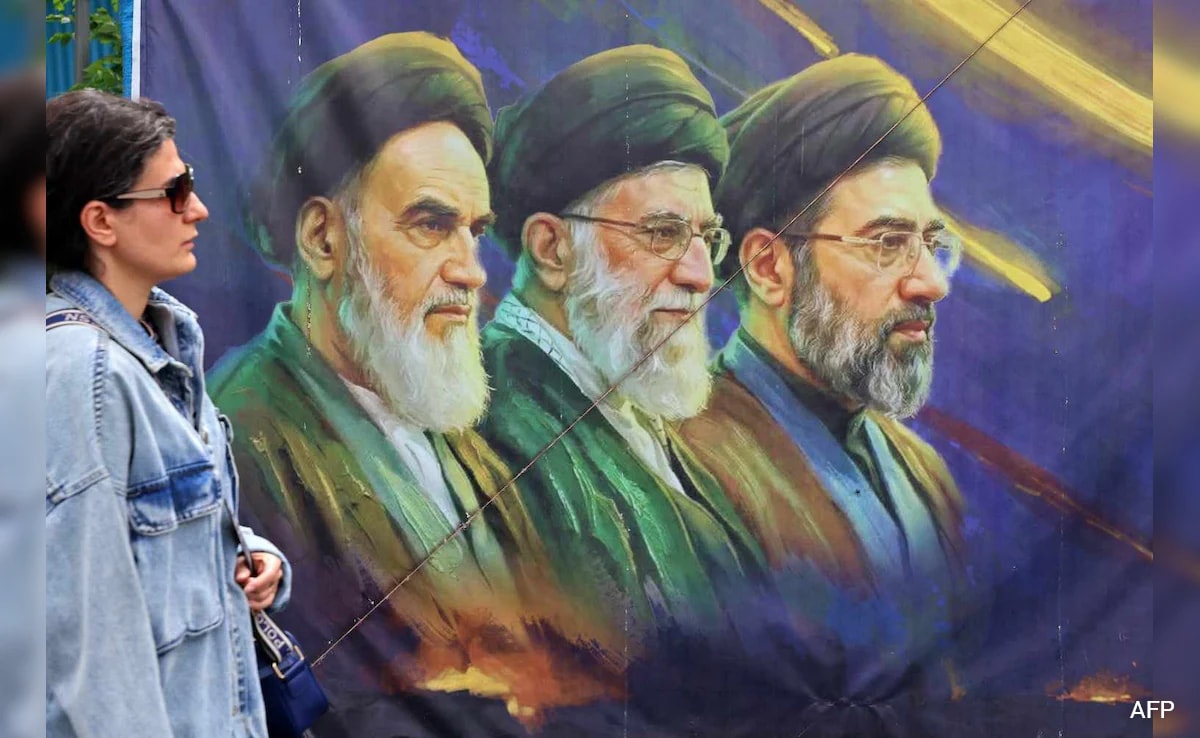
For decades, the State Department has operated under the assumption that the President of Iran or the Foreign Minister represents the ultimate word of the state. This is a mirage. In the labyrinthine structure of the Iranian government, the executive branch is frequently an outlier, a front-office meant to interface with the world while the real decisions happen in the shadows of the Supreme Leader’s office and the barracks of the Islamic Revolutionary Guard Corps (IRGC).
The Myth of the Moderate
Every few years, the West falls in love with the idea of an Iranian moderate. We saw it with Mohammad Khatami, then Hassan Rouhani, and now the cycle repeats with Masoud Pezeshkian. The narrative is always the same. A "reformer" wins an election, promises to fix the economy, and signals a willingness to engage with the Great Satan.
But the Iranian presidency is a job with high responsibility and almost zero ultimate authority. The President manages the budget and the bureaucracy, but he does not control the military, the intelligence services, or the judiciary. When a President sits down at a table in Geneva or Vienna, he is constantly looking over his shoulder. If he gives too much, the hardliners back home will dismantle his political base or, worse, arrest his closest aides on charges of espionage or "soft war" against the values of the revolution.
The IRGC thrives on isolation. They have built a vast domestic economic empire—controlling everything from construction firms to telecommunications—partially because sanctions cleared the field of international competition. For the Guard, a "normalized" Iran is a threat to their bottom line. They don't just want to keep the missiles; they want to keep the monopoly. When the U.S. thinks it is negotiating for peace, it is actually threatening a multi-billion dollar business model.
Why the Supreme Leader Prefers the Status Quo
Ali Khamenei has mastered the art of the "neither war nor peace" strategy. By allowing the President to talk to the West, he provides a pressure valve for a population desperate for economic relief. By allowing the hardliners to sabotage those same talks, he ensures that the revolutionary purity of the state remains intact.
This isn't indecision. It is a calculated survival mechanism.
The Supreme Leader views the 2015 nuclear deal (the JCPOA) not as a bridge to a new era, but as a cautionary tale. From his perspective, Iran gave up its leverage, and in return, the U.S. walked away from the deal three years later, proving that Washington’s word is only as good as the current occupant of the Oval Office. This creates a massive "credibility gap" that no amount of diplomatic phrasing can bridge. Why would a regime risk its only real deterrent—the threat of a nuclear breakout—for a promise that might expire in the next election cycle?
The Shadow Government at the Negotiating Table
When you look at the Iranian delegation, you aren't just seeing diplomats. You are seeing the representatives of a "deep state" that has spent forty years perfecting the art of the stall. The IRGC doesn't need to be in the room to dominate the conversation. Their influence is felt through "red lines" delivered via the Supreme National Security Council.
These red lines often include demands that no U.S. administration could ever meet, such as a permanent guarantee that a future president won't exit the deal. It is a masterful use of the "poison pill" strategy. By demanding the impossible, the hardliners ensure the talks remain in a state of permanent process, never reaching the stage of actual implementation.
The Economic Shield
The Iranian leadership has spent the last decade building a "Resistance Economy." They have redirected trade toward China, Russia, and neighboring Iraq. While the Iranian people suffer under the weight of inflation and a collapsing currency, the elite have found ways to bypass the global financial system.
The rise of the "ghost fleet" of oil tankers—ships that turn off their transponders to move Iranian crude to Chinese refineries—has provided a lifeline that the U.S. has been unable or unwilling to cut. This revenue stream, while smaller than it would be in a free market, is enough to keep the security apparatus funded. As long as the IRGC can pay its soldiers and its proxies in Lebanon, Yemen, and Iraq, the pressure of sanctions remains a secondary concern.
The Miscalculation of Maximum Pressure
The West often assumes that if the economic pain becomes great enough, the regime will be forced to the table. This ignores the history of the Islamic Republic. The regime was forged in the fire of the Iran-Iraq War, a conflict that killed hundreds of thousands and lasted eight years. They are comfortable with pain. In fact, they use the external threat to justify internal repression.
Whenever protests break out over fuel prices or social restrictions, the state quickly labels the movement as a foreign conspiracy. By maintaining a state of perpetual confrontation with the West, the regime simplifies the domestic narrative: you are either with the revolution or you are an agent of Washington. Negotiations, if they become too successful, actually threaten this internal control mechanism.
The Regional Chessboard
Iran’s foreign policy is not dictated by the Foreign Ministry, but by the Quds Force. Their strategy is one of "forward defense." By maintaining a presence in Mediterranean and the Persian Gulf through proxies, they ensure that any conflict will happen on someone else's soil.
The U.S. wants to talk about nuclear centrifuges. Iran wants to talk about its right to exist as a regional hegemon. These two goals are fundamentally incompatible under the current framework. Washington views Iran’s regional meddling as a separate issue to be "dealt with later," but for Tehran, the missiles and the proxies are the primary security guarantee. They will never trade their regional influence for a temporary lift in sanctions. It would be like a homeowner trading their front door for a new coat of paint.
The Future of the Stalemate
We are entering a period where the traditional tools of diplomacy are becoming obsolete. The "step-for-step" approach—where Iran limits enrichment and the U.S. releases frozen assets—has failed to create lasting trust. The reality is that as long as the IRGC controls the economy and the Supreme Leader controls the narrative, any deal will be a temporary truce rather than a transformation of the relationship.
The West must stop asking "Who speaks for Iran?" and start asking "Who benefits from the silence?" The rifts in Tehran are real, but they are not a weakness; they are a feature of the system. They allow the regime to be many things to many people, while moving toward its own goal of regional dominance and regime survival.
The next time a "moderate" Iranian official makes a televised plea for a new beginning, look past the suit and the smile. Look at the budget of the IRGC. Look at the expansion of the drone programs in the Middle East. Look at the increasing military cooperation with Moscow. That is where the true voice of the state resides. Until the West addresses the players who actually hold the power, the negotiations will continue to be a theater of the absurd, where both sides read from a script that was written decades ago. Stop looking for a partner in peace and start recognizing a competitor in a long-game of survival.