The dust in North Delhi smells like cheap paper and sweat.
If you walk down the narrow lanes of Mukherjee Nagar at two in the morning, you will see a strange glow leaking from thousands of high-rise windows. It is the light of LED desk lamps, illuminating tiny rooms where young men and women sit hunched over massive, spine-cracking textbooks. They are studying for competitive government examinations. They eat instant noodles, sleep four hours a night, and trade their early twenties for the promise of a stable administrative job.
Picture a young woman named Aditi. She isn't a single person, but a composite portrait of tens of thousands of real students who poured their families' entire life savings into coaching institutes this year. Her father sold a piece of farmland to pay her rent. Her mother sent her off with a jar of homemade pickles and a simple instruction: Make us proud.
Aditi spent two years memorizing thousands of pages of history, law, and mathematics. On the morning of the exam, she took her seat in a crowded, unventilated hall, her fingers stained with blue ink, her heart hammering against her ribs. She handed in her paper, exhausted but hopeful.
Three days later, the news broke.
The question paper had leaked on Telegram hours before the exam even began. The test was canceled. Two years of her life, erased in a single notification.
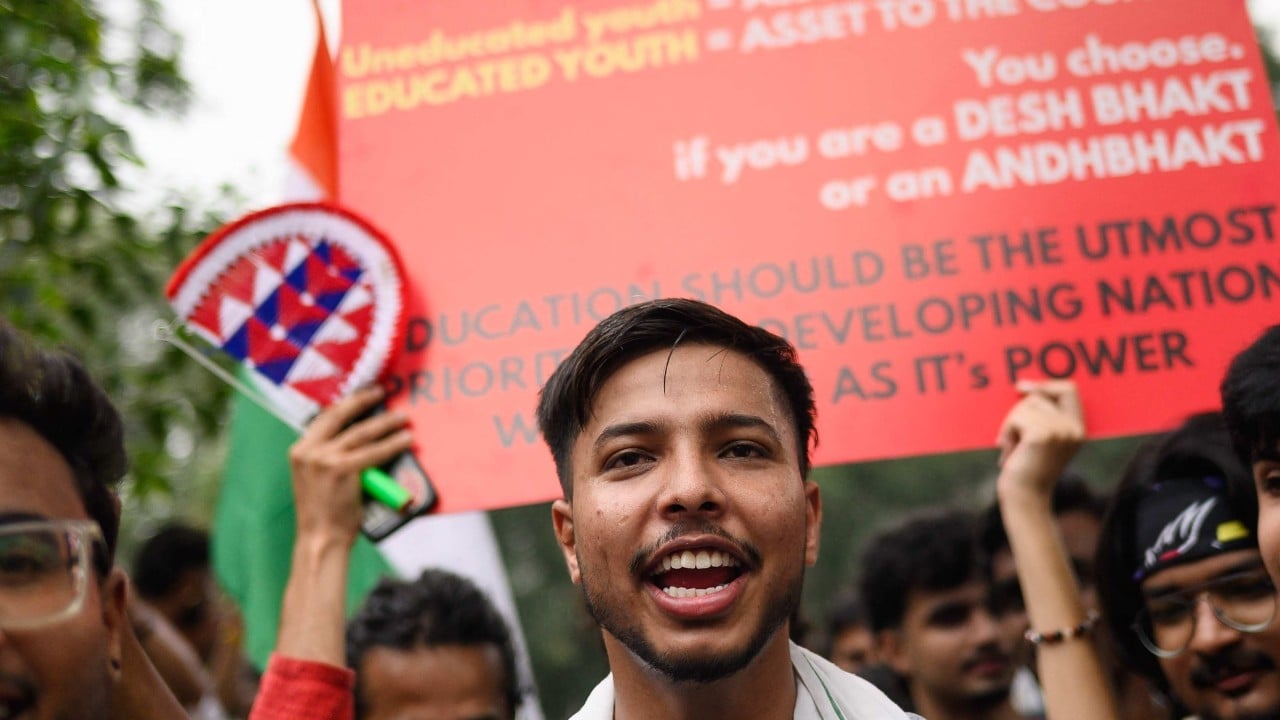
When Aditi and thousands of her peers took to the streets to demand answers, they were met not with empathy or accountability, but with riot police, tear gas, and brutal crackdowns. In the heat of the clash, officials and local commentators went so far as to refer to the protesting students as parasites—or "cockroaches"—plaguing the public squares.
Think about that word for a moment.
To call a student a cockroach is to erase their humanity. It turns a systemic failure of governance into a pest control problem. It shifts the blame from the corrupt syndicates that leak papers to the desperate youth who simply ask for a fair playing field.
The crisis of exam irregularities in India is not merely an administrative hiccup. It is a human catastrophe built on a foundation of scarcity.
In a country where millions of graduates compete for a few thousand public sector jobs, a government position is not just a career path. It is security. It is respect. It is a ticket out of generational poverty. When the integrity of these exams collapses, the social contract shatters along with it.
The mechanics of these leaks are complex, but the incentives are painfully simple. A criminal paper-leak syndicate can make millions of dollars overnight by selling access to answer keys. They exploit underpaid test administrators, hack poorly secured digital centers, and utilize encrypted messaging platforms to distribute the stolen material. For the middle-class family that pooled its savings to buy a leaked paper, it is a desperate gamble. For the millions who prepared honestly, it is a devastating betrayal.
Consider what happens when desperation meets systemic indifference.
The streets fill with young adults who feel they have nothing left to lose. They hold up handmade placards made from the very cardboard notebooks they used for studying. They chant slogans in the blistering heat. Instead of an open dialogue, heavy wooden batons swing. Water cannons blast through crowds of youth wearing backpacks.
The tragedy deepens when the public response focuses entirely on the commotion in the streets rather than the rot in the system. Media headlines freeze the frame on overturned barricades and clashing crowds, completely ignoring the quiet, slow-burning agony that brought those young people there in the first place.
When a system fails its youth, it does not just lose its credibility. It steals their time—the one asset they can never get back.
Right now, in a tiny rented room, another desk lamp turns on. A student sits down, opens a book, and looks at the printed pages through tired, red-rimmed eyes. They pick up a pen, take a deep breath, and begin to read, praying that the ground beneath their feet won't give way again.