The sea does not care about barbed wire.
It rolls in from the west, deep blue and indifferent, crashing against the limestone cliffs of Kyrenia before spilling lazily onto the golden stretches of Protaras. For thousands of years, this water carried Phoenician traders, Venetian galleys, and Ottoman sails. Today, it laps against a scar.
Walk through the historic heart of Nicosia, and you will feel the sudden drop in temperature as the modern world vanishes behind concrete barricades, rusting oil drums, and sandbags. This is the Green Line. A buffer zone frozen in amber since 1974. A militarized gash tearing through the last divided capital in Europe.
Most headlines treat this place as a diplomatic chess match. They talk about high-level summits, bureaucratic stalemates, and abstract parameters set by the United Nations. But statistics do not bleed. Resolutions do not remember the smell of baking bread in a courtyard they can no longer visit.
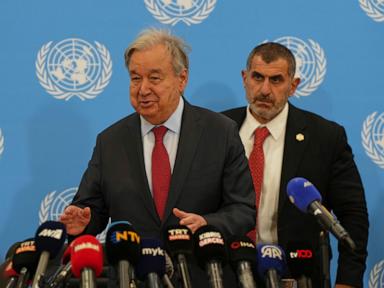
To understand why the UN Secretary-General continues to sound the alarm about Cyprus, you have to look past the mahogany tables of Geneva and down into the dusty alleys where ordinary people live on the edge of an unresolved yesterday.
The Geography of Separation
Imagine a neighborhood where you can see your childhood home from your rooftop, yet stepping foot inside is an act that could land you in prison. That is the daily reality for generations born after the island fractured.
The division is stark. To the south lies the Republic of Cyprus, economically integrated with the European Union, neon-lit and forward-looking. To the north sits the self-declared Turkish Republic of Northern Cyprus, recognized by Ankara alone, isolated by international embargoes and tethered heavily to the economic winds of mainland Turkey. In between lies the buffer zone, patrolled by blue helmets, where nature has reclaimed abandoned warehouses and swallows nest in the shattered windows of shuttered airports.
History is heavy here. It clings to the stone walls. In 1974, a coup inspired by the military junta then ruling Greece triggered a Turkish military intervention. The result was a tragic partitioning. Tens of thousands of Greek Cypriots fled or were forced south. Tens of thousands of Turkish Cypriots fled or were forced north.
Entire communities were swapped on paper while lives were upended in blood and dust.
For decades, politicians have tried to stitch the island back together. Bi-zonal, bi-communal federation. These are the dry, clinical terms tossed around by negotiators. They sound like provisions in a corporate merger document. But behind those words lies a terrifyingly delicate question: How do you rebuild trust when two populations have spent half a century learning to fear one another?
The Human Cost of Waiting
Consider a hypothetical citizen named Eleni, living in Limassol. She keeps a faded black-and-white photograph of an orchard in Morphou on her mantelpiece. She was seven years old when her family ran from that house, clutching a single suitcase. Today, she is seventy-two. Her grandchildren ask about the trees in the picture, and she tells them stories that sound like fairy tales from a distant continent, even though they happened just down the road.
Now consider Mehmet, sitting in a cafe in Famagusta. He looks out over the ghost town of Varosha—once the crown jewel of Mediterranean tourism, now a hollowed-out military zone of crumbling luxury hotels devoured by weeds. He wants his children to have a passport that opens doors to the wider world, tired of the economic suffocation that comes with international isolation. He wants a normal life. But he also fears losing his identity, his language, and his safety in a unified state dominated by the majority.
Fear is the mortar holding the bricks of this partition in place.
It is the fear of domination. It is the fear of displacement repeating itself. Every time a peace talk collapses—and they have collapsed with agonizing regularity, from Annan's plan in 2004 to the breakdown in Crans-Montana in 2017—another layer of cynicism hardens over the populace.
Young people on both sides grow up knowing less and less about each other. They speak different languages, consume different media, and look toward different capitals for cultural validation. The physical barrier has successfully bred psychological islands.
Why the Region Cannot Afford the Status Quo
When the UN leadership warns that this split threatens a tumultuous region, they are not speaking in hyperbole. The Eastern Mediterranean is a powder keg of overlapping ambitions.
Beneath the seabed lie vast reserves of natural gas. Energy exploration has turned the surrounding waters into a high-stakes arena involving Greece, Turkey, Israel, Egypt, and international energy conglomerates. Every drillship dispatched to contested waters raises the temperature. Every naval maneuver edges the region closer to a miscalculation that could draw in NATO powers and destabilize an already volatile Middle East just miles to the east.
An unresolved Cyprus is not a localized inconvenience. It is a permanent fracture in the geopolitical fault line between Europe and the Middle East. As long as the island remains divided, it serves as a chronic inflammation, easily exploited by regional actors looking to project power, block maritime trade routes, or assert dominance over vital energy corridors.
Stability cannot be built on a foundation of unresolved grievances.
The Quiet Resistance of Hope
Yet, beneath the official paralysis, something quieter and more stubborn persists.
Cross the checkpoints that finally opened in 2003, and you will witness a subtle defiance of the status quo. Greek Cypriots drive north to fill their cars with cheaper fuel and eat meze in Kyrenia. Turkish Cypriots cross south to work in hospitals, study in European universities, and trade goods.
Musicians from both communities occasionally share stages in the buffer zone, blending traditional bouzouki and saz melodies into something hauntingly unified. Environmentalists from both sides work together to clear minefields and protect endangered sea turtles nesting on shared shores.
These interactions are fragile. They are minor cracks in a massive wall. But they prove that human connection runs deeper than political ideology.
The UN chief knows this. The persistence of diplomacy, despite decades of failure, stems from the realization that walking away means surrendering an entire generation to permanent division.
Night falls quickly over the old Venetian walls of Nicosia. The muezzin's call echoes from a minaret in the north, while church bells chime from a steeple in the south. Their sounds drift upward, meeting in the quiet, empty air above the razor wire, blending together whether the guards below allow it or not.


