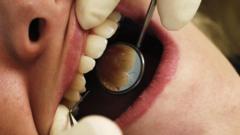
Thousands of dental patients across Sydney are currently facing a terrifying reality because of a fundamental breakdown in basic clinical hygiene. Health authorities have been forced to issue urgent warnings to individuals who visited specific clinics, advising them to undergo blood tests for blood-borne viruses, including HIV and Hepatitis B and C. This is not a drill. It is the consequence of a systemic failure in sterilization protocols that should have been ironclad.
The core of the issue centers on the discovery that surgical instruments used in these practices were not cleaned or sterilized according to the mandatory national standards. When a dentist fails to use an autoclave correctly or skips the manual scrubbing phase of instrument preparation, they transform a tool of healing into a vector for chronic disease. For the patients involved, the risk of actual transmission may be statistically low, but the psychological toll of waiting for results is immense.
The Invisible Failure of the Autoclave
Sterilization is the backbone of modern medicine. In a dental setting, this usually involves a pressurized steam device called an autoclave. For the process to work, the machine must reach a specific temperature and pressure for a set amount of duration to kill every living microorganism, including hardy spores.
Investigation into these specific Sydney cases suggests the failure wasn't a one-time glitch. It was a pattern. When a clinic prioritizes "patient throughput"—the industry term for seeing as many people as possible in a day—the sterilization cycle becomes a bottleneck. If a staff member pulls tools out before the cycle is complete, or if they fail to track the chemical indicators that prove the heat reached the center of the instrument pack, the entire system collapses.
Why Surface Cleaning Is Not Enough
Some practitioners mistakenly believe that a quick wipe with a disinfectant is sufficient for instruments that do not penetrate the "red zone" of the gums. They are wrong. The mouth is a high-aerosol environment. High-speed drills create a mist of saliva and blood that coats everything in the room. If the handpieces themselves are not internally flushed and sterilized, the next patient is essentially sharing fluids with the previous one.
The Regulatory Gap in Private Practice
In Australia, the dental industry is heavily regulated on paper, but the actual day-to-day oversight of small private practices is surprisingly thin. Most clinics operate on a model of self-regulation. The Australian Health Practitioner Regulation Agency (AHPRA) and the Dental Board of Australia set the standards, but they do not conduct random, unannounced inspections of every storefront clinic in the suburbs.
Inspectors usually only arrive after a whistleblower speaks up or a patient falls ill. This reactive stance means that a negligent dentist can operate for years without being caught. In the current Sydney crisis, it was often an anonymous tip or a routine audit that finally pulled back the curtain. By then, the list of potentially exposed patients had already grown into the thousands.
The Cost of Cutting Corners
Running a high-standard dental surgery is expensive. The cost of biological indicators, specialized cleaning staff, and the maintenance of high-end autoclaves adds up. When a practice is struggling with rising commercial rents or falling patient numbers, hygiene is sometimes the first "invisible" expense to be trimmed. You cannot see a virus on a shiny metal probe. A patient sitting in the chair has no way of knowing if the tool entering their mouth was properly processed or merely rinsed in the back room.
Understanding the True Risk of Transmission
While the headlines focus on HIV, the more immediate threat in these scenarios is often Hepatitis B and C. These viruses are more resilient and require less fluid to transmit than HIV.
- Hepatitis B: This virus can survive outside the body for seven days or more. It is highly infectious and can cause chronic liver disease.
- Hepatitis C: While now curable with modern antivirals, it remains a serious condition that often shows no symptoms until significant liver damage has occurred.
- HIV: The virus is fragile and dies quickly outside the body, making it the least likely to be transmitted through a dental instrument, yet it remains the primary source of public panic.
Health officials have been careful to state that no infections have been definitively linked to these specific Sydney clinics yet. However, because these viruses can remain dormant for years, the look-back period for patients often extends back a decade.
The Psychological Aftermath for Patients
The medical system often treats these "notification events" as administrative hurdles. For the person receiving the letter, it is a life-altering moment. They are told that a routine check-up years ago might have introduced a life-threatening pathogen into their bloodstream.
This creates a profound "betrayal of care." The relationship between a dentist and a patient is built on an assumption of safety. When that is violated, the damage extends beyond the individual to the entire profession. People stop going to the dentist. They ignore toothaches and allow infections to fester because they no longer trust the environment.
Fixing a Systemic Blind Spot
To prevent another mass notification in New South Wales, the industry needs to move beyond the honor system.
- Mandatory Third-Party Audits: Private practices should be required to undergo annual, independent hygiene audits to maintain their license.
- Digital Sterilization Tracking: Every instrument pack should have a barcode that is scanned into the patient's digital record. This creates a permanent, searchable link between the patient and the specific sterilization cycle used for their treatment.
- Publicly Available Hygiene Ratings: Just as restaurants are required to display health scores in some jurisdictions, dental clinics should be transparent about their most recent sterilization audit results.
The current situation in Sydney serves as a grim reminder that in healthcare, the things you cannot see are the things that can hurt you the most. We rely on the integrity of the person holding the drill. When that integrity fails, the consequences ripple through the community for years.
If you have been contacted by health authorities regarding your dental history, do not delay the blood tests. Most of these viruses are manageable or curable if caught early, but they are unforgiving to those who wait. The focus now must shift from damage control to a total overhaul of how we police the cleanliness of our clinical spaces.
Demand to see the sterilization area if you are unsure. A reputable dentist will never be offended by a patient who takes their own safety seriously.