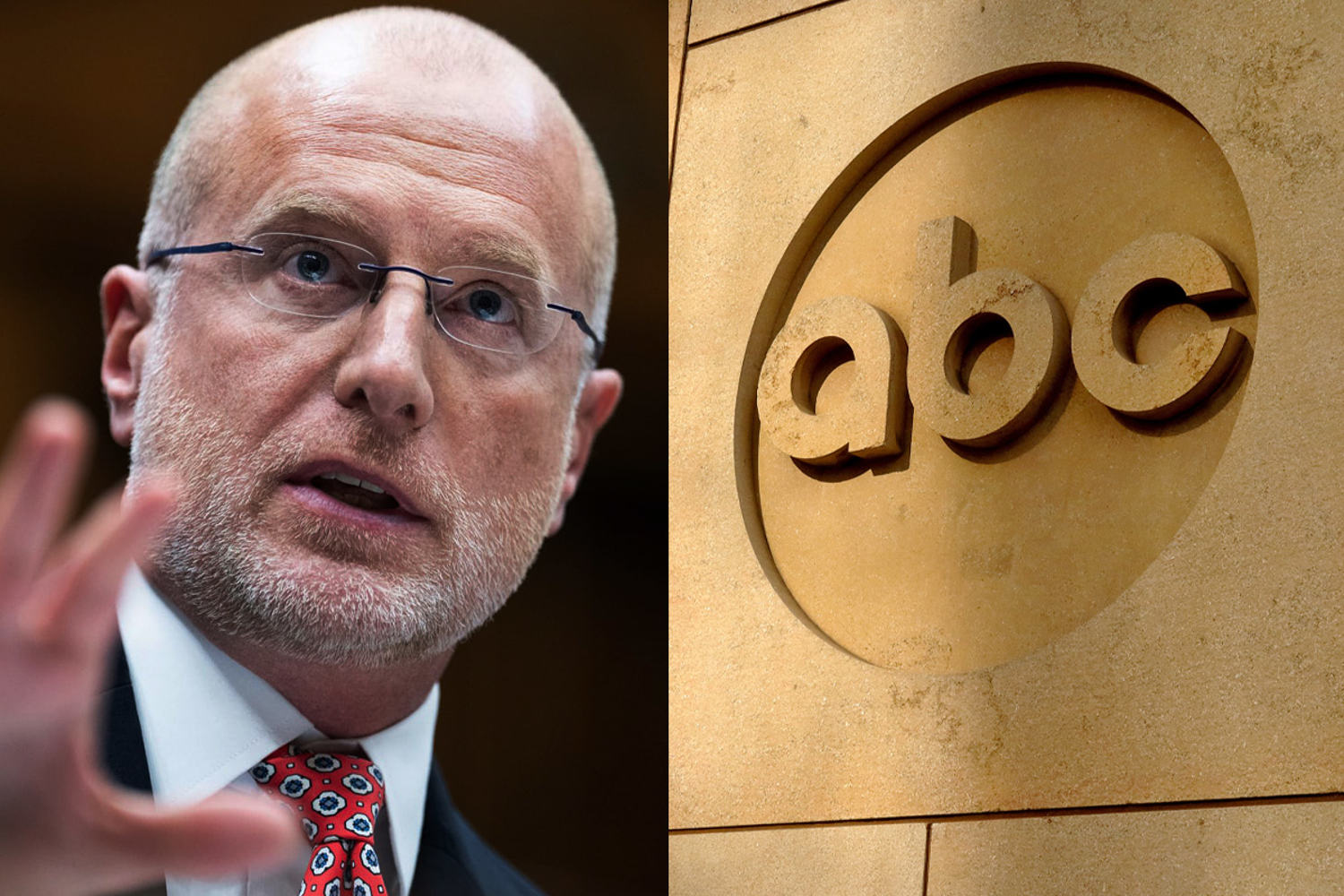
The Federal Communications Commission (FCC) operates under a mandate to ensure broadcast licensees serve the "public interest, convenience, and necessity." While this standard is intentionally broad, its application to news content creates a structural tension with the First Amendment. When the commission initiates an early review of a broadcast license—specifically ABC’s—based on the perceived bias or inaccuracy of its news reporting, it shifts from a technical regulator to a content arbiter. This transition creates a precedent where administrative law is used to bypass constitutional protections, effectively turning the license renewal process into a mechanism for editorial oversight.
The Structural Framework of FCC Oversight
To understand why an early review is an anomaly, one must categorize the three pillars of FCC licensing:
- Technical Compliance: Ensuring the station operates within assigned spectrum boundaries and adheres to safety and interference regulations.
- Character Qualifications: Assessing whether the licensee has engaged in criminal activity or egregious misrepresentation to the commission.
- Public Interest Obligations: A nebulous requirement that includes educational programming for children and non-discriminatory advertising practices.
The current friction arises from an attempt to expand the "Public Interest" pillar to include the "News Distortion Doctrine." This doctrine prohibits a licensee from deliberately misrepresenting news. However, the evidentiary threshold for this is historically high. The FCC must prove that a licensee intentionally falsified information with the knowledge of station management. By initiating an early review without a high-level "smoking gun," the commission ignores the standard sequence of regulatory procedure, moving directly to a punitive investigation phase.
The Cost Function of Regulatory Uncertainty
A broadcast license is not merely a permit; it is a capital asset. For ABC and its parent company, Disney, these licenses underpin the valuation of local stations. When the FCC signals a potential challenge to these licenses, it introduces an "Uncertainty Premium" into the business model.
- Capital Expenditure Compression: Stations under review often delay infrastructure upgrades, such as ATSC 3.0 transitions, due to the risk of asset seizure or license revocation.
- Operational Distraction: The legal cost of defending a license against federal inquiry involves thousands of billable hours, diverting resources from newsgathering to compliance.
- Chilling Effect on Editorial Risk: If the price of a hard-hitting or controversial report is a multi-year federal investigation, the rational economic actor will choose "safe" content over investigative journalism.
This chilling effect is the primary mechanism of control. The regulator does not need to actually revoke a license to exert influence; the threat of the process itself achieves the desired behavioral modification.
Logical Fallacies in the Distortion Argument
Advocates for the early review often rely on the premise that "fairness" is a measurable metric that the FCC is qualified to track. This premise fails under rigorous scrutiny for two specific reasons.
First, the Definition Gap. There is no objective, data-driven definition of "neutrality" in broadcast news. Any attempt to quantify it relies on subjective coding of language, which is inherently biased by the coder. If the FCC adopts a subjective standard for "distortion," it becomes a tool for whichever political party holds the commission majority.
Second, the Causality Error. Critics argue that biased reporting causes public harm, thereby violating the public interest. However, in a fragmented media environment, broadcast television is one of many competing information sources. There is no empirical data suggesting that the revocation of a specific station’s license would mitigate "public harm" when the same content remains accessible via cable, streaming, and social media.
The Distortion of the News Distortion Doctrine
The News Distortion Doctrine was never intended to police general bias or "slant." It was designed to address "staged" news—incidents where a reporter literally fabricates an event, such as a fake riot or a falsified interview. Expanding this to cover "editorial selection" or "fact-checking choices" during a live event (like a presidential debate) fundamentally alters the doctrine's DNA.
The move to review ABC’s licenses specifically targets the editorial discretion of the network. In legal terms, this is a content-based restriction. Under the First Amendment, content-based restrictions are subject to strict scrutiny, requiring the government to prove it has a compelling interest and has chosen the least restrictive means to achieve it. An early license review is arguably the most restrictive means possible, as it threatens the existence of the speaker.
The Bottleneck of Administrative Overreach
The FCC’s structure consists of five commissioners. When the commission is weaponized for political purposes, it creates a bottleneck where three individuals can effectively silence a national news organization. This centralization of power is a vulnerability in the American democratic framework.
If the FCC successfully uses the license renewal process to punish a network for its debate moderation or coverage, it establishes a "Precedent of Peril." Under this new framework:
- Licenses are no longer ten-year certainties but are contingent on the political climate.
- The "Public Interest" standard becomes a vehicle for "State-Sanctioned Truth."
- The judiciary becomes the only check on a regulatory body that has bypassed its own internal guidelines for investigation.
Tactical Realignment for Broadcasters
To mitigate the risk of regulatory weaponization, broadcast entities must shift their strategy from defensive compliance to offensive transparency. This involves a three-pronged approach:
- Immutable Audit Trails: Documenting every editorial decision and the sourcing behind it to provide an immediate rebuttal to "distortion" claims.
- Spectrum Diversification: Reducing the financial reliance on licensed broadcast spectrum by migrating audiences to un-licensed digital platforms where the FCC lacks jurisdictional oversight.
- Judicial Pre-emption: Filing for declaratory judgments when a regulator threatens early review, forcing the commission to prove its case in a federal court rather than an internal administrative hearing.
The current attack on ABC's licenses is a stress test for the First Amendment. If the commission is allowed to use its administrative powers to litigate the quality of journalism, the "broadcast license" becomes a leash rather than a permit. The strategic imperative for the industry is to ensure that the "News Distortion Doctrine" remains a narrow tool for identifying fraud, rather than a broad sword for carving out dissent.
The most effective counter-measure is a formal challenge to the FCC's authority to initiate reviews based on content-adjacent grievances. By forcing a legal showdown on the definition of "public interest," broadcasters can move to codify a narrower, technical-focused interpretation of the law that protects the editorial floor from political tides.


