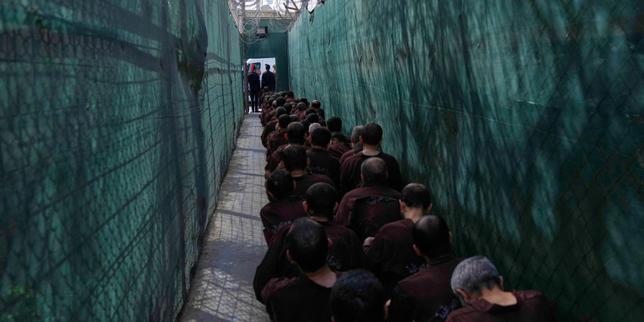
The lazy consensus on European foreign fighters is a masterpiece of comfortable self-delusion. When twenty-five French nationals locked inside Iraqi detention facilities petitioned the European Court of Human Rights to force Paris into repatriating them, the usual suspects in the legal and human rights industrial complex shrieked about international obligations, universal norms, and the sanctity of the rule of law. They want you to believe that ignoring these petitions makes France a moral failure, sliding down a slippery slope toward authoritarianism.
They are wrong. Not just slightly mistaken, but fundamentally misunderstanding the mechanics of modern statecraft and counter-terrorism.
Let us dispense with the emotional blackmail immediately. These individuals did not accidentally stumble across the Syrian border to pick up gardening tools. They packed their bags, burned their passports, swore allegiance to an apocalyptic death cult, and participated in or enabled atrocities that shattered an entire region. Now, facing the grim reality of Iraqi military tribunals and indefinite desert incarceration rather than Parisian cafes, they have suddenly remembered their European citizenship. They want a Western safety net. And our legal purists are ready to hand it to them on a velvet pillow.
The Sovereignty Mirage
The core argument driving the Strasbourg litigation rests on extraterritorial jurisdiction. The lawyers claim that because these detainees are French citizens, the long arm of the French state must reach into Mesopotamian prisons and pull them back.
This view ignores the brute reality of territorial sovereignty. Iraq fought a brutal, grinding war to eradicate the Islamic State from its soil. Tens of thousands of Iraqi soldiers and civilians died in that campaign. Baghdad captured these combatants, prosecuted them under Iraqi law, and holds them in Iraqi facilities. For a European court to casually override Iraqi penal jurisdiction from the comfort of a heated chamber in France is a masterclass in neo-colonial paternalism.
Imagine a scenario where a foreign mercenary goes to the United States, commits acts of mass violence, and gets locked up in a maximum-security state penitentiary. Now imagine their home country demanding an extradition back home for a slap on the wrist rehabilitation program. Washington would laugh them out of the room. Yet when Iraq asserts its legitimate right to judge those who tore its cities apart, our legal elite treats Baghdad like a chaotic provincial courthouse that needs adult supervision.
The Domestic Security Fallacy
Proponents of wholesale repatriation love to throw around the concept of control. The narrative goes like this: Bring them home, put them through the French judicial system, lock them in domestic prisons where intelligence services can monitor them, and manage the threat transparently.
I have spoken with counter-terrorism analysts who spend their nights tracking radicalization networks inside European penitentiaries. The domestic control argument is a fantasy born in air-conditioned offices far away from the cell blocks. French prisons are not sterile laboratories; they are radicalization incubators. Bringing hardened veterans of the caliphate back into the European prison ecosystem does not neutralize them; it gives them a fresh recruitment pool of disaffected youth.
Furthermore, the French judicial system—bound by rules of evidence, procedural constraints, and standard evidentiary thresholds—struggles mightily to prosecute individuals for actions committed in a war zone years ago. Battlefield evidence is notoriously difficult to translate into courtroom convictions that satisfy Western standards. The result? You repatriate a high-risk operative, fail to secure a life sentence due to a lack of chain-of-custody paperwork, and watch as they walk free onto the streets after a lenient sentence.
I have seen state intelligence apparatuses stretch thin trying to maintain twenty-four-hour surveillance on a single high-profile returnee. Multiply that by twenty-five, and factor in their wives and children who carry secondary ideological conditioning, and you are creating an asymmetric security burden for the taxpayer to soothe the conscience of legal theorists.
The Pragmatic Brutality of Inaction
There is an ugly truth here that no politician wants to say on television: leaving them where they are is the optimal security outcome for France.
Iraq wants justice. Iraq has the evidence. Iraq has the physical infrastructure designed to contain these threats permanently. Leaving these detainees within the Iraqi legal and penal framework respects local sovereignty, shifts the enormous financial and security burden of lifetime detention away from European taxpayers, and ensures that these individuals never walk the streets of Lyon or Marseille again.
The European Court of Human Rights should dismiss this petition not because human rights do not matter, but because stretching human rights jurisprudence to shield those who actively sought to destroy every human right is a suicidal distortion of the law.
Let them make their case to the judges in Strasbourg. And let Strasbourg have the courage to admit that some choices carry permanent consequences. You cannot renounce your social contract, wage war against civilization, and then demand that civilization send a taxi.


