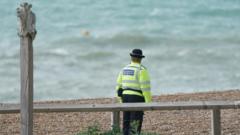
The recovery of three young women from the water off the Brighton coast has sent a shockwave through the local community, but for those who monitor the English Channel, it represents a grim repetition of a known hazard. While initial reports focused on the immediate emergency response, the broader context involving tidal surges, shelf drops, and the specific mechanics of the Brighton shoreline reveals a much more complex and dangerous environment than most weekend visitors realize. This was not a random occurrence. It was a collision between human activity and the unforgiving physical geography of the Sussex coast.
The Geography of a Death Trap
Brighton’s beaches are famous for their pebbles, but what lies beneath the surface is a topographical nightmare for the uninitiated. Unlike the gradual sandy slopes found in the West Country, the central Sussex coast features a sharp underwater drop-off.
At low tide, the water may seem shallow and inviting. However, the seabed here is characterized by a "shelf" effect. A swimmer can walk out twenty yards in waist-deep water only to have the ground vanish beneath them as the shelf terminates. This creates an immediate panic response. When the cold water hits the chest and the feet can no longer find purchase, the body’s natural "gasp reflex" takes over. This involuntary inhalation of seawater is the primary cause of drowning in the English Channel, often occurring long before fatigue or muscle failure sets in.
The current along this stretch of the coast moves with deceptive speed. The "longshore drift" pushes water and sediment from west to east, fueled by the prevailing south-westerly winds. On the night of the incident, the tidal cycle was transitioning, creating a period of increased turbulence. When a body is caught in these lateral currents, it is not pulled out to sea in a straight line; it is swept sideways, away from the point of entry and away from any friends or observers who might be trying to help from the shore.
Failures in the Warning System
There is a recurring argument among coastal safety experts regarding the efficacy of shore-based warnings. On the night these three women entered the water, the flags and signs were in place, but they were largely invisible. Brighton’s nightlife often spills onto the beach after dark. The transition from a brightly lit urban environment to a pitch-black marine environment creates a sensory gap.
The local council and the Coastguard have long struggled with how to manage a 24-hour beach. Lifeguard patrols in the UK are almost exclusively daytime operations. Once the red and yellow flags are packed away at 6:00 PM, the beach becomes a "swim at your own risk" zone. This policy assumes that adults can accurately judge the risks of the ocean at 2:00 AM.
That assumption is flawed.
Alcohol often plays a role in nighttime coastal incidents, but the more significant factor is "perceived safety." Because the beach is bordered by a bustling city with bright lights, hotels, and a pier, people feel they are in a controlled environment. They aren't. Once you are five meters into the surf at night, you are in a wilderness as dangerous as any mountain range, yet without any of the specialized equipment or training usually associated with such environments.
The Physical Toll of Cold Water Shock
Even in the summer months, the English Channel rarely rises above 18 degrees Celsius. To the human body, this is cold. The moment the skin is submerged, the nervous system triggers a massive spike in heart rate and blood pressure.
For the three women recovered off Brighton, the struggle likely lasted less than ten minutes. Most people believe they can swim to safety if they fall in, but cold water shock makes coordinated movement almost impossible. The muscles in the arms and legs quickly lose strength as the body pulls blood toward the core to protect vital organs. This is "swim failure." You can be a strong pool swimmer and still find yourself unable to lift your arms above your head after only five minutes in the Channel.
The recovery operation itself highlighted the difficulty of nighttime SAR (Search and Rescue). The RNLI and the Coastguard helicopter use thermal imaging, but sea spray and waves can mask the heat signature of a human head, which is often the only part of the body above water. The delay between the initial distress call and the first sighting is often the difference between a rescue and a recovery.
Infrastructure and the Pier Effect
Brighton Palace Pier acts as more than just a landmark; it is a massive man-made obstacle that alters the local hydrodynamics. Structures like piers and groynes create "rip currents" or "permanent rips." As waves hit the shore, the water needs a way to get back out to sea. It finds the path of least resistance, which is usually alongside a solid structure like the pier pilings or the wooden groynes that dot the beach.
These rips act as conveyor belts. A person standing near the pier can be caught in a seaward flow that moves at two meters per second. No human can outswim that. The standard advice—to swim parallel to the shore—is difficult to follow in the dark when you cannot see the horizon or the landmarks that indicate which way is "parallel."
The Economic Pressure on Coastal Safety
Behind every tragedy like this lies a spreadsheet. The funding for coastal safety has seen a shift over the last decade, with more responsibility falling on charities like the RNLI and local authorities facing budget constraints.
There is a glaring lack of physical barriers or enhanced lighting along the lower promenade. While some argue that railings would ruin the aesthetic of the historic seafront, others point out that the current setup encourages easy access to the water at hours when the water is at its most lethal. The cost of a 24-hour shore watch is deemed prohibitive, leaving a gap in protection during the very hours when the highest-risk behaviors occur.
Local business owners are often hesitant to support more aggressive warning systems, fearing it will portray the town as a dangerous destination. This tension between tourism and safety is a constant undercurrent in seaside governance. However, as the frequency of these incidents increases, the "business as usual" approach is becoming harder to justify.
Beyond the Official Report
The investigation into the deaths of these three women will likely conclude that it was a tragic accident fueled by environmental conditions. But calling it an accident ignores the systemic failures in how we manage the intersection of urban life and the sea.
The sea off Brighton is not a swimming pool. It is a powerful, changing, and often violent natural force that is currently being treated as a backyard amenity. Until there is a fundamental shift in how the shoreline is managed after dark—including better lighting, more physical barriers in high-risk zones, and a realistic appraisal of the "pier effect"—the names on the casualty list will continue to grow.
You cannot negotiate with the tide. You can only respect the physics of the water or pay the price for ignoring it. Stop treating the Channel as a playground when the sun goes down.