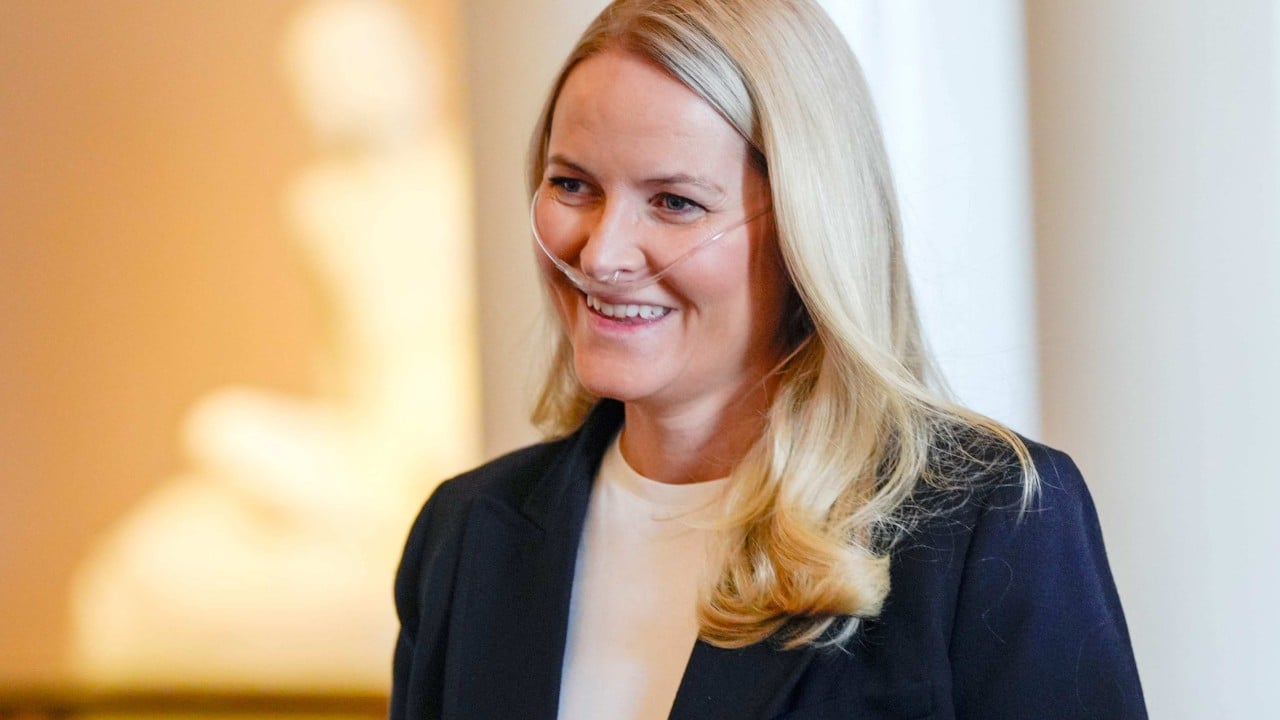
The human body does not care about royal protocol. It knows nothing of titles, dynastic duties, or the heavy weight of a crown. It only knows the basic, brutal rhythm of survival. Inhale. Exhale. Repeat. When that rhythm falters, the grandest palaces on earth quickly shrink to the size of a sterile hospital room.
For years, Crown Princess Mette-Marit of Norway has lived a life split between two starkly different worlds. In one, she is the future queen consort, dressed in gala attire, representing her nation on the global stage. In the other, she is a patient fighting a slow, suffocating battle against her own lungs. Now, that quiet struggle has reached a definitive, terrifying crossroads. The palace walls can no longer shield the reality. The crown princess is waiting for a lung transplant. For a different look, see: this related article.
To understand the weight of this moment, we have to look past the official, sanitized press releases. Royal communication is designed to smooth over rough edges, to project stability even when the ground is shaking. But chronic illness cannot be managed by a public relations team. It is a physical, daily grind.
The Slow Stealing of Air
In 2018, the Norwegian royal court made an announcement that shocked the public. The Crown Princess had been diagnosed with chronic pulmonary fibrosis. It is a medical term that sounds clinical, almost detached, until you realize what it actually does to a human being. Similar analysis on this trend has been published by Al Jazeera.
Imagine your lungs as a pair of soft, elastic sponges. Every time you breathe, they expand effortlessly, taking in oxygen and life. Pulmonary fibrosis changes that. It replaces that soft, pliable tissue with thick, stiff scar tissue. Over time, the sponges turn to stone. Every breath becomes a conscious effort. It is like trying to inflate a balloon made of thick leather.
For the average person, this diagnosis is devastating. For a public figure whose entire life is defined by presence, speech, and constant travel, it is a uniquely public form of torture. Mette-Marit did not retreat from public life immediately. Instead, she chose a path of stubborn transparency. She spoke about her fatigue. She apologized for canceled appearances. She let the world see her stumble, not out of weakness, but because pretending otherwise was a luxury she could no longer afford.
There is a profound vulnerability in watching a royal figure lose their breath. We expect our leaders and monarchs to appear invincible, frozen in time and immune to the decay that affects the rest of us. Mette-Marit shattered that illusion. By showing her fragility, she became something far more powerful than an untouchable icon. She became human.
The Waiting List Lottery
Now, the disease has progressed to its final, unavoidable chapter. Medications can only slow the scarring for so long. Eventually, the only option left on the table is the most drastic one: replacing the ruined organs entirely.
A lung transplant is not a routine surgery. It is a medical gamble of the highest stakes. To even be placed on a transplant list, a patient must be sick enough to need the organs, but strong enough to survive the massive trauma of the operation and the grueling recovery that follows. It is a razor-thin wire to walk.
Consider the psychological toll of this waiting game. A transplant list is not a standard queue where you wait your turn in line. It is a dynamic, unpredictable matrix based on compatibility, urgency, and geography. You live with your phone permanently glued to your hand. Every time it rings, your heart leaps. Is this the call? Is there a match?
But that hope is tangled up in a dark, uncomfortable truth. For Mette-Marit to receive the gift of life, another family must experience the worst day of theirs. Organ donation is born from tragedy. A sudden accident, a brain-dead patient, a grieving family in a hospital corridor making a choice in the middle of their deepest grief. The future Queen of Norway is waiting for a stranger’s tragedy to save her.
This reality cuts through any notions of royal privilege. You cannot buy your way to the top of an organ transplant list. Wealth cannot manufacture a perfect tissue match. In the eyes of the medical allocation system, a princess carries no more weight than a factory worker or a schoolteacher. They are all just names on a screen, waiting for the same miracle.
The Invisible Stigma of a Royal Past
To truly understand Mette-Marit’s journey, you have to look back to the very beginning, long before the diagnosis. Her story has always been one of defiance against convention. When Crown Prince Haakon chose her as his bride in the late 1990s, the Norwegian establishment panicked.
She was a single mother. She had a colorful past that included ties to the Oslo rave scene. She was not the polished, aristocratic blank slate the monarchy expected. The media scrutinized her every move, searching for reasons why she was unfit for the role. In a famous, deeply emotional press conference before her wedding in 2001, she addressed her past openly, shedding tears as she asked the public for a chance to start anew.
She won the country over through sheer authenticity. She didn't try to erase her past; she owned it. That same raw honesty has defined her battle with pulmonary fibrosis.
There is an old, cruel stereotype that health crises are somehow a reflection of lifestyle choices or personal failings. When an ordinary person gets sick, people secretly wonder about their diet, their stress levels, or their habits. When a controversial royal gets sick, the whispers can be even more insidious. But pulmonary fibrosis is often idiopathic—meaning it happens for entirely unknown reasons. It strikes without warning, without prejudice. Mette-Marit’s illness has forced a national conversation in Norway about the randomness of health and the ultimate vulnerability of our bodies.
The True Cost of Royal Duty
We often look at royal life through a lens of envy. We see the palaces, the security, the endless resources. What we rarely see is the cost. The intense pressure to show up, even when your body is screaming for rest.
Over the past few years, the Crown Princess’s schedule has been a patchwork of sudden absences and brave returns. She would appear at a literary festival, smiling and engaged, only for the palace to announce a week later that she was taking a period of sick leave. Behind those headlines was a woman trying to negotiate with a progressive disease.
Imagine the mental stamina required to dress up for a state banquet, knowing that your lung capacity is operating at a fraction of what it should be. Imagine smiling for the cameras while calculating exactly how many steps you have to take to reach the podium, and whether your breath will hold out until the end of your speech. It is a performance of a completely different kind, where the stakes are not just public approval, but physical survival.
Crown Prince Haakon has been by her side through this entire trajectory, his own future shaped by her health. They were supposed to be a partnership, stepping into the roles of King and Queen together. Now, that future is suspended in mid-air. The monarchy is entering a period of profound uncertainty, not because of political upheaval, but because of a biological clock that is ticking too fast.
The Unknown Shore
The surgery itself is only the first hurdle. If the call comes, and if the operation is a success, the road ahead does not lead back to a normal life. It leads to a different kind of medical vigilance.
A transplanted organ is always a foreign object to the body. The immune system’s natural instinct is to attack it, to reject it. To prevent this, transplant recipients must take heavy doses of immunosuppressant drugs for the rest of their lives. These medications carry their own heavy tax—increased risk of infections, kidney damage, and physical exhaustion.
The Crown Princess will never truly be cured. She will simply swap one medical reality for another. It is a trade anyone in her position would make in a heartbeat, but it requires a monumental amount of courage to face.
Norway watches and waits. The public squares of Oslo, the quiet coastal towns, the editorial boards of the major newspapers—everyone is holding their breath alongside her. The woman who was once deemed too unconventional for the royal family has become the very heart of it. Her struggle has done more to modernize the perception of the monarchy than any public relations campaign ever could. She showed that royalty does not mean perfection. It means enduring the human condition with as much grace as you can muster.
The palace lights remain on. Somewhere inside, a woman waits for the phone to ring, relying on a machine to help her breathe, looking out the window at the country she is destined to queen, wondering whose breath will eventually save her life.