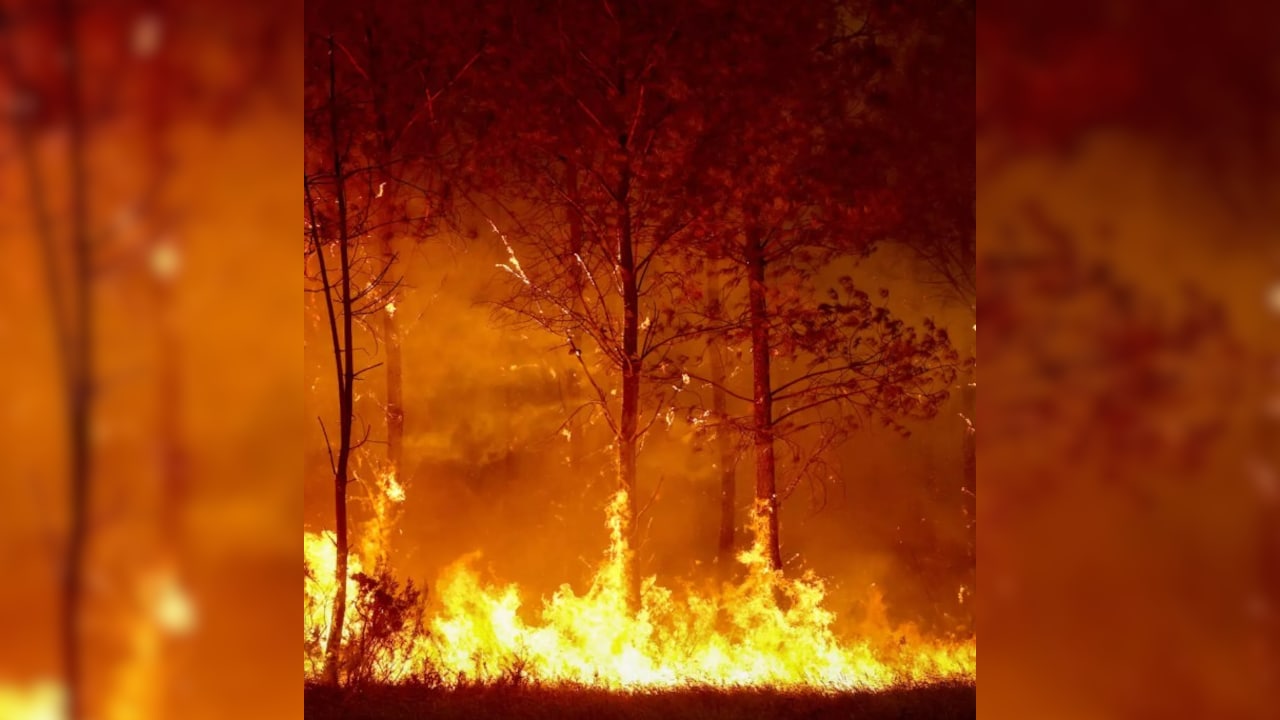
When an entire region starts making its own chaotic weather, you know normal rules no longer apply. Southwestern France isn't just dealing with another routine summer dry spell. The massive fire tearing through the Gironde department near Bordeaux has burned roughly 42,000 hectares, forcing over 220,000 people to pack up and flee. Now, as the country braces for its fourth major heatwave of the year, firefighters are holding their breath.
If you think this is just standard seasonal burning, you are missing the bigger picture. This crisis is rewriting what emergency responders thought was possible.
The Science Behind the Firestorm
What makes the Bordeaux wildfire terrifying isn't just the sheer acreage scorched. It is the behavior of the flame itself. During the height of the blaze, local crews witnessed a phenomenon never before documented in France: a pyrocumulonimbus cloud.
A fire cloud forms when a wildfire generates so much intense heat that it creates its own towering thunderstorms. These monstrous plumes don't just sit there. They spin off erratic winds, hurl lightning bolts miles beyond the perimeter, and ignite brand-new spot fires out of nowhere.
- The scale: The fire has consumed an area four times the size of Paris.
- The temperature: Bordeaux is tracking at 33°C to 37°C, running up to seven degrees above historical baselines.
- The human toll: More than 220,000 residents and vacationers evacuated from campsites, rural homes, and coastal resorts like Lacanau.
President Emmanuel Macron toured the front lines and labeled the situation the toughest crisis of its kind since the Second World War. When thousands of tourists are scrambling to cancel summer plans while local emergency teams deal with dozens of injured firefighters, the economic and social shockwaves are immediate.
Why Traditional Firefighting Falls Short
For decades, forest management relied on predictable wind patterns, steady humidity recovery overnight, and standard firebreaks. Those strategies are breaking down.
When relative humidity drops and afternoon winds whip up ahead of a new heatwave, dormant embers roar back to life within seconds. Fire crews can spend hours securing a perimeter only to watch a sudden downdraft from a fire-generated storm throw sparks across a six-lane highway.
You cannot simply out-muscle a blaze that changes the local atmosphere. Military engineers and local forest protection teams have rushed to cut over 100 kilometers of firebreaks, but physical clearings only work if the weather gives crews a fighting chance.
What Comes Next for Vulnerable Regions
The immediate priority remains holding the line around Bordeaux before temperatures peak further. While some evacuees in nearby Landes have been allowed home as separate blazes stabilize, the threat across Gironde is far from resolved.
European climate monitoring shows western Europe warming at more than twice the global average. That means these compounding heatwaves aren't anomalies. They are the new baseline operating conditions. If you live, travel, or invest in southern Europe, you need to look closely at local municipal evacuation plans, regional water retention projects, and early warning infrastructure.
Check your routes, heed local prefectorial warnings immediately, and stop treating extreme heat as a temporary inconvenience.