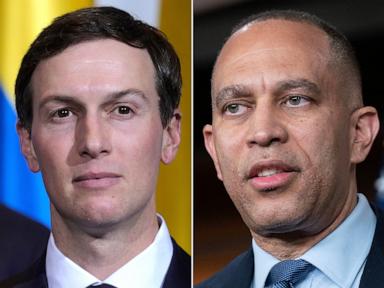
Whenever Hakeem Jeffries and Jared Kushner reportedly cross political lines to chat about areas of common ground, the mainstream media treats it like a diplomatic summit between warring empires. Cameras flash. Pundits squawk about statesmanship. Editorial boards swoon over the rare sighting of bipartisan hygiene in a toxic Washington swamp.
It is entirely performative nonsense.
You are being sold a fairy tale about ideological arch-rivals finding common humanity. The lazy consensus says these closed-door sit-downs signal a functional legislative future, a sign that pragmatic adults are saving us from partisan tribalism. That narrative is completely backwards. When the nominal left-wing House leader and the architect of the Trump administration's family real estate and foreign policy apparatus break bread, they are not forging a grand compromise for the working class. They are managing the status quo.
Let us look at the actual mechanics of modern American governance. True structural change never emerges from secret handshakes between dynasty scions and party bosses. Real shifts happen when grassroots pressure makes the existing machinery unviable. Everything else is just shadowboxing designed to keep the donor class comfortable while giving cable news something to talk about on a slow Tuesday.
The Myth of the Good Faith Broker
Washington operates on a simple rule: public division is the product; private alignment is the profit.
For decades, I have watched politicians and political operators treat policy like professional wrestling. They scream at each other across committee rooms, trade insults on social media, and fundraise off the ensuing outrage. Then they retire to private clubs in Georgetown or vacation compounds in Martha's Vineyard to coordinate on tax exemptions, defense appropriations, and deregulation bills that benefit the exact same portfolio managers.
When Jeffries and Kushner meet, they are not bridging a divide. They represent two sides of the same managerial coin. One manages the institutional apparatus of the Democratic Party's donor coalition; the other represents the populist-adjacent capitalist wing of the modern right. Their interests do not fundamentally clash on the things that actually matter to Wall Street, major real estate cartels, or defense contractors. They clash on culture war talking points because culture wars are cheap to produce and keep the electorate neatly divided into manageable, controllable tribes.
If you believe a backroom negotiation between a congressional leader and a billionaire family operative will yield housing reform, wage growth, or antitrust enforcement, you are ignoring every historical precedent since the Gilded Age. Capital talks. Bipartisanship at the elite level is rarely about helping citizens; it is about cartelizing power.
Follow the Cap Table
To understand why these high-profile meetings happen, stop looking at press releases and start looking at cap tables.
When political elites talk about "common ground," translate the phrase correctly. It means they have found a way to align their financial backers' interests without triggering a populist revolt. Think about infrastructure bills, tech regulation, or foreign aid packages. The fights look fierce on television, but the final text always contains enough carve-outs, subsidies, and loopholes to keep institutional investors happy.
Take real estate development and urban housing, a space Kushner knows intimately and where federal policy dictates local market realities. When establishment figures from both parties discuss housing solutions, they invariably frame the crisis through the lens of supply-side subsidies, tax incentives for large developers, and public-private partnerships. They do not talk about banning institutional single-family home buying, breaking up corporate landlord monopolies, or taxing vacant luxury units out of existence.
Why? Because those policies would hurt their donors. Jeffries and Kushner finding common ground on housing means they have agreed on a framework that lets big capital keep buying up neighborhoods while throwing a few crumbs of zoning reform to the middle class. It is a masterclass in controlled opposition.
The Danger of Polite Consensus
There is a deeper danger to these cozy bipartisan narratives. They sanitize corruption and institutional failure.
When the system stops working—when housing is unaffordable, healthcare is an administrative nightmare, and public trust is subterranean—the last thing we need is a bipartisan hug. We need radical divergence. We need parties and leaders who offer genuinely competing visions of economic and social organization, not two factions of the property-owning elite arguing over how to split the proceeds.
Every major advancement in American history—from labor rights and the New Deal to civil rights and environmental protections—was born from fierce, unyielding conflict. It was forced upon Washington by angry citizens, militant unions, and social movements that made life unlivable for the political class. No billionaire ever woke up, walked across the aisle, and voluntarily surrendered power because a congressman asked nicely in a private parlor.
The next time you read about a secret summit between political royalty, ask yourself a simple question. Who benefits from the compromise? If the answer is the people whose net worth ends in nine figures, you are not looking at statesmanship. You are looking at a merger.
Stop cheering for the bipartisan handshake. It is your pocket they are picking while their hands are clasped.