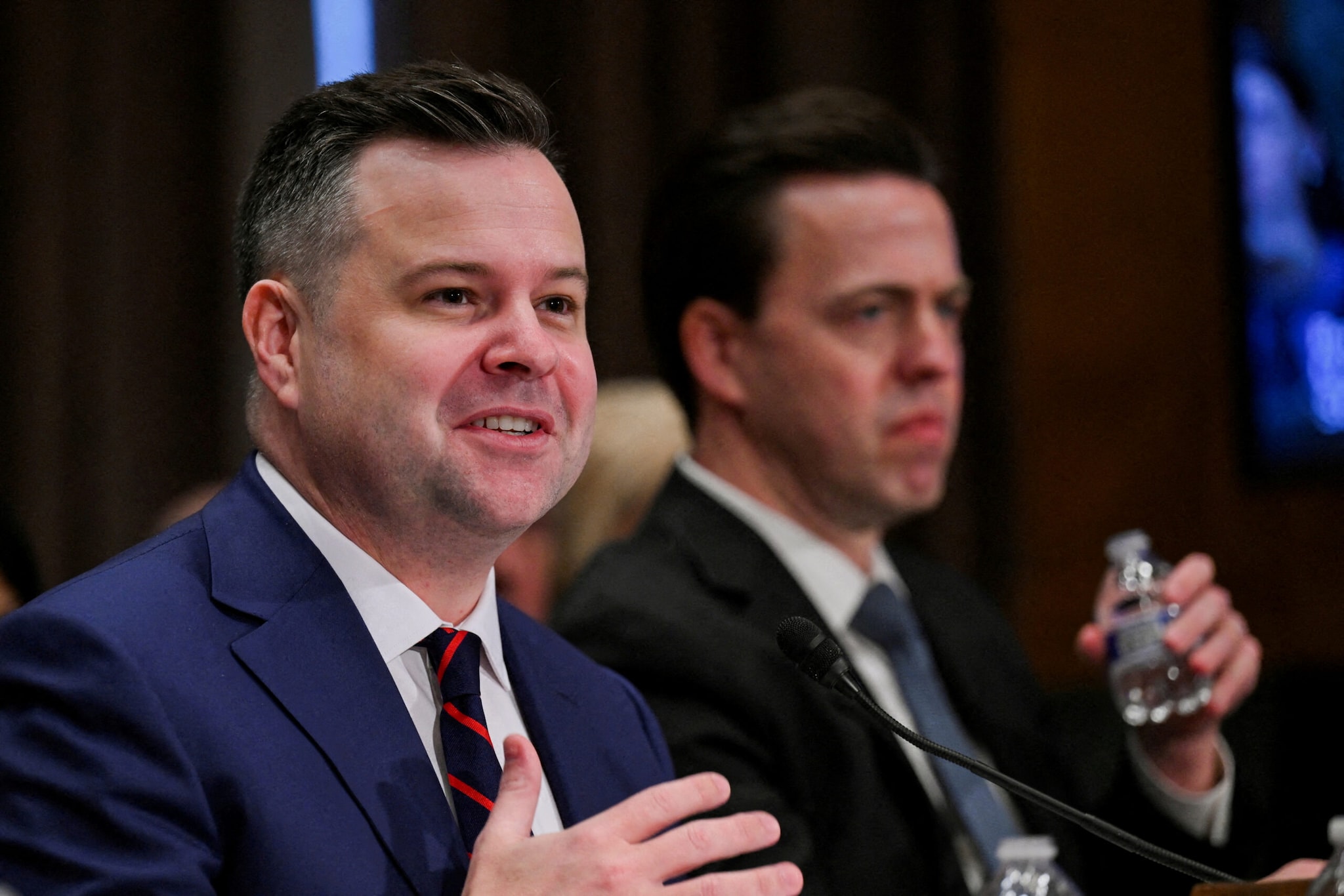
Donald Trump just threw another wrench into the gears of the federal bureaucracy. By moving up the timeline for Bill Pulte to take over as acting Director of National Intelligence to June 19, the president isn't just installing a loyalist. He's intentionally picking a fight with Capitol Hill at the worst possible moment.
If you're wondering why a guy who spent his career in homebuilding and currently regulates mortgages is suddenly running the nation's 18 spy agencies, you're not alone. Washington is reeling. The timing is brutal, the strategy is aggressive, and the potential fallout for American national security is massive.
The Sudden Shift in the Intelligence Timeline
Tulsi Gabbard was supposed to hold down the fort at the Office of the Director of National Intelligence until the end of June. Her resignation, prompted by her husband's bone cancer diagnosis, already left a glaring void. But Trump decided waiting was a bad idea.
By pushing Pulte's start date up to June 19, the administration is bypassing standard transition pacing. Pulte isn't leaving his day job either. He'll keep running the Federal Housing Finance Agency, meaning he will simultaneously oversee Fannie Mae, Freddie Mac, and the nation's top-secret foreign intelligence operations.
"William Pulte, who is working closely with Tulsi Gabbard, will be taking over as Acting Director of National Intelligence on Friday, June 19," Trump posted on Truth Social.
This dual-hatted arrangement is practically unprecedented for a role that usually requires full-time, hyper-focused attention. It signals that Trump cares far less about traditional administrative management and far more about disruptive reform.
The Workforce Reduction Agenda
What is a housing finance guy actually going to do at the ODNI? Trump didn't leave much to the imagination. In an interview with The Wall Street Journal, the president made it clear that Pulte has a very specific mandate: downsize.
Trump wants Pulte to initiate a significant workforce reduction immediately. The president noted that he wants to see the agency smaller, claiming there are plenty of people working there who shouldn't be. This is a direct shot at career intelligence personnel who served under previous administrations.
Pulte is the hatchet man. He has a reputation for hunting down perceived adversaries in the mortgage sector, and Trump expects him to bring that exact same energy to the intelligence community. Under federal law, an acting director can serve for 210 days without Senate confirmation. That gives Pulte until early next year—well past the November midterm elections—to execute this purge without ever needing a single Senate vote.
The FISA Section 702 Meltdown
The immediate casualty of this political chess move is the reauthorization of Section 702 of the Foreign Intelligence Surveillance Act. This is the critical tool that allows US agencies to collect communications of noncitizens abroad without a warrant. National security officials call it indispensable for stopping terror plots and cyber attacks.
It was already facing a tough renewal fight. Now, it's effectively dead in the water.
- Democratic Revolt: Democrats, led by Senate Minority Leader Chuck Schumer, have declared they won't vote for any FISA extension as long as Pulte is in that seat. Schumer slammed Pulte for using his previous office to target political enemies.
- Republican Hesitation: It's not just a partisan issue. High-profile GOP senators like John Cornyn, Bill Cassidy, and Thom Tillis have openly voiced disapproval. Cornyn noted that dropping Pulte might be the price required to save FISA.
- The Impasse: House Intelligence Committee ranking member Jim Himes went so far as to call it the most dangerous appointment Trump has made.
By forcing Pulte into the driver's seat on June 19, Trump is testing whether Congress will blink on national security surveillance just to block a single temporary appointment.
What Happens Next on Capitol Hill
Don't expect Trump to back down easily, but he has already acknowledged that Pulte is a short-term fix. The president stated in the Oval Office that he doesn't plan to nominate Pulte for the permanent position, which would require a brutal, likely losing confirmation battle in the Senate.
Instead, the administration is using Pulte as a bridge. Behind the scenes, lawmakers are already jockeying for the permanent nod, with names like Representative Elise Stefanik floating around Washington circles.
If you are tracking how this impacts policy, keep your eyes on the June 19 handoff. If Congress fails to pass a FISA extension before the deadline, the intelligence community will face a sudden, massive blind spot in its global surveillance capabilities. Trump is betting that the bureaucracy can stand to lose some weight; the intelligence community is betting that the disruption will cost American lives. We're about to find out who is right.
For a deeper look into how lawmakers are reacting to this unprecedented shakeup, watch this Congressional analysis on the Pulte appointment which breaks down the intense bipartisan pushback inside the House Intelligence Committee.