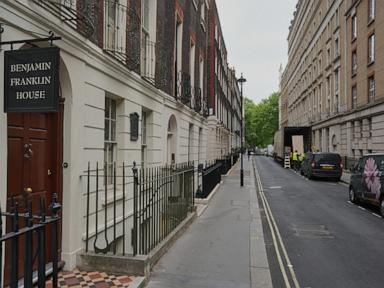
Revolutions are messy. They tear apart nations, economies, and—most brutally—families. When the American colonies decided to break away from the British Empire in 1776, the split wasn't just geographical. It ran right through living rooms, dinner tables, and fathers and sons.
Look no further than Benjamin Franklin and his illegitimate son, William Franklin.
Benjamin stood proudly among the Founding Fathers, signing the Declaration of Independence and helping forge a brand-new republic. William stayed loyal to King George III, serving as the Royal Governor of New Jersey. They didn't just disagree on politics. They chose opposing sides in a violent civil war that permanently shattered their relationship.
If you want to understand the true human cost of the American Revolution, forget the textbook troop movements. Look at the Franklins.
Two Men Two Paths in a Divided America
History paints the American Revolution as a united front against British tyranny. That is a myth. The population was roughly split into thirds: patriots who wanted independence, loyalists who wanted to stay British, and a massive group caught in the middle just trying to survive.
The Franklin household was a microcosm of that exact national fracture.
Benjamin didn't start out as a radical extremist. For years, he lived in London trying to broker a peaceful compromise between the crown and the colonies. He believed in the British system. He wore British clothes, invested in British land, and served as a loyal subject of the empire.
William followed in his father's footsteps early on, fighting alongside British forces during the French and Indian War and eventually earning a prestigious appointment as the royal governor of New Jersey through his father's political influence.
Then came the tipping point. The Stamp Act, the Boston Tea Party, and escalating military clashes forced a choice. You were either with the crown or against it. There was no middle ground left.
Why William Chose the Crown
People often ask how William could betray his father's radical vision. The answer lies in duty, order, and self-preservation.
William was a man of the establishment. As the Royal Governor of New Jersey, he owed his career, status, and loyalty directly to King George III. He genuinely believed that violent revolution would lead to total chaos, mob rule, and economic ruin.
He also saw the patriot movement as a dangerous gamble led by radical agitators who were destroying constitutional order. To William, loyalty to the crown wasn't blind obedience. It was a commitment to stability and the rule of law.
When the revolutionary provincial congress ordered him to step down, William refused. He argued that his authority came from the king, not a bunch of rebellious local committees. The patriots didn't negotiate. They arrested him, charging him with treason against the new state of New Jersey.
Benjamin Chose the Future
Benjamin watched his son double down on the monarchy with profound disappointment.
By 1775, Benjamin realized compromise was dead. The British government had pushed too hard, shedding American blood at Lexington and Concord. He packed his bags, sailed back across the Atlantic, and threw his immense prestige behind the Continental Congress.
Benjamin knew the risks. Treason against the crown carried a death sentence by hanging, drawing, and quartering. Yet he signed his name anyway, famously joking that they must all hang together or most assuredly they would hang separately.
He didn't hate his son immediately, but political ideology drove an unbridgeable canyon between them. Benjamin was looking toward an independent American experiment. William was looking backward at tradition and empire.
The Brutal Reality of Divided Families
The fallout between Benjamin and William wasn't unique. Thousands of families faced the exact same agony. Brothers fought brothers on battlefields. Fathers disowned sons in wills.
Loyalists faced terrible persecution from patriot mobs. They were tarred and feathered, had their homes burned, and thousands fled north to Canada or across the ocean to Britain as refugees.
William spent over two years imprisoned in Connecticut by the revolutionary government. Did his father use his immense political clout as minister to France to secure his immediate release? No. Benjamin largely ignored his son's plight during the war, focusing entirely on securing French alliance and military aid for the United States.
The emotional distance grew wider. When William was eventually released in a prisoner exchange, he relocated to New York City—which remained under British occupation—and organized loyalist military units to fight against his father's new nation.
The Final Break
The war ended in 1783 with American victory. The British lost, the loyalists lost, and William found himself on the wrong side of history.
He sailed into permanent exile in England, never to set foot on American soil again.
In 1785, on his way back to America from his diplomatic mission in France, Benjamin stopped briefly in England. Father and son met one last time in Southampton to settle financial matters and property disputes.
It wasn't a tearful cinematic reconciliation. It was cold, formal, and brief. Benjamin sent a brief letter to William afterward acknowledging the visit, but the bond was completely gone. When Benjamin died in 1790, he left the bulk of his estate to his grandson—William's son Temple—while explicitly cutting William out of significant inheritance, noting bitterly the part his son took against the American cause.
History remembers Benjamin as a visionary architect of freedom. It remembers William as a footnote on the losing side of an empire. But the real lesson of their tragedy is that political revolutions don't happen in government halls alone. They happen in families, tearing apart the people who love each other over competing visions of what a nation should be.