China is currently orchestrating a high-stakes diplomatic pressure campaign to stabilize the Red Sea and secure a lasting truce in West Asia, driven by a singular, cold reality: the disruption of global shipping lanes is strangling its primary economic artery to Europe. While Western powers rely on military strikes to deter Houthi rebels in Yemen, Beijing is leveraging its unique position as Iran’s largest oil customer and a self-styled neutral mediator to force a return to the status quo. This isn't about peace for the sake of humanitarianism. It is a calculated move to protect the Belt and Road Initiative (BRI) from a prolonged maritime crisis that is driving up freight costs and exposing the fragility of China’s supply chain dominance.
The blockade of the Bab al-Mandab Strait has forced cargo vessels to take the long route around the Cape of Good Hope. This adds ten to fourteen days to a journey that used to be efficient. For a manufacturing giant that lives and dies by "just-in-time" delivery, these delays are more than an inconvenience. They are an existential threat to export targets. Beijing knows that every week the shipping lanes remain "high risk," its goods become less competitive in the Mediterranean and Northern European markets.
The Economic Shackle of Maritime Instability
The Red Sea is not just a body of water. It is a choke point that controls roughly 12 percent of global trade. When China calls for a reopening of shipping lanes, it is addressing the fact that its state-owned shipping giants, such as COSCO, have had to navigate a logistical nightmare that threatens to derail its 2026 economic recovery targets.
Unlike the United States, which has deployed carrier strike groups to the region, China has kept its People’s Liberation Army (PLA) Navy base in Djibouti largely on the sidelines of active combat. This is a deliberate choice. By refusing to join the American-led "Operation Prosperity Guardian," Beijing avoids being labeled as a combatant by regional militias. Instead, it uses this perceived neutrality as a tool to demand that the underlying cause of the instability—the conflict in Gaza—be resolved through a permanent ceasefire.
The Cost of Redirection
Shipping costs have skyrocketed since late 2023. Consider the math of a standard container ship.
- Fuel Consumption: Circumnavigating Africa requires an additional $1 million in fuel per round trip.
- Insurance Premiums: War risk insurance for transit through the Red Sea has increased by over 1,000 percent for vessels with any perceived links to the West.
- Inventory Holding Costs: Longer lead times mean capital is tied up in "floating warehouses" for two weeks longer than planned.
Beijing’s insistence on a truce is a direct response to these numbers. They are watching their profit margins evaporate as the Red Sea remains a "no-go" zone for the faint of heart.
Diplomacy with Teeth Behind the Scenes
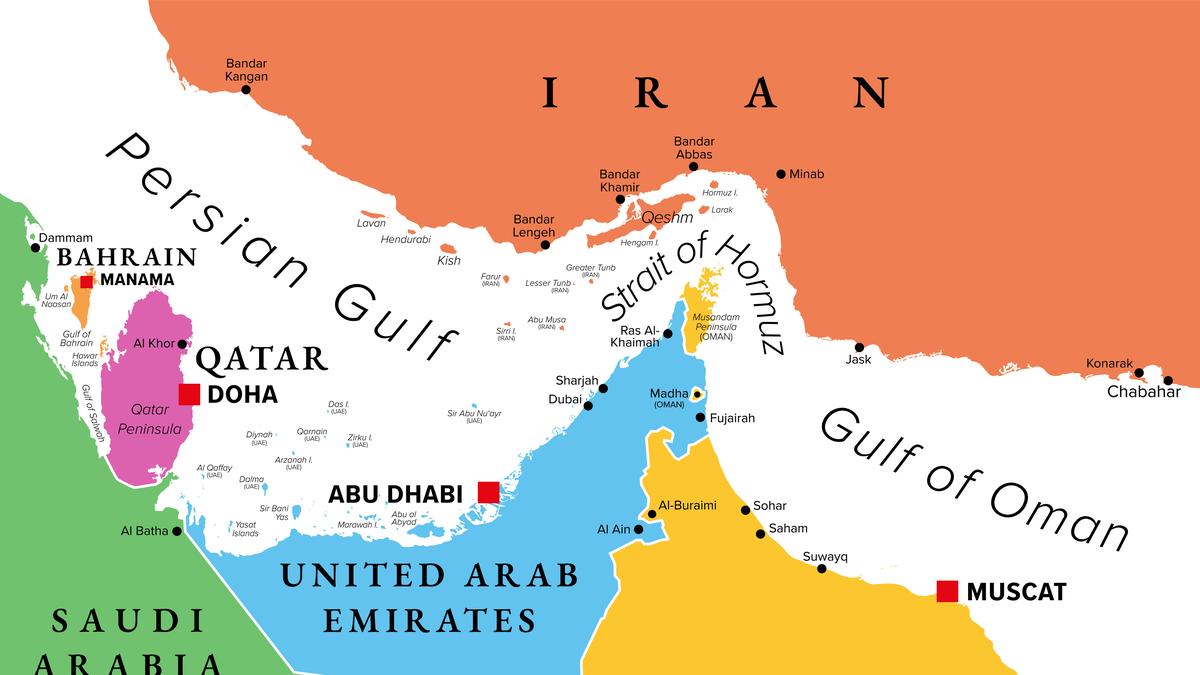
The public statements from the Chinese Foreign Ministry often sound like boilerplate calls for "restraint" and "dialogue." The reality is far more aggressive. Behind closed doors, Chinese officials are reminding Tehran that the stability of the Persian Gulf and the Red Sea is a prerequisite for continued Chinese investment.
China buys approximately 90 percent of Iran’s sanctioned oil exports. This gives Beijing a level of influence that Washington simply cannot match. If the Houthi attacks—widely understood to be supported by Iranian intelligence and hardware—continue to hit ships that indirectly impact Chinese trade interests, Beijing has the capability to tighten the financial screws on the Iranian economy.
The Gaza Link
The genius of the Chinese position lies in its ability to tie maritime security to the Palestinian cause. By arguing that the Red Sea cannot be safe until a West Asia truce is achieved, China aligns itself with the sentiment of the Arab world. This isolates the U.S. and the UK, who are seen as treating the symptoms (Houthi drones) rather than the disease (the regional spillover of the Gaza war).
China is positioning itself as the "responsible power" that understands the holistic nature of Middle Eastern security. They are playing a long game. They want to prove that their model of "developmental peace" is more effective than the Western model of military intervention.
The Failure of Current Deterrence
The American strategy of bombing Houthi launch sites has not reopened the Red Sea. It has merely created a high-endurance war of attrition. The Houthis, battle-hardened by a decade of conflict with a Saudi-led coalition, are not easily intimidated by Tomahawk missiles. They have shifted to using undersea drones and more sophisticated ballistic missiles, proving that military force alone cannot secure a shipping lane that spans hundreds of miles of coastline.
China’s critique of this approach is quiet but scathing. They view the Western military response as a provocation that increases the risk of a wider regional conflagration. From Beijing's perspective, every missile fired by the U.S. is another reason for shipping companies to keep their vessels away from the Suez Canal, further cementing the "Cape of Good Hope" as the new global standard.
Impact on the European Export Market
The European Union is China’s largest trading partner. Germany, in particular, relies heavily on Chinese components for its automotive and machinery sectors. When the Red Sea is blocked, the "Eurasian Land Bridge" via rail through Russia and Central Asia becomes an alternative, but it cannot handle the volume of a mega-max container ship.
A single large vessel carries 20,000 containers. You would need dozens of trains to match that capacity. The sea remains the only viable path for the volume of trade China needs to sustain its GDP growth. Therefore, the truce is not a diplomatic luxury; it is a logistical necessity.
The Strategic Neutrality Trap
There is a risk in China’s "neutral" stance. By refusing to help patrol the waters, they are effectively "free-riding" on the security provided by others, even as they criticize it. However, if Beijing successfully brokers even a partial de-escalation through its back-channels in Tehran and Sana'a, it will have achieved a diplomatic victory that makes the U.S. look obsolete in the region.
We are seeing a shift in the global order where the "policeman of the world" is being replaced by the "broker of the world." China doesn't want to run the Middle East. It wants the Middle East to run smoothly enough that the oil keeps flowing and the ships keep moving.
Emerging Threats to the BRI
The instability threatens the Maritime Silk Road, a key pillar of the BRI. China has invested billions in ports like Piraeus in Greece and various hubs in the Red Sea corridor. If these ports become quiet because ships are avoiding the Suez Canal, those investments turn into stranded assets.
Beijing’s call for a reopening of the shipping lanes is a desperate attempt to protect its "string of pearls"—the network of ports and maritime infrastructure it has spent twenty years building. They cannot afford to let a regional militia dictate the terms of global trade.
Weaponizing Trade and Stability
The move to push for a West Asia truce is also a branding exercise. China is presenting a vision of the world where trade and economic development are the primary drivers of stability, not democratic ideals or military alliances. They are betting that regional players—Egypt, Saudi Arabia, and the UAE—are tired of the chaos and are ready for a deal that prioritizes the bottom line.
Egypt, for instance, has seen its Suez Canal revenues plummet by nearly 50 percent in early 2024. This is a disaster for Cairo. China is stepping in as the only power capable of talking to all sides—the Israelis, the Iranians, the Arabs, and the Americans—to find a way out of the deadlock.
The Realistic Outcome
Will a truce happen because China "urges" it? Not on its own. But when China combines that urging with the threat of reduced oil purchases or the promise of massive reconstruction funds for Yemen and Gaza, the power dynamic shifts.
The Western world often underestimates the influence of the buyer. In the global energy market, China is the buyer of last resort for the world’s most volatile regimes. That gives them a seat at the table that no amount of naval firepower can buy.
The Future of Maritime Choke Points
The Red Sea crisis has taught Beijing a hard lesson about the vulnerability of its trade routes. Expect to see China accelerate its efforts to find "land-based" workarounds, including pipelines through Myanmar and expanded rail networks through Pakistan. But for the next decade, the sea is the only way.
The push for a truce is a signal that China is willing to step into the role of a regional arbiter if it means protecting its economic interests. They are no longer content to sit on the sidelines while their supply chains are set on fire. The world is witnessing the beginning of a Chinese-led security architecture in West Asia, built on the foundation of trade and reinforced by the reality of the energy market.
If the shipping lanes do not reopen soon, the global economy faces a permanent inflationary shock. Beijing is the only player with the specific set of keys—economic and diplomatic—needed to unlock the gate. The U.S. has the hammers, but China has the combination to the lock.
The resolution of the Red Sea crisis will likely not be found in a naval battle, but in a quiet room in Beijing where the price of oil and the flow of containers are used as the ultimate bargaining chips. Success for China means a return to the profitable status quo; failure means a fractured global trade system that forces a painful and expensive decoupling from the West. For the veteran analyst, the choice is clear: watch the money, not the missiles. The true "truce" will be signed in the ledger of a shipping company long before it is announced at a podium.