Every desk pundit in Washington and London is hyperventilating over Beijing updating its National Defense Mobilization Law. The lazy consensus runs on a predictable script: China is oiling the gears for an amphibious assault across the Taiwan Strait, snapping its civilian shipping, logistics, and tech sectors into a totalitarian war machine overnight.
It is a lazy, unimaginative reading of statecraft that fundamentally misunderstands how modern superpowers actually prepare for existential shocks.
I have spent the better part of two decades tracking industrial policy and supply chain architecture across Asia. I have watched Western analysts mistake administrative housekeeping for imminent invasion plans more times than I can count. Beijing is not writing a battle plan for an island campaign. They are doing something much more pragmatic, and much more dangerous to the Western economic status quo: they are institutionalizing panic insurance against total global economic strangulation.
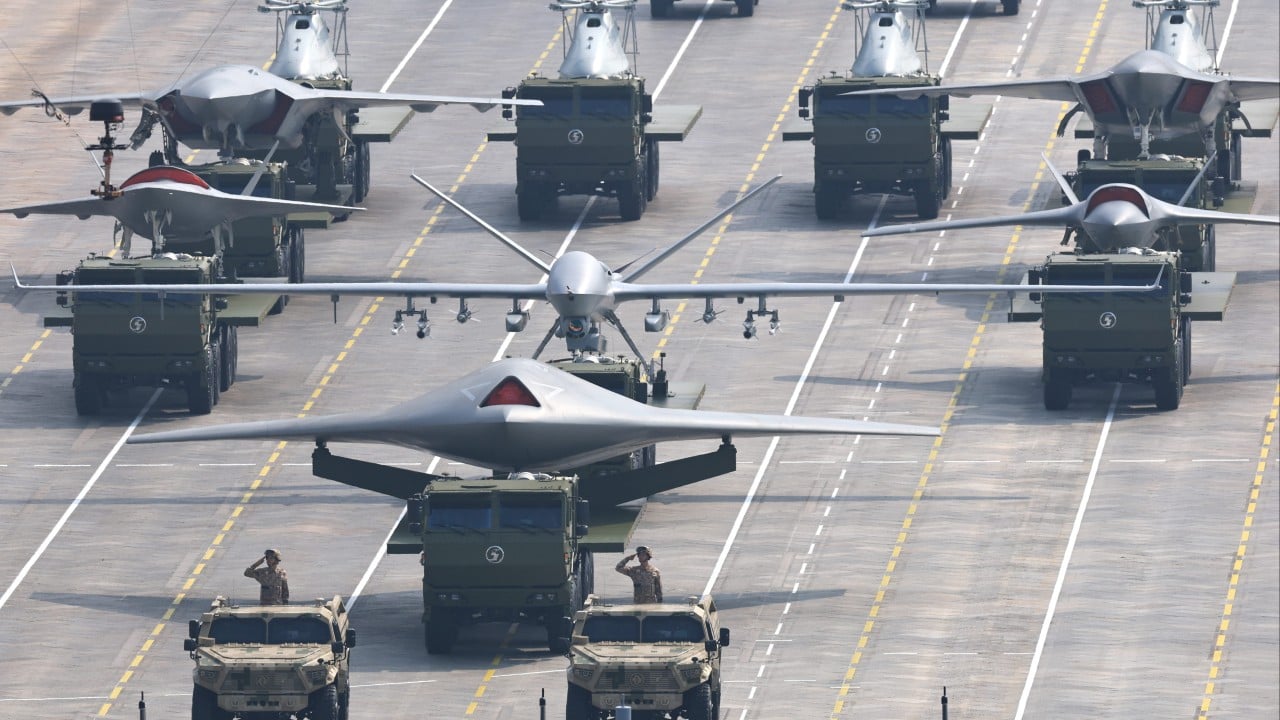
To understand why the conventional wisdom is entirely backward, you have to look past the military hardware parades and examine the mechanical wiring of the new statute.
The Myth of the Overnight Civil Fleet Conversion
The core panic in every defense journal centers on provisions allowing the People's Liberation Army to requisition civilian assets. Container ships, roll-on/roll-off ferries, commercial drones, and private logistics networks are suddenly painted as an armada-in-waiting.
This argument ignores basic maritime economics and military logistics.
A modern container ship or civilian ferry is a floating skyscraper of specialized electronics, delicate propulsion systems, and civilian crews who have zero appetite for anti-ship missile fire. Shoving ten thousand civilian logistics workers into a contested military zone does not create a fighting force; it creates a logistical parking lot that is exceptionally easy to sink.
What the legal update actually targets is supply chain continuity under severe economic blockade. Beijing watches the sanctions architecture deployed against Russia with clinical detachment. They see the freezing of central bank reserves, the swift severing of swift messaging systems, and the weaponization of maritime insurance.
The defense mobilization update is not about offensive projection. It is an internal shock absorber designed to keep internal energy grids lit, food moving, and domestic manufacturing breathing when foreign shipping lanes slam shut. It is domestic economic defense disguised in martial language.
The Real Shift: Algorithmic Mobilization
While Western media obsesses over troop reserves and transport ships, they are completely missing the software layer.
The most significant change in the legal framework is the mandatory integration of private tech platforms, logistics data feeds, and artificial intelligence into state planning. This is not about drafting coders into the infantry. It is about automating the friction out of national requisition.
For decades, state mobilization was sluggish because matching military need with civilian inventory required mountains of paperwork and bureaucratic negotiation. By embedding cloud infrastructure, real-time inventory tracking, and automated asset-tagging into private enterprise mandates, Beijing is building an algorithmic state.
Imagine a scenario where a maritime choke point in the Malacca Strait experiences sudden closure or severe disruption. Instead of weeks of committee meetings to reroute critical raw materials, algorithms integrated directly into private shipping giants automatically reallocate domestic rail capacity, shift battery storage inventories, and prioritize domestic manufacturing inputs within minutes.
That is not a wartime invasion strategy. That is a state-level continuity protocol designed to make the Chinese economy entirely immune to foreign economic coercion.
Why the West is Asking the Wrong Question
When policymakers in Washington ask how to deter this mobilization, they ask the wrong question entirely. They ask how to sink more ships or place more sanctions on specific military contractors.
That is like trying to stop a flood by bailing water with a tea strainer while the dam upstream is disintegrating.
The real vulnerability for Beijing is not military hardware or legal statutes; it is systemic debt, demographic contraction, and structural overcapacity in heavy industry. A nation that has to legally compel its civilian sector to prepare for emergency mobilization is a nation deeply anxious about its own internal fragility.
When you look at the raw numbers, China's domestic consumption remains depressed, local government debt loads are staggering, and their reliance on imported energy through vulnerable maritime corridors is an unfixable structural reality. Passing a law does not manufacture crude oil or replace twenty percent of the global semiconductor supply chain overnight.
The Uncomfortable Truth About Total Defense
The Western reaction reveals a profound insecurity about our own decaying administrative capacity. We look at a government that can unilaterally rewrite corporate mandates overnight and we confuse our own bureaucratic paralysis with their tactical brilliance.
Beijing is terrified of the exact same things keeping Western leaders awake at night: energy shocks, climate-driven agricultural disruption, and financial isolation. The defense mobilization update is an admission of vulnerability, not a declaration of imperial ambition.
Stop reading it as a countdown to war. Read it as a desperate, methodical attempt to build a concrete bunker around an economy that knows the global trading system is fracturing into hostile, regional blocks.
When the next major global supply chain shock hits, the economies that survive will not be the ones with the most aggressive wartime laws on the books. They will be the ones with flexible, resilient, decentralized markets that do not require a government decree to adapt.
Right now, neither side has built that. And passing a law doesn't change the physics of global trade.