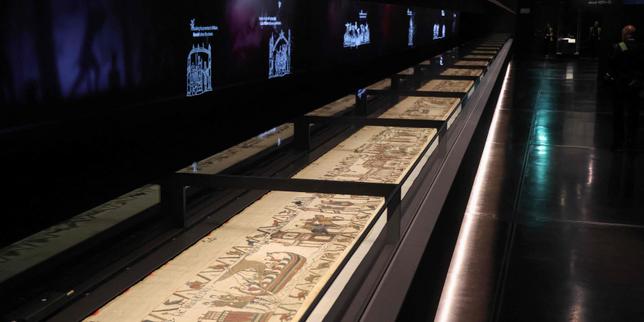
Two broken threads over seventy meters of wool and linen. That was the precise toll announced by French culture officials after the historic transport of the eleven-century embroidery from Normandy to the British Museum. Headlines quickly pivoted to reassurance, emphasizing that the artifact suffered no catastrophic structural failure. Yet, the quiet emergence of those minor fractures exposes the underlying tension of moving a fragile millennium-old relic for diplomatic pageantry and record-breaking ticket sales.
The artifact left its custom-built home in Bayeux under maximum security, marking its first trip to British soil in nearly a thousand years. For generations, French conservators resisted any relocation, warning that the physical stress of moving the massive wool embroidery on linen backing risked permanent stitch loss. Those warnings were dismissed in the name of international goodwill, sealed by high-profile visits from political leaders. When French Culture Minister Catherine Pégard confirmed the two-thread fracture during an interview, she downplayed the finding as negligible. Conservators looking closely at the data understand that any loss of original material on an object of this age represents an irreversible shift. If you enjoyed this article, you might want to look at: this related article.
Moving a seventy-meter-long artifact requires navigating immense logistical hurdles. Temperature fluctuations, humidity shifts, and the micro-vibrations of transit all act upon organic materials that have spent centuries stabilizing in controlled environments. Even with custom shock-absorbing crates and teams of international specialists monitoring every centimeter via high-resolution imaging systems developed with the University of Caen, the physics of movement remain unforgiving. Wool fibers that have degraded over nine hundred years lose their elasticity. They do not bend; they snap.
The exhibitions industry thrives on blockbuster loans. Museums need foot traffic, revenue, and political capital. When the British Museum secured the loan, it triggered a massive surge in advance ticket sales, raking in millions within hours of release. This commercial and diplomatic engine creates immense pressure to say yes to high-risk loans. Cultural ministries balancing tight budgets find it difficult to resist the prestige and financial injection of such international collaborations, regardless of the conservation risks involved. For another look on this event, refer to the latest update from Al Jazeera.
Examining the microscopic damage reveals a broader ethical question facing modern heritage management. At what point does public accessibility outweigh physical preservation? Every time an irreplaceable piece of history is rolled, packed, transported, and unrolled, its lifespan diminishes. Two broken threads might seem like an acceptable casualty for a historic cross-Channel cultural exchange, but they serve as a warning sign.
The exhibition will run for months, drawing millions of curious visitors past glass-fronted cases. The real test will not be how the embroidery looks on opening night, but its condition report when it finally makes the return journey back to Normandy. Until then, those two microscopic breaks stand as a quiet reminder of what is quietly sacrificed when cultural heritage is put on the road.