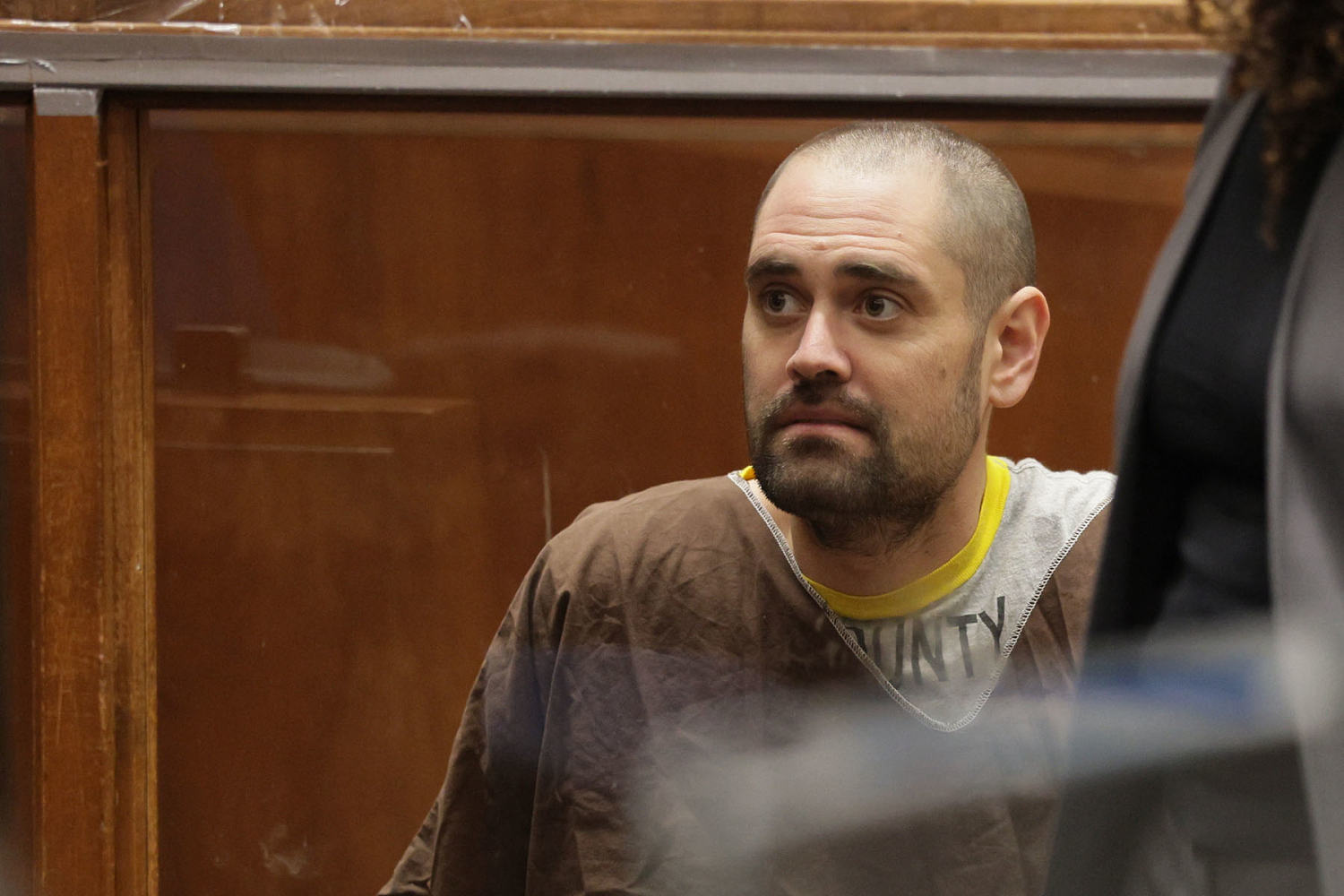
Nick Reiner, the 32-year-old son of the late Hollywood filmmaker Rob Reiner and photographer Michele Singer Reiner, filed a 136-page petition in Los Angeles Superior Court on Monday demanding the immediate release of an estimated $1.5 million trust fund established by his parents. Arrested hours after his parents were found stabbed to death in their Brentwood home on December 14, 2025, Nick faces two counts of first-degree murder. The legal maneuver represents an aggressive attempt to reclaim high-profile private counsel after his siblings revoked financial backing, thrusting a complex estate battle into the center of a capital murder case.
The filing deliberately separates the ongoing criminal prosecution from a cold, contractual trust dispute. It asserts that the mandatory distributions outlines in the 1993 irrevocable trust are unconditional, absolute property of the defendant, unaffected by the statutory bans that usually prevent accused killers from inheriting their victims' wealth.
The Anatomy of an Irrevocable Trust Under Murder Charges
To understand why a man accused of patricide can legally demand his victims’ money to fund his defense, one must look at the structural mechanics of California estate planning. The media frequently cites California Probate Code Section 250, commonly known as the Slayer Statute. This law states that any person who feloniously and intentionally kills a decedent is prohibited from bringing any interest, asset, or insurance policy from the victim’s estate.
The Slayer Statute applies to new inheritances triggered by a death. It does not automatically strip an individual of property they already legally owned prior to the crime.
Nick Reiner’s legal team argues that the money inside "Nick's Trust"—a smaller, independent instrument separate from the main $200 million Reiner family trust—became his absolute property long before the December stabbings. According to the petition, the trust document mandated that Nick receive half of the principal when he turned 30, and the remaining half at age 35.
Because Nick turned 30 two years ago, his attorneys argue that the first distribution is overdue. The trustee, corporate attorney Paul R. Kanin, allegedly withheld the funds based on subjective assessments of Nick’s stability and competence.
"These funds were a commitment by Nick's parents, in the most binding way the law of trusts allows, that these resources would belong to Nick for his use and benefit," the petition states. "The facts about what did and did not happen to them are not at issue in this trust litigation."
By framing the $1.5 million as pre-existing personal property rather than a post-death inheritance, the defense bypasses the Slayer Statute entirely. If a bank cannot freeze your checking account just because you are arrested, a trustee theoretically cannot freeze a mandatory trust distribution that matured two years prior to the offense.
The High Cost of Capital Defense and the Sibling Retreat
The immediate catalyst for this civil petition is a crisis in Nick Reiner’s criminal defense team. Following his arrest, high-profile defense attorney Alan Jackson—known for representing prominent clients in complex felony trials—was retained to lead the defense. Funding for Jackson’s firm initially came from Nick's siblings, Jake and Romy Reiner.
That united family front collapsed. The siblings reversed course and severed the funding, forcing Jackson to formally withdraw from the criminal case due to non-payment. Nick was temporarily relegated to a public defender.
Jackson submitted a sworn declaration alongside Monday's petition, explicitly stating that his firm stands "ready, willing, and able to resume representation" the moment the trust assets are unfrozen.
The reality of defending a capital murder charge in Los Angeles County involves immense structural costs. District Attorney Nathan Hochman has not yet ruled out seeking the death penalty. A private capital defense routinely demands hundreds of thousands of dollars for independent forensic experts, private investigators, psychiatric evaluators, and jury consultants.
Without access to the trust, Nick Reiner faces a trial handled by an overburdened public defender's office. The civil petition even notes that he currently lacks the funds to purchase basic jailhouse necessities like socks, soap, and hygiene items due to the frozen accounts.
The Trustee Strategy of Delay
The defense accuses the current trustee, Paul R. Kanin, of employing a "shifting series of excuses" to prevent the distribution of the assets. In estate administration, a trustee owes a strict fiduciary duty to the beneficiary, not to the creators of the trust or the broader family.
Kanin's legal defense for withholding the money likely rests on a standard protective clause embedded in many high-net-worth trusts: the spendthrift provision or a temporary incapacity clause. If a trustee determines that a beneficiary is incapacitated, suffering from severe substance abuse, or otherwise unable to manage funds without causing self-harm, they can occasionally delay distributions. Nick Reiner’s historic, highly publicized struggles with addiction are well-documented within Hollywood circles.
The legal threshold to maintain such a block is exceptionally high once a mandatory age milestone is reached. The trust language from 1993 reportedly contains no explicit behavioral conditions. It specifies ages: 30 and 35.
A probate judge will have to decide whether a trustee can use a murder charge and potential mental instability as a justification to hold funds that legally matured 24 months before the crime occurred.
Precedent and the August Showdown
The Los Angeles Superior Court has set a formal hearing date for the trust dispute on August 17, weeks before Nick Reiner is scheduled to return to criminal court for a pretrial hearing in September.
The outcome of this probate battle will dictate the entire trajectory of the murder trial. If the probate court rules in favor of the trustee, Nick Reiner will likely proceed with state-funded counsel, keeping the vast Reiner family fortune entirely insulated from his legal bills. If the court rules for Nick, a $1.5 million war chest will instantly transfer to private defense attorneys, setting up a heavily resourced legal battle against the Los Angeles District Attorney's office.
The case exposes a stark truth about American estate law. Wealth wrapped in an irrevocable trust operates under its own rigid mechanics, entirely blind to the moral or criminal crises of the families who created it.



:max_bytes(150000):strip_icc()/pittosporum-tenuifolium-7104378_02-00675b9d9c6041698f753a235dae7914.jpg)