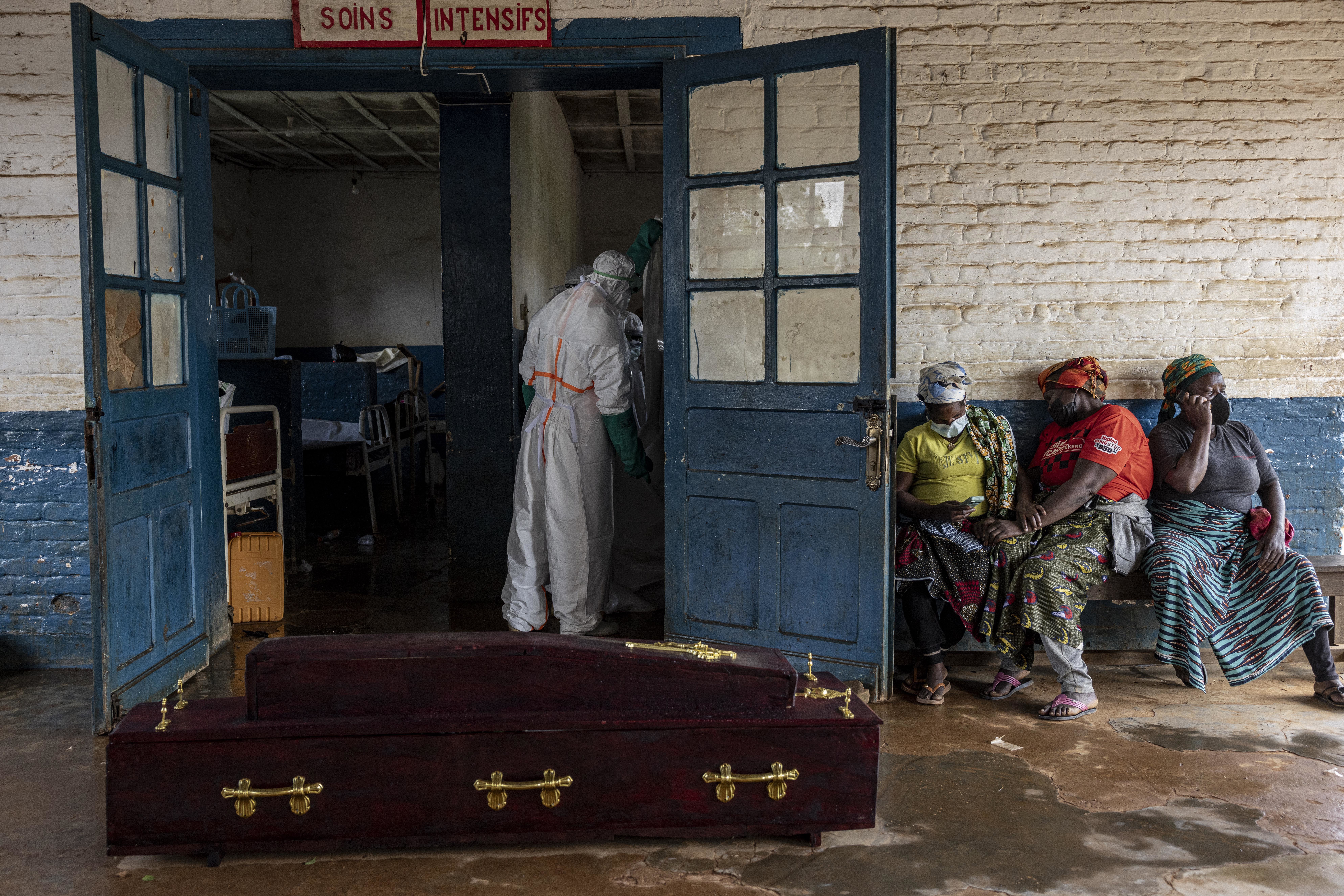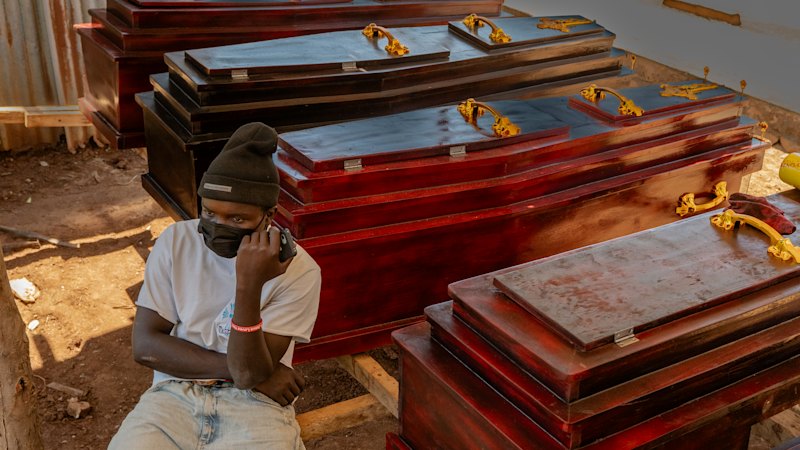
The World Health Organization just raised the Ebola threat level to "very high" and the global health apparatus reacted with its usual blunt-force trauma: banning funeral wakes. The media is flooded with harrowing imagery of overwhelmed coffin makers working around the clock. The narrative is set. Traditional burial practices are the enemy, public mourning is a biohazard, and top-down prohibition is the only savior.
It is a comforting, linear illusion. It is also dangerously wrong.
Banning funeral traditions during a hemorrhagic fever outbreak does not stop transmissions. It drives them underground. By criminalizing grief, public health officials turn communities into adversaries, ensure hidden corpses infect more families, and sabotage the very surveillance systems required to contain the virus. We are repeating the catastrophic policy failures of the 2014 West African outbreak under the guise of "decisive action."
The Illusion of Control Through Prohibition
Public health bureaucrats love prohibitions because bans look like leadership on a spreadsheet. If Ebola spreads through bodily fluids, and deceased bodies carry the highest viral load, then banning the gathering around the deceased seems logical.
Except human behavior does not conform to bureaucratic spreadsheets.
When you tell a community that they cannot touch, wash, or honor their dead, they do not suddenly lose their deep-seated cultural obligations. They simply stop telling you who is dying. During my years analyzing field responses to infectious outbreaks, I have seen exactly how this plays out. The moment a military or police force enforces a blanket ban on wakes, families begin burying their loved ones at night, in secret, without protective equipment.
Consider the mechanics of Ebola transmission. The virus is highly contagious in death because the viral load peaks as the patient succumbs. When a safe burial team arrives, they wear full personal protective equipment (PPE) and disinfect the area. When a family hides a body to avoid a government ban, multiple people handle the highly infectious corpse without a single layer of latex. The ban increases the exact risk it claims to mitigate.
The Math of Hidden Transmissions
Let us look at how the data actually flows during a mismanaged outbreak.
In a standard epidemiological model, the basic reproduction number ($R_0$) dictates how many people an infected individual will pass the virus to. In past Ebola outbreaks, the localized $R_0$ for traditional burials has spiked significantly.
Imagine a scenario where a transparent, community-led safe burial occurs. The $R_0$ for that specific event drops to virtually zero.
Now imagine the prohibition scenario:
- The Hidden Case: A family hides a sick relative to avoid forced isolation and a banned funeral.
- The Secret Wake: Ten close relatives handle the body in secret.
- The Exponential Jump: Instead of a controlled environment, you now have a localized $R_0$ of 5 or 6, multiplying silently across households before the first symptom even manifests.
By forcing compliance through bans, public health agencies trade a visible, manageable risk for an invisible, exponential threat.
Dismantling the PAA Presumptions
When panic sets in, the questions the public asks are fundamentally flawed because they are built on media sensationalism rather than epidemiological reality.
Can you stop Ebola by stopping the coffin makers?
No. Tracking the supply chain of coffin makers is a vanity metric for journalists looking for a grim visual. The bottleneck in an Ebola crisis is never the availability of wood; it is the breakdown of contact tracing. Focusing on the macro-industry of death ignores the micro-behaviors that cause it.
Why does the WHO use blanket bans if they backfire?
Because institutional inertia favors the appearance of total control over the messiness of community negotiation. The WHO sets macro-level threat assessments. Local ministries then interpret these assessments as a license to implement draconian measures, terrified that any nuance will look like weakness.
Safe Burials Over Forced Bans
The alternative is not allowing unregulated, high-risk funerals. The alternative is negotiated, harm-reduction anthropology.
During the tail end of the 2014 epidemic, researchers and field workers finally realized that coercion was failing. The shift toward "Safe and Dignified Burials" (SDB) saved lives. This protocol did not ban the wake; it modified it.
- Visual Participation: Families were allowed to see the body wrapped in a translucent shroud rather than a opaque body bag.
- Substituted Rituals: Splashing holy water or tossing soil onto the coffin from a safe distance replaced the physical washing of the corpse.
- Clergy Involvement: Religious leaders were trained in infection control, becoming the ambassadors of safety rather than the targets of state enforcement.
When communities were given a way to honor their dead safely, secret burials plummeted. Resistance vanished. The epidemic curve flattened.
Yet, looking at the current reactions to the "very high" threat level, those hard-earned lessons have been entirely scrubbed from the institutional memory. We are right back to deploying security forces to shut down grief.
The True Cost of Institutional Arrogance
The downside to the harm-reduction approach is that it requires time, immense cultural humility, and trust. It requires talking to village elders, neighborhood leaders, and local physicians instead of issuing decrees from a capital city or a Geneva headquarters. It is slow work.
But the cost of the alternative is catastrophic.
When you treat the population as a vector to be managed rather than a partner to be engaged, you destroy public trust. Once trust is gone, contact tracers get chased out of villages. Mobile clinics get burned down. People hide their symptoms until they are dying in the streets,保证 environmental contamination reaches its peak.
The global health community must stop using the hammer of prohibition for every nail. Banning funeral wakes does not show strength; it confesses an inability to engage with human reality. If we want to drop the Ebola threat level back down, we need to stop fighting the people dying from it.